He Who Permeates at Tao Art Gallery brings together Jayesh Sachdev and NFN Kalyan in an exhibition that explores mythology, identity and self-reflection.
Curated by Mihir Thakkar, the show connects personal experiences with contemporary social and political realities through immersive and layered artworks.
Through sculpture, painting and installation, He Who Permeates examines how ancient symbols continue to exist within modern life.
At Tao Art Gallery, He Who Permeates opens like a conversation that slowly expands in many directions. The exhibition, bringing together artists Jayesh Sachdev and NFN Kalyan under the curatorial vision of Mihir Thakkar, does not stay confined to mythology alone. Instead, it uses mythology as a starting point to speak about identity, memory, conflict, belief and the emotional weight people carry within themselves.
The title itself suggests something larger than a physical presence, an energy that moves through people, objects and ideas. Walking through the exhibition, that feeling becomes visible in different ways. Sculptures reflect the viewer back at themselves. Paintings move between history and present-day politics. Symbols that seem familiar begin to shift meaning when placed beside contemporary anxieties.
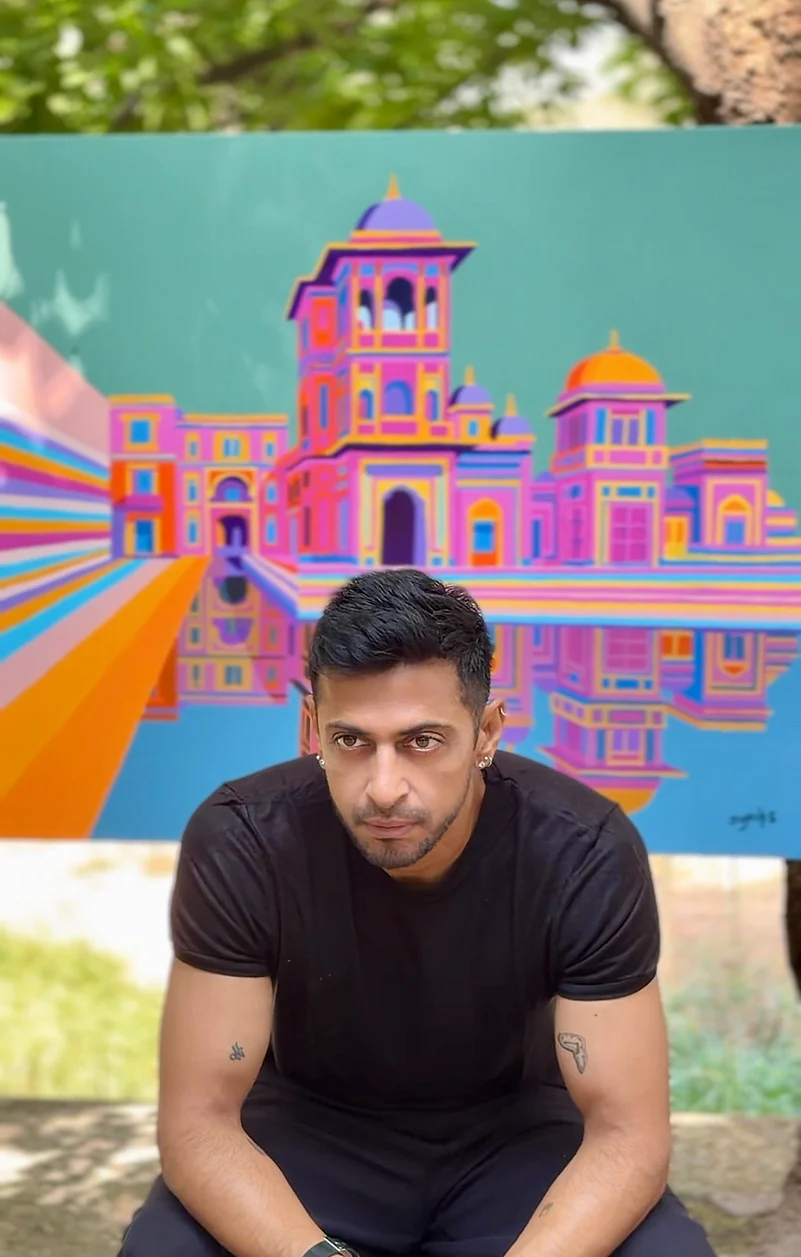
For Jayesh Sachdev, this idea of permeability has always existed in his work. His artistic language often moves between spirituality, design, fantasy and urban visual culture. But in He Who Permeates, the works feel more inward-looking. He speaks about ancient symbols not as relics from the past, but as living forms that continue changing over time.



“I believe certain symbols and energies never really disappear; they just keep changing form over time,” Sachdev says. “My work sits somewhere in that space between the past and the present.”
Sachdev is not interested in preserving mythology in a fixed form. Instead, he wants to make it relevant to contemporary life. “The goal is not preservation; it’s relevance,” he explains. “It is about asking questions and resisting them and self-reflecting.”
That thought runs through many of his works in the exhibition. His sculptures and installations may draw from mythology, but emotionally they feel rooted in human contradictions. Strength and vulnerability exist together. Chaos sits beside silence. His figures often appear hybrid, almost suspended between identities.
Over time, Sachdev says he realised these forms were less about mythology itself and more about people. “We all hold multiple versions of ourselves,” Sachdev says. “We co-exist as multitudes and live in between the greys.”
One of the works that stands out most strongly for him is Architecture of Faith. The installation reacts to viewers through light and movement. Chrome surfaces reflect the audience back into the work, making them part of the experience itself. For Sachdev, the piece moves beyond the idea of a physical temple.
“The chrome is intentional for it to be a reflection of yourself in the work,” Sachdev adds. “Conceptually too, it connected strongly with my ongoing thoughts around temples as architecture and faith, not as physical structures, but as internal psychological spaces.”
That relationship between the external and internal becomes central to the exhibition itself. Faith, here, is not presented as doctrine. It appears instead as memory, conditioning, energy and self-awareness.
Sachdev also speaks warmly about collaborating with NFN Kalyan. Though their visual styles are very different, he believes the contrast strengthened the exhibition rather than dividing it. “Kalyan and I have very different visual styles and approaches,” he says. “We never tried to make the works feel similar.” He credits the gallery and the curatorial team for bringing both artistic worlds together in one space. “I am a huge admirer of Kalyan, both of him and his work, and it was an honour to showcase alongside him,” he says.
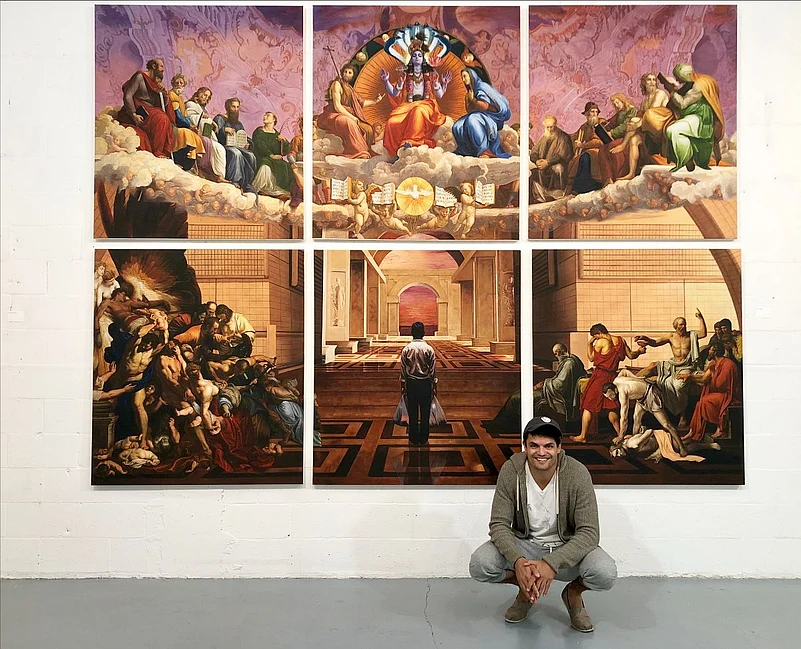
For NFN Kalyan, He Who Permeates marks his India debut. His paintings bring together references from mythology, politics, internet culture and personal anxiety. While Sachdev’s works often move toward immersive environments, Kalyan’s paintings feel crowded with layered meanings and historical references.
Yet beneath the density of the images lies a deeply personal core.
Kalyan says he was happy with both the India debut and the collaboration itself. “The collaboration brings two different perspectives and art styles,” Kalyan says. “The communications were in sync too.”

One of his important works in the exhibition is Kalayuga, his first major oil painting. The work responds to current global developments and political unrest. The lower half of the painting takes inspiration from Raphael’s School of Athens, while the central figure comes from the famous Tiananmen Square protests of 1989.
The mixing of references reflects the way Kalyan sees the world today, fragmented, layered and constantly colliding with history.
His own upbringing shaped that way of thinking. Kalyan was home-schooled by his parents, both academics. His mother holds a PhD in Philosophy and his father a PhD in Economics. Growing up around intellectual discussion and questioning influenced the way he approaches art now. Personal fears also enter his work directly. Speaking about his inspirations, Kalyan mentions the repeated school shooting incidents in the United States. “As a father of three, it scares me how these incidents happen day in and day out,” he says. “It aches my heart.”
That emotional unease moves quietly through many of his paintings. Even when mythology appears, it is tied to present-day violence, fear and human conditioning. His works do not separate ancient narratives from modern crises. Instead, they place them together within the same frame.
Currently, he says he is working on ideas around ego, desire and fundamental human conditioning, themes that continue his interest in the inner structures that shape human behaviour.
Bringing these two distinct practices together is curator Mihir Thakkar, who approaches the exhibition through both mythology and self-awareness. For Thakkar, the connection between the artists lies not in visual similarity, but in the intensity of their practices.
“Both artists are different in their fundamental work and idea of work,” Thakkar says. “They have intense practices, common thread on self-awareness and both respond in their language of art.”
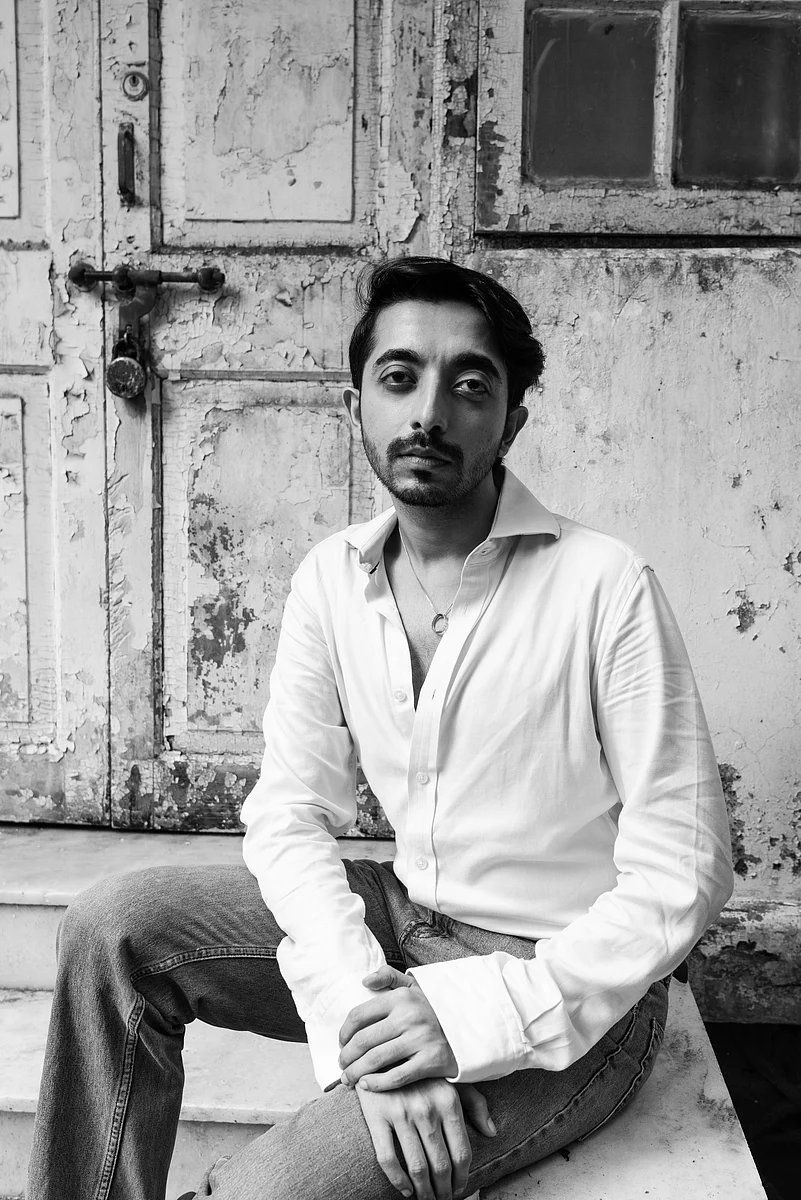
Thakkar wanted mythology to become the connecting route through the exhibition, while still allowing both artists complete independence within their own practice. “Through this exhibition, He Who Permeates, I wanted to say what Hindustan meant in today’s political climate,” he explains. “It was important to distinguish the practices of artists with independence.”
That freedom becomes visible throughout the show. No work tries to dominate another. Instead, the exhibition creates space for multiple interpretations to exist together. Even the mirrors used in some works carry a larger meaning. “The mirrors in some art work are to reflect the self element,” Thakkar says.
In the end, He Who Permeates becomes less about mythology as subject matter and more about reflection itself. It asks viewers to confront what they carry within themselves, memory, fear, belief, contradiction and identity. Somewhere between Sachdev’s immersive spaces, Kalyan’s layered narratives and Thakkar’s curatorial framework, the exhibition opens into something quieter: a study of how people continue searching for meaning in unstable times.