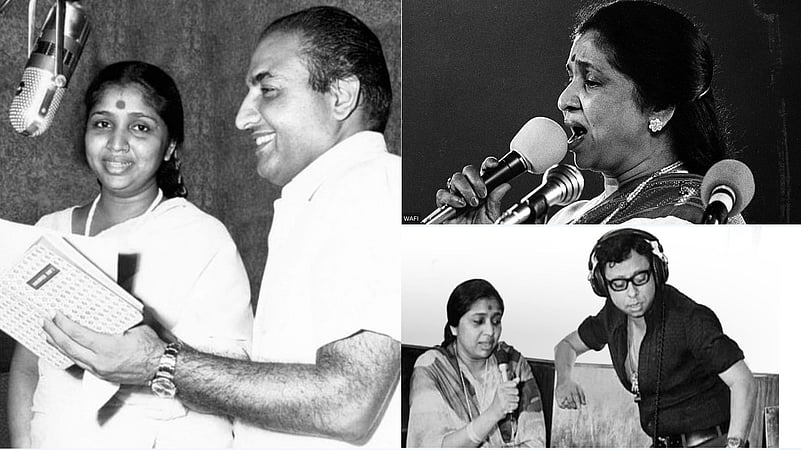
Asha Bhosle shaped Indian cinema and music over eight decades with an unmatched range.
Her songs defined eras, from bold cabaret to deeply felt ghazals.
At 92, she leaves behind a voice that still feels alive.
Legendary singer Asha Bhosle lived several musical lives within one lifetime. Born into a family of musicians, she began singing as a child and went on to become one of the most recorded voices in history, her career stretching across more than 80 years. What makes that journey remarkable is not just its length but its range: she sang for heroines and vamps, for heartbreak and mischief, for classical restraint and unabashed spectacle, often within the same decade.
Her early years were marked by struggle, personal upheaval and an industry that did not always make space for her. Yet she persisted, taking on the songs others turned down and, in doing so, built a voice that refused to be boxed in. Collaborations with composers like O.P. Nayyar and R.D. Burman sharpened that instinct for reinvention, helping her shape some of the most distinctive sounds in Hindi cinema.
On April 12, 2026, Asha Bhosle died at Breach Candy Hospital in Mumbai due to multi-organ failure, with her last rites set to be held at Shivaji Park. What remains is not merely a catalogue of songs but a living archive of moods, eras and identities, a body of work that continues to move between generations with ease.
Here are 9 songs that best capture the scale of her artistry:
1. Aaiye Meherbaan – Howrah Bridge (1958)
This was the moment Asha Bhosle became herself unmistakably. In an industry that often preferred softer, more restrained female voices, she leaned into seduction without apology. The song unfolds like a velvet invitation, playful yet assured, establishing her as the voice of cinematic allure.
It also marked the beginning of her defining collaboration with O.P. Nayyar. Together, they crafted a sound that was rhythm-driven, bold and unmistakably modern. With this song, she stepped out of the shadows and claimed a space no one else could inhabit.
2. Abhi Na Jao Chhod Kar (female part) – Hum Dono (1961)
If Asha could command a room with flirtation, she could just as easily soften it with longing. Her contribution to this duet is delicate yet emotionally grounded, balancing restraint with an undercurrent of yearning.
The song remains a masterclass in tonal control. She does not overwhelm the composition; instead, she inhabits it with quiet emotional intelligence, proving early on that her range extended far beyond the playful persona she was often associated with.
3. Piya Tu Ab To Aaja – Caravan (1971)
Few songs capture the electric 70s in Hindi cinema quite like this one. Breath, rhythm and voice collide to create something almost theatrical. Bhosle turned the act of singing into a performance, using pauses and inflections as expressive tools.
This was not merely a cabaret number. It redefined how desire could be voiced in Indian cinema. Her vocal playfulness, combined with R.D. Burman’s inventive composition, made it an enduring cultural landmark.
4. Dum Maro Dum – Hare Rama Hare Krishna (1971)
With this track, Asha became the sound of rebellion. The song carried the spirit of a generation in flux, its psychedelic undertones echoing global counterculture movements.
Her voice here is detached, almost hypnotic, perfectly matching the disillusionment and defiance on screen. It travelled far beyond India, becoming one of the earliest Hindi film songs to resonate with an international audience. Even today, it feels startlingly contemporary.
5. In Aankhon Ki Masti – Umrao Jaan (1981)
If the 1970s proved her daring, the 1980s revealed her depth. In this ghazal, she strips away all ornamentation and sings with measured grace. The result is haunting.
Singing in a lower register, she brought an introspective quality to the courtesan’s voice, one filled with quiet sorrow and self-awareness. It remains one of the finest examples of how she could transform herself entirely to serve the emotional world of a song.
6. Mera Kuchh Saamaan – Ijaazat (1987)
This song broke form altogether. With no conventional structure, it reads almost like fragmented poetry set to music. Where others might have struggled, Asha found a way to let the words breathe.
Her rendition feels intimate, as though she is thinking aloud rather than performing. It is a reminder that her greatest strength lay not in technique alone but in her instinctive understanding of emotional truth.
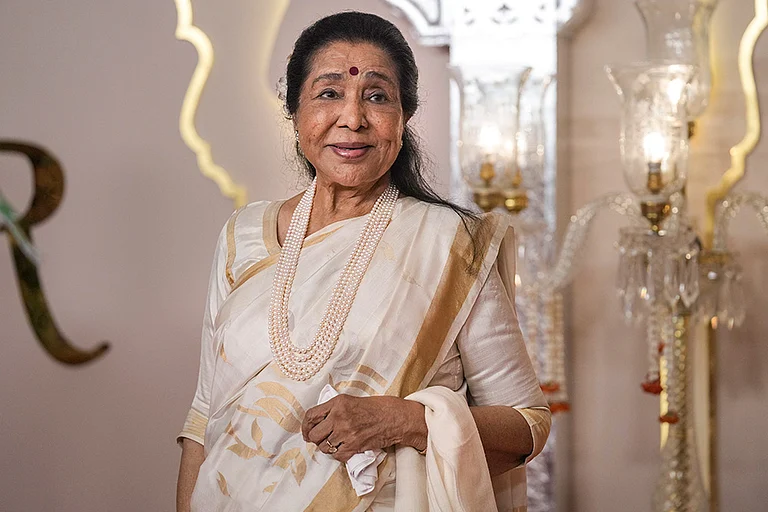
7. Radha Kaise Na Jale – Lagaan (2001)
Decades into her career, she remained startlingly relevant. This song, composed by A.R. Rahman, brought her voice to a new generation. It carries the playfulness of folk tradition while retaining a classical base.
What stands out is her agility. Even in her later years, her voice retained its brightness and expressive clarity, proving that time had not diminished her artistry but refined it.
8. Dayar-e-Dil Ki Raat Mein (1983)
Her collaboration with Ghulam Ali steps into the ghazal space with remarkable ease. The song is restrained, almost conversational, allowing emotion to unfold without excess. Singing alongside a master of the form, she does not try to match or overpower; instead, she listens, responds and blends, creating a delicate balance between two distinct styles. It reveals a quieter confidence, one rooted in craft rather than display.
9. Me Maza Harpun Basale Ga from the album Hi Vaat Dur Jaate (2001)
This song shows another side of her musical curiosity. Singing in Marathi, she leans into regional texture with warmth and familiarity, bringing a sense of lived-in ease to the composition. There is no attempt to revisit past grandeur here. Instead, the song feels personal, almost reflective, as if she is returning to something intimate and close to home, proving once again that her voice could travel across languages and still feel entirely her own.
A late-career collaboration that crossed worlds
Late into her career, Asha Bhosle lent her voice to an unexpected global project, recording The Shadowy Light for Gorillaz’s album The Mountain. The track featured a Hindi hook, Majhi Re Majhi, written by Kausar Munir and was recorded in her Mumbai home with Damon Albarn on the harmonium and producer James Ford capturing her voice in a stripped-back, intimate setting.
Speaking to Rolling Stone India, she said, “This was not one of those everyday kinds of songs. The lyrics held deep meaning, and I felt moved enough to accept this assignment.” She later reflected on the song’s deeper meaning: “In one part of ‘The Shadowy Light’, I sing, ‘Chal mere raahi, gehra hain paani, mujhe jaana hain uss paar.’ I’m telling the boatman to ferry me across the river, which is my life’s journey… The boatman is a metaphor for my music, which has guided me across this river of life. When I get to the other side, my journey will be complete, and I will attain moksha… I shall become one of them.”
Bhosle’s voice refuses to belong to the past. It moves effortlessly between eras, moods and identities, always finding new listeners. What this body of work reveals is not just versatility but fearlessness, a willingness to experiment, to fail, and to begin again.
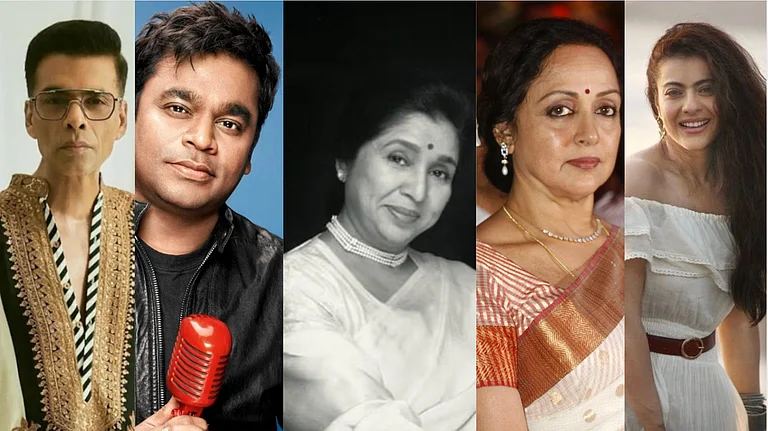
In the end, her songs do what great art always does: they outlive the moment of their creation. They remain, vivid and alive, carrying with them the spirit of a woman who turned survival into song and song into legacy.