US student visas issued to Indian students have fallen sharply amid stricter immigration policies, expanded vetting and changes to visa rules under the Trump administration.
The uncertainty is prompting many students to consider alternatives alongside concerns over rising education costs.
The trend could have long-term implications for both Indian students' study abroad choices and US universities that rely heavily on international enrolments.
For decades, the United States has been the top destination for Indian students seeking higher education, cutting-edge research opportunities and pathways to global careers. But that equation is beginning to shift. Student visa approvals for Indians have fallen sharply, scrutiny of applicants has intensified and the Trump administration has introduced sweeping changes to the rules governing international students.
While the US remains home to the world's leading universities, the combination of stricter immigration policies, rising costs and growing uncertainty is prompting many Indian students to reconsider where—and whether—they pursue the "American Dream."
How sharp is the decline in student visas?
The decline has been significant by almost every measure.
According to US State Department data, F-1 student visas issued to Indian students during the crucial June-July 2025 admission season fell by 69%, dropping from 41,336 during the same period in 2024 to just 12,776. Those months are particularly important because they coincide with visa processing for the Fall semester, when most international students begin their courses.


Parliament was also informed earlier this year that the total number of Indian students enrolled in the United States fell from 378,787 in February 2025 to 352,644 in February 2026—a decline of nearly 7%, based on data from the US Department of Homeland Security's Student and Exchange Visitor Information System (SEVIS).
Why are fewer visas being issued?
Several factors have converged to reduce the number of visas being granted.
One immediate reason was the temporary suspension of new student visa interview appointments in 2025 as the US expanded social media screening and background checks for international applicants. Although interviews later resumed, the additional vetting slowed processing and created large backlogs in countries such as India.
Applicants now face more extensive scrutiny of their digital footprints, financial documentation and study plans. Consular officers are also placing greater emphasis on whether applicants can demonstrate genuine academic intent and strong ties to their home country, both longstanding requirements that are now being enforced more rigorously.
Overall, The Washington Post attributed the decline in number of visas issued by the US to stricter immigration policies, temporary interview pauses, and intensified vetting measures by the Trump administration.
What has changed under the Trump administration?
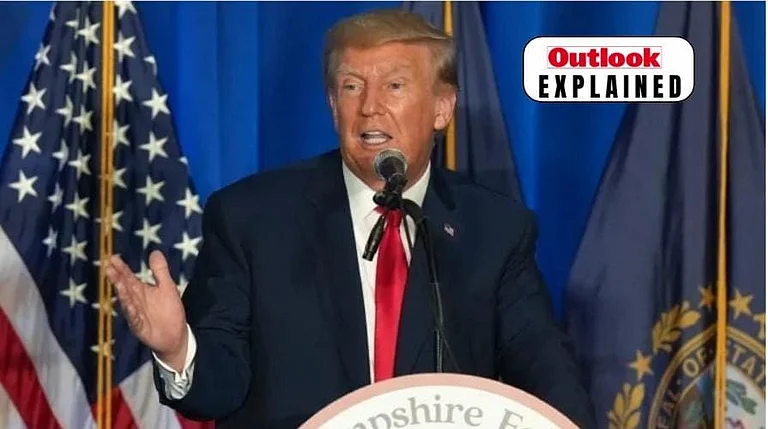
The Trump administration has introduced the most significant overhaul of student visa rules in years.
The biggest structural change is the replacement of the long-standing "duration of status" system with fixed periods of admission. Previously, students could remain in the US as long as they maintained valid student status. Under the new framework, most international students will receive a fixed period of authorised stay—generally capped at four years—and must seek formal approval from US Citizenship and Immigration Services if they need more time to complete their studies.
The administration has also shortened the grace period after graduation, reducing the time students have to transfer institutions, begin another academic programme or change their immigration status. It has shifted greater authority over extensions from universities to federal immigration authorities, and continued to review post-study work pathways such as Optional Practical Training (OPT). Supporters argue these measures strengthen immigration enforcement and national security, while critics, including many universities, say they increase uncertainty for genuine students and make the US less attractive compared with competing destinations.
Will Indian students choose other destinations?
Early signs suggest many already are.
Countries such as Canada, Australia, the United Kingdom, and Germany have increasingly emerged as alternatives for Indian students over the past decade. While some of these countries have also tightened immigration rules recently, many continue to offer relatively clearer post-study work pathways and more predictable visa systems than the US.
According to data by the German Academic Exchange Service (DAAD), Germany reported about a 100% increase in Indian students from 2019 to 2025. Similarly, French President Emmanuel Macron has set a target of 30,000 Indian students by 2030.
Education consultants report that students are becoming more diversified in their choices instead of viewing the US as the automatic first preference. Cost is another major consideration. Tuition fees, living expenses and currency fluctuations have made studying in America substantially more expensive, especially when combined with uncertainty over visa approvals and employment prospects. The German Public education system has hence emerged as a lucrative opportunity due to the low costs involved.
What does this mean for US universities?
International students are not just an academic asset—they are also an economic one.
Indian students are among the largest international student groups in the United States and contribute billions of dollars annually through tuition fees, housing, living expenses and research. Many universities, particularly public institutions and graduate schools, rely heavily on international enrolments to support budgets and research programmes.
University associations have warned that prolonged declines in international enrolment could affect campus diversity, research output and institutional finances. A sustained reduction could also make it harder for American universities to compete globally for highly skilled students who have multiple study destinations to choose from.
In January, referring to the Trump administration’s policies towards international students, the Association of American Universities (AAU) issued a strong warning.
"These actions, combined with hostile rhetoric and unprecedented cuts to federal research funding, have resulted in a decline in interest among international students in pursuing their studies at America's colleges and universities,” it said.
Is this a short-term dip or a long-term reset?
Some of the current decline reflects temporary factors, including visa interview backlogs and stricter screening procedures that could ease over time. If processing capacity improves, visa numbers may recover.
However, the broader policy direction suggests a more structural shift. Fixed-duration visas, tighter immigration oversight and uncertainty around post-study employment indicate that US immigration policy is becoming less predictable for international students than it was a decade ago.
For Indian students, that means decisions are increasingly driven not only by university rankings but also by the likelihood of obtaining a visa, finding work after graduation and securing long-term career opportunities.
The United States remains one of the world's premier destinations for higher education, and hundreds of thousands of Indian students continue to study there successfully. But the latest visa figures suggest that the "American Dream" is no longer being taken for granted. Instead, Indian students are weighing it against a growing number of global alternatives—making their choices more pragmatic than aspirational.