Chief Minister Omar Abdullah has faced criticism from opposition parties for failing to fulfill his promise to provide 200 units of free electricity to residents of Jammu and Kashmir at a time when power cuts have become more frequent
Officials have maintained that metering is an essential component of the power reforms to reduce power losses and provide free electricity
Jammu and Kashmir faces a deficit of over 16 percent in the power supply, while the transmission and distribution losses in the Union Territory also remain high.
Chief Minister Omar Abdullah has received a drubbing from opposition parties for his failure to keep the electoral promise of providing 200 units of free electricity at a time when Jammu and Kashmir is facing frequent power cuts due to the deficit in the supply of electricity.
Due to the deficit, UT is witnessing outages as the authorities have managed to harness only 3540 MW of electricity, which is nearly 23 percent of the estimated hydro power potential of 18,000 MW of the UT. In the state sector, J&K has a generation capacity of 1197 MW only, which reduces significantly during the winters due to a drop in water level.
Managing Director of Kashmir Power Distribution Corporation limited (KPDCL) Mehmood Ahmad Shah, admits that there is a shortfall in the availability of power. He says that the generation from the state sector currently remains 200 to 300 megawatts only for the entire Jammu and Kashmir, as against the demand of 3000 megawatts. “We are also purchasing power to meet the demand for electricity,” he adds. The gap between requirement and availability of power in the UT has remained between 14-16% of the demand.

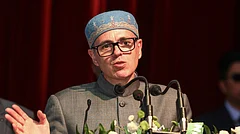


However, opposition parties have criticised the ruling National Conference government for failure to provide 200 units of free electricity, which the party had promised in its 2024 election manifesto. Chief Minister Omar Abdullah recently said that the use of meters was necessary for providing 200 units of free electricity.
People’s Democratic Party spokesperson, Mohit Bhan, says that before the polls, the National Conference had promised in its election manifesto that people would get 200 units of free electricity irrespective of their economic status, but Omar Abdullah has forgotten the promise while in power.
“Omar was himself against the installation of smart meters in Jammu and Kashmir, but the government is saying now that these devices are necessary. But have they benefited Jammu and Kashmir? We don't think so as the power cuts are rampant even in areas which are metered and the payment of flat rates has also been done away with for those who live in the Below the Poverty Line (BPL) category,” he says.
Bhan notes that the previous government of the People’s Democratic Party had initiated discussions with the Central government to seek compensation or the return of power projects which were developed utilising the water resources of Jammu and Kashmir by the Government of India. “Elected government should adopt the policy to seek the return of power projects as well,” he adds.
Bharatiya Janata Party (BJP) leader Manzoor Bhat says that claims made by the government that there are several areas in Kashmir that are getting round-the-clock electricity were a hoax, and only those people who are influential and affluent have benefited in the current government. “The areas that the current government is talking about that they are getting regular power supply are the VIP areas only. Otherwise, the common man in Kashmir has suffered the worst. People have realised now that the situation was better in the BJP government in the past, and the conditions have only deteriorated since Omar assumed office,” he says.
Officials, however, say that metering was necessary not only to reduce the transmission and distribution losses, but also to provide a waiver in the tariff. Jammu and Kashmir also has high power transmission and distribution losses, while till last year, PDD had installed 6.4 lakh smart meters, and there are plans to connect houses with an additional 14.07 lakh meters.
A senior official of the Power Development Department (PDD) says that metering was needed to work out any slabs to provide 200 units of free electricity to the residents of Jammu and Kashmir. “As of now, there are many areas where there are no meters, and people are also resisting the installation of meters. To provide free electricity, we need to measure the power consumption first. How do we do that? We need to have a device for that, and that's why metering is necessary,” he says.
According to officials, the government could extend the benefits of waiver on the 200 units of electricity to low income groups in Jammu and Kashmir through the installation of solar rooftop setups, for which the Central government provides funds and also offers two units of free electricity for each day.
“Our funding from the Central government also depends on our progress on power reforms to curtail the transmission and distribution losses. There is also monitoring which happens at the national level, and we also upload the data regularly on the National Feeder Monitoring set up, and the Central government assesses over progress on power reforms,” says a PDD official.