The Election Commission has given the West Bengal chief secretary 72 hours to report on action against four officials accused of voter roll irregularities.
The poll body has reiterated its directive for FIRs, suspensions and departmental inquiries ahead of the Special Intensive Revision.
The EC has also ordered strict law and order arrangements in compliance with the Supreme Court’s January 19, 2026 directive.
The Election Commission (EC) has asked the West Bengal chief secretary to submit a report within 72 hours on the action taken against four state government officials accused of illegally adding names to electoral rolls in two districts, according to PTI.
The poll body had earlier recommended the suspension of Electoral Registration Officers (EROs) Debottam Dutta Chowdhury and Biplab Sarkar, along with Assistant EROs Tathagat Mondal and Sudipto Das, and sought criminal proceedings against them over alleged irregularities in Purba Medinipur and South 24 Parganas districts, PTI reported.
In a letter to the chief secretary, the EC said, “… you are requested to refer to the Commission’s letter dated 05.08.2025, wherein directions were given for suspension and initiation of suitable disciplinary proceedings against the concerned EROs/AEROs and for lodging of FIRs against the erring officials.” The state’s top bureaucrat was asked to explain by 5 pm on January 24 why the directions had not been implemented, a senior EC official told PTI.



The Commission had initially ordered that FIRs be registered against the officials for allegedly including voters’ names illegally in the rolls. However, former chief secretary Manoj Pant reportedly did not act on the instructions.
“Even after our repeated orders, FIRs were not filed. We have now asked the district magistrates concerned to act,” the EC official said.
The issue escalated after Chief Minister Mamata Banerjee, speaking at a meeting in Jhargram, alleged that state government officials were being intimidated by the Election Commission.
Separately, the state Home Department’s special commissioner had written to the office of the chief electoral officer (CEO), seeking withdrawal of the FIR directive, describing it as a “major punishment for minor mistakes”. The CEO reportedly forwarded the letter to Delhi, but the EC remained firm, stating, “No lapse in implementing electoral law will be overlooked.”
Ahead of the Special Intensive Revision (SIR), the poll body had directed the West Bengal government to suspend the officials, conduct departmental inquiries and file FIRs over the alleged addition of “ghost voters” to the electoral rolls. “Action must be taken to ensure the integrity of the electoral rolls,” the Commission had said at the time.
In compliance with a Supreme Court order dated January 19, 2026, the EC also wrote to the chief secretary and the director general of police (DGP) of West Bengal, directing them to ensure strict maintenance of law and order during the SIR.
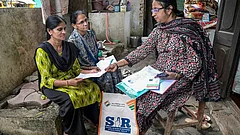
In its communication, the EC said that document collection and hearings linked to the SIR should be held at gram panchayat bhavans, block offices, public places at the taluka level and ward offices in urban areas. The state government has been asked to provide adequate manpower to the chief electoral officer, while district collectors and superintendents of police have been instructed to deploy sufficient staff and forces for the smooth conduct of the exercise.
The Commission further directed the DGP, the Kolkata Police commissioner and district police chiefs to ensure that no law and order situation arises at SIR venues, warning that strict action would follow any non-compliance or disruption.
Meanwhile, Chief Election Commissioner Gyanesh Kumar assured residents of West Bengal that no one would be allowed to take the law into their own hands and that stringent action would be taken against any such attempts.
In another letter issued on Wednesday, the EC wrote to West Bengal Chief Electoral Officer Manoj Agarwal, directing strict compliance with the Supreme Court’s order relating to the SIR. The communication outlined steps for public display of affected voters’ names, submission of documents through authorised representatives and mandatory hearings by EROs and AEROs, and instructed all authorities to ensure full and timely implementation of the apex court’s directions, according to PTI.
(With inputs from PTI)