Congress accuses government of lacking coordination on Russian oil and India-US trade issues.
Jairam Ramesh says ministers are deflecting questions, calling it a “hole in government” approach.
Deal framework includes India’s USD 500 billion US energy buys and removal of 25% US tariffs linked to Russian oil.
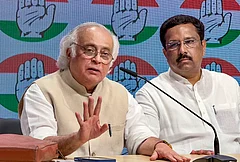
The Congress on Monday criticised the government for apparent inconsistencies in ministerial statements on India's imports of Russian oil and the recently announced framework for an interim trade agreement with the United States, describing it as a "hole in government" approach.
According to PTI, Congress general secretary in-charge of communications Jairam Ramesh said Prime Minister Narendra Modi "talks big of what he calls a 'whole of government' approach". Ramesh pointed to conflicting responses from ministers on the issues.
"On the Russian oil issue and the India-US trade deal - the Commerce Minister says ask the External Affairs Minister, the External Affairs Minister says ask the Commerce Minister, and the Petroleum Minister is preoccupied with other issues," he said, referring to Commerce Minister Piyush Goyal, External Affairs Minister S Jaishankar, and Petroleum Minister Hardeep Puri.
"This is a 'hole in government' approach in the India-US trade deal," Ramesh said on X.
PTI reported that the criticism follows a joint statement issued by India and the US on Saturday outlining the framework for the first phase of a bilateral trade agreement. Under it, India has expressed its intention to purchase USD 500 billion of US energy products, aircraft and aircraft parts, precious metals, technology products, and coking coal over the next five years.


The US will reduce tariffs on Indian goods to 18 per cent. US President Donald Trump also issued an Executive Order removing the punitive 25 per cent tariffs imposed on India for its purchases of Russian oil, according to the statement.
On safeguards against a sudden surge in imports from the US, Goyal has said adequate safeguards are in place in the trade agreement to protect the interests of farmers and the domestic industry from any increase in imports.
The remarks from Ramesh highlight opposition concerns over coordination within the government on these linked foreign policy and trade matters.
(With inputs from PTI)