It was an sos the Customs sleuths were little prepared for. There was an eerie singularity in the virtual deluge of messages pouring into the Customs Economic Intelligence Bureau (eib). The desperate pleas came from Bhagalpur silk traders whose business had been choked by dumped bales of smuggled Chinese silk. Last fortnights red alert from Bihar had followed another warning - from the Indian embassy in Tashkent - about the increased smuggling in fabrics and electronic gadgets (from China and Taiwan) by the cash-starved former Central Asian Soviet republics like Uzbekistan, Kazakhstan, Kyrgyzstan, Tajikistan and Turkmenistan.
Is this the new buzzword in smuggling? An illicit twin trade operating, on the one hand, on near-barter terms with these countries and, on the other, from Singapore and Hong Kong - the global hubs for cheap computer components? A trade which marks the end of the villainy typified by Bollywood potboilers: shifty characters trying to sneak in gold biscuits in specially-crafted sections of their luggage, or diamonds in sleek walking sticks or countrymade boats dumping gold bars on a moonlit beach off Mumbai.
Customs commissioner Siddharth Kak calls it a transition fuelled by internal demands. Free market has taken the focus off gold and the De Beers magic dimmed the sparkle of smuggled diamonds. "So smugglers have taken to new products which come through new routes," says Kak.
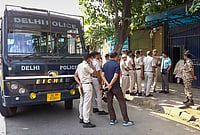
His tension is understandable. In the past 10 months, goods worth more than Rs 500 crore have been confiscated following arrests of youngsters masquerading as tourists from the former Soviet republics. On an average, there has been at least two arrests every month at the Indira Gandhi International Airport. Last month, Customs officials arrested a Uzbek national for carrying 81,000 yards of Chinese silk worth over Rs 150 crore. This was followed by the Delhi Police arrest of four Uzbeks trying to smuggle out large quantities of life-saving drugs which are prohibitively expensive in Central Asia.


"Its been nine years since the breakup of the Soviet Union and a host of Central Asian nations continue to reel under bankruptcy. Today, growing Western interest is increasingly affecting the political landscape, triggering demands to live up to the standards. And when you do not have any industry, smuggling appears to be an alternative that is both easy and lucrative," adds Kak.
His colleague and additional customs commissioner V.K. Singh Kushwah agrees. Kushwah says the recent spurt in smuggling cases from Central Asia stems from a host of reasons: Beijing is looking for new markets for its second-grade silk (the best produce goes to fashion houses in Europe and the US). Then, Taiwan, Hong Kong and Singapore need fresh buyers for the $4-billion unbranded computer software and hardware products. Finally, cash-starved cis nations are ready to do almost anything and everything to get their domestic economy on the rails.
"So, India is the best bet. The domestic silk market is growing at a rapid pace and, almost unknowingly, absorbing the Chinese products. Then theres this IT boom and not everyone wants branded software or hardware. Smugglers from cis see India as the ideal base for their operations since India provides almost anything and everything they need back home," explains Kushwah.
Ironically, strong ties with these countries have only helped those on the wrong side of the law. On an average, over 15,000 people visit India every month from the cis nations on tourist and business visas. But not many travel beyond Delhi and return within a fortnight. Its during this stay in Delhi that deals are struck: with lower-rung computer companies, middlemen from the grey cellphone market, bulk traders from the silk marts of Bihar and Punjab and even pimps seeking supplies for hotels in Delhi and Mumbai. The return is equally hassle-free, ostensibly because its extremely difficult to arrest tourists carrying medicines (thanks to its size) and other products because they do not have price tags and are normally put in the cargo where there is no system of cross-checking each unit of baggage.
"Its a strange situation. We encourage tourism but what we are flooded with is people acting as couriers. Worse, new laws dont permit Customs officials to note everything a tourist brings into India. In any case, these arent expensive cameras or laptops which will catch your attention. For instance, the tourists - to play it safe - bring in 10 bottles of some medicines and return with 40 bottles, whose size and quantity make it extremely difficult for the Customs to move in for a quick check. Again, each one could be carrying 20 leather jackets. How do you know these are new or old?" asks one source in the eib. Customs officials - for a better understanding of the economic situation of the region (minus the oil-rich countries) - are now seeking information from Indian missions on the antecedents of such groups visiting India.
Analysts say vital information must come from Indian missions so that seizures can be made at airports itself. Despite routine arrests, there is no let-up in the courier inflow. Experts feel its because of the sharp fall in global prices of most commodities on which these countries heavily depend. Also, the differing regional and global orientations of these land-locked states add to the crisis. They cite the example of Kyrgyzstan - the smallest and most isolated of the Central Asian countries - where there are serious concerns over the drugs and arms trade. Primarily because of its relatively open political system and the hilly terrain, the Kyrgyz are worried about becoming the Columbia of Central Asia. In Tajikistan, the big question is not only political but also moral because its nominal government admits it does not control most of the country, including large parts of the capital at night.
Many in the know say India must follow the example of China which has virtually shut out the lucrative trade in falcon chicks. Beijing Customs had swooped down on smugglers who were selling falcons for anything between $50,000 and $100,000 to Arabs in the Persian Gulf. A source in the eib feels India needs to act tough. And now.
Kak agrees. For long, New Delhi has viewed Central Asia as part of its "extended neighbourhood" and is nostalgic about the strong ties it had with the region during Soviet rule. Its ties now are minimal, but interest is keen. Some Indian businesses have invested in Central Asia and the cii has opened regional offices there. Yet, tensions over increased smuggling remain high. "The governments chief concern - for the moment - revolves around drugs. But very soon, we will have to take a serious view of this illicit barter," adds Kak.
He should know. Someday New Delhi hopes to replace Beijing as the primary supplier of cheap manufactured goods to Central Asia, but this will depend on stability in the north and easy access to trade routes. If smuggling from Central Asia (read China and Taiwan) continues unabated, it will have serious ramifications for the domestic industry. And India could become a dumping yard for Chinas copycat machinery.