Gunmen carried out a faith-based massacre in Baisaran Valley, targeting men based on religion.
Eyewitnesses recall Shah grappling with an attacker and attempting to snatch a rifle before being killed.
Remembered for his courage and humanity, his family says they are proud of his sacrifice in the face of terror.
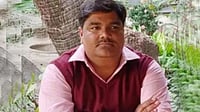
When the gunmen in Baisaran Valley began stopping tourists and asking them who they were, demanding identity cards, ordering men to recite prayers and forcing them to prove their religion, Adil Hussain Shah, the 30-year-old pony operator from Hapatnar village did not run away.
On April 22, Shah was guiding tourists through the rolling meadows near Pahalgam, a lush stretch of green ringed by pine trees and Himalayan peaks.
That morning, after three days of rain, he had left home as he always did, saddling his pony and heading toward the trail.
“It was his livelihood, one shaped by routine and responsibility,” his father, Syed Haidar Shah, said. “Who knew that this was the last time?”
When heavily armed men opened fire, Shah found himself amid panic and terror. According to survivors the attackers separated men from women, questioned them about their faith, demanded Aadhaar cards and driving licences, and shot those identified as Hindus at point-blank range.
As the killing unfolded, Shah did not attempt to save himself, but according to eyewitness accounts, he tried to stop the attackers. Grappling with one of them, and attempting to snatch his rifle as tourists fled. He was shot and killed on the spot. Shah was the only local resident, a Muslim, among the 26 people who died that day. The remaining victims were tourists.




Not a single day passes without remembering his elder brother, Nazakat Shah says. “We talk about him every day. Every morning, after leaving the mosque, we go to the graveyard and pay tribute to him,” he says.
The three brothers grew up together and worked together. Though Adil was only four years older, he had taken on the role of the family’s main breadwinner. “We always turned to him for advice,” Nazakat says. “But we also spent a lot of time together, playing cricket, laughing.”
Their mother’s health has deteriorated since his death. “She keeps talking about him, praying for his soul,” he says. “Still, we are proud of what he did, of how he saved so many lives.” The day before Adil was killed, the brothers played cricket and talked late into the night about their childhood.
“We had dinner together, and laughed a lot,” Nazakat recalls. The next morning, Nazakat left for his sister’s house, and Adil left for work. “Soon I learned what had happened,” he says. “I never saw him again. He comes in my dreams every day.”
His brother, Naushad Hussain, remembers the hours of dread that followed: When Shah’s phone went unanswered and news of the attack spread, he rushed to the Pahalgam hospital. “Many injured and dead people were being brought there, but I was not allowed to go in to look for my brother.”
Outside the hospital, a woman told Naushad that her husband had been killed, but that a local pony operator had tried to protect her, holding the attacker back until the pony driver was shot himself. “She had been talking about my brother,” he says. It was only hours later, after following ambulances carrying bodies to Srinagar, that Naushad found his brother.
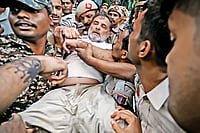
“There, I saw my brother’s body lying on a stretcher, his shirt torn,” he said. “There were three bullet wounds, one on his neck and two on his upper chest.” “I could see bruises on his left arm and wrists. To me, that clearly showed he had fought with the attacker.”
To his father, Haidar Shah, that final act reflected the person Shah had always been. “My son had a very sharp sense of right and wrong,” Haidar said. “He sacrificed his own life while trying to save innocent tourists.” “He showed his humanity, and that allows us to live on.”
Hundreds of people from nearby villages attended Shah’s funeral prayers in Hapatnar. Jammu and Kashmir Chief Minister Omar Abdullah stood among them, offering condolences to a family that had lost its only son.
The Pahalgam attack, one of the deadliest in Jammu and Kashmir since 2019, triggered a nationwide outrage also because the killings followed a brutal, faith-based screening of victims. It also triggered a sweeping security response, and a geopolitical fallout. But for Shah’s family, the story is not about geopolitics or policy. “We are not alone in our grief,” his father said. “There are 25 other families who lost loved ones that day. But I am proud of what my son’s sacrifice, but I remember him every day.”
This year, the Jammu and Kashmir government posthumously honoured Adil Hussain Shah for bravery, awarding his family a medal and a cash prize of ₹1 lakh on Republic Day.