The work under Prashant Kishor was defined by relentless, granular preparation.
Success was measured by visible metrics like crowd turnout, requiring team members to engage in door-to-door mobilization and manage logistics down to the block and panchayat level, making politics a "lived" experience rather than an abstract theory.
Kishor displayed remarkable composure, a deep memory for local political details, and an immense physical work ethic, often covering multiple districts in a single day
Working with Prashant Kishor
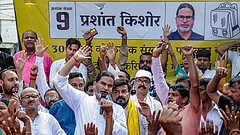
I was in a crowd of more than a hundred professionals. We were part of Team Prashant Kishor, waiting for him to arrive. It was the first time I was going to see him so closely in the Patna office.
As team members, a day before every such interaction, preparations would begin. We revised caste data, block names, local leaders, booth dynamics—every micro-detail of the area where we were deployed.
After waiting for hours, he finally arrived. There was something different about his presence—an aura difficult to explain. I remember feeling mesmerised.
The meeting, however, was not about grand strategy. He asked whether we were comfortable in our work. Any issues with accommodation or travel? It was a reminder that political machinery ultimately runs on human endurance.
Despite warnings not to ask “silly questions,” one boy said, “The hotel is serving puri and oily sabji.” Calmly, Kishor replied, “You get enough salary to buy fruits. Take it.”

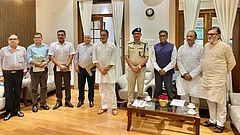

The room relaxed.
What struck me most about Kishor was his composure. He carried in his memory the constituency-level politics of almost the whole of Bihar. He could recall people he had met during his yatra even two years ago.
After that, I met him several times. Every time, the ritual was the same—prepare block-level details thoroughly. Being from Bihar, I already knew the realities—of education, of jobs, of migration... But working in that ecosystem, under that intensity, made those realities sharper. Politics was no longer abstract theory; it was granular, lived, and relentless.
During the Tarari by-election, I was deployed in the constituency where a social worker was contesting against a well-known bahubali who was facing multiple charges—including murder and kidnapping.
In every panchayat, the structure was fixed: one professional, one local support person, and two political leaders. When a visit by Kishor was scheduled, the pressure multiplied instantly.
The first and most visible metric of success was the crowd size at the gathering. This programme was at the panchayat level, and the target was at least 1,000 people—without transportation support.
We made announcements on loudspeakers the day before. We walked from house to house, requesting people to attend. We successfully managed that visit.
The second visit, a more challenging one, was a minority outreach in my panchayat, scheduled on the evening of Chhath Puja at the Saanjhiya Ghat. The complication was obvious—people were heading towards the ghat and minority families were also part of the festival environment.
One local leader agreed to host the gathering. The target was more than 200 minority attendees.
Kishor arrived slightly late. As he began speaking, it was time for namaz. Several Muslim attendees started walking toward the nearby mosque. Kishor somehow concluded his speech and a local leader persuaded him to stay on for snacks. Usually, he doesn’t linger after such programmes.
I relaxed. If he was giving time, it meant my efforts had not been wasted.
After all that pressure and preparation, we lost the election. On the last day, Kishor was scheduled to visit the camp. We were anxious. No one knew how he would react.
When he came, he interacted calmly. He simply said, “Kuch din chhutti ke baad agle kaam pe lagte hain. Iske baad ladai lambi hai.” (After a few days’ rest, we get back to work. The fight ahead is long.)
In the 2025 Assembly elections, I was deployed in Madhepura district. By then, I had seen his rhythm more closely. He would cover three districts in one stretch, address meetings in three different Vidhan Sabhas, and sometimes return to Patna the same night. Even after that, late-night meetings with leaders would continue.
In my constituency, his speech was scheduled. We worked the entire night preparing the venue. Then came the rain and people scattered to save themselves from the deluge.
When he arrived, somehow, the people reorganised themselves. When he began speaking, the rain returned—heavier. But he still spoke for a long time—water dripping from the stage. Despite the chaos, it felt like one of the most successful visits. Because success that day was about showing up—in the rain, in defeat, in exhaustion—and continuing the fight.
That is when I understood something deeper about working with Kishor: politics is not built only in victories. It is built in persistence.
I have seen Kishor travel across districts in a single day, address multiple constituencies, return late at night, and still sit with leaders to analyse booth data. I have seen him lose—and begin planning the next battle the same evening. Perhaps that is why, I still carry a quiet belief.
Bihar needs structural change and the courage to confront its realities—education, unemployment, fractured leadership. I haven’t seen many who combine data, ground instinct, endurance, and strategic patience the way Kishor does.
The fight, as he once said, is long. And somewhere in that long fight, I still believe Bihar may find its turning point.

MORE FROM THIS ISSUE




Gaurow Gupta is a policy consultant by profession and a writer by passion. The author of the books Der Raat Tak and Udaas Shehar, he is currently serving with the Dept of Information & Public Relations, Government of Punjab.