The U.S. has prepared a “short and powerful” military strike plan against Iran as peace talks collapse, though President Trump still prioritizes a naval blockade.
Iran rejected U.S. demands to address its nuclear program first, warning of “unprecedented action” as its economy crumbles under record inflation and a tanking currency.
Global oil prices have soared past $107 per barrel with the Strait of Hormuz blocked, raising pressure on Trump as his approval ratings fall.
The United States Central Command has drawn up plans for a “short and powerful” wave of military strikes against Iran, as hopes for a diplomatic breakthrough fade and the two-month-old conflict threatens to reignite .
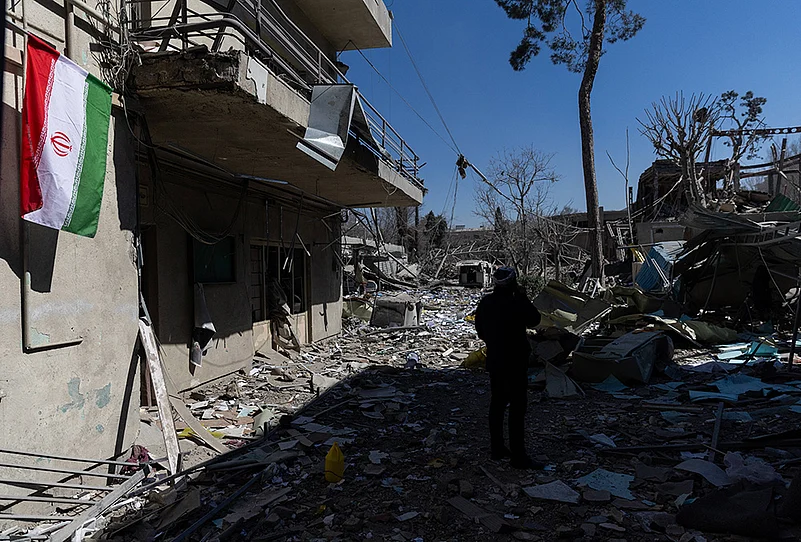
According to sources familiar with the matter who spoke to Axios, the proposed strikes would target Iranian infrastructure. The plan, formulated by CENTCOM, aims to break the current negotiating deadlock and force Tehran to return to the table with greater flexibility.
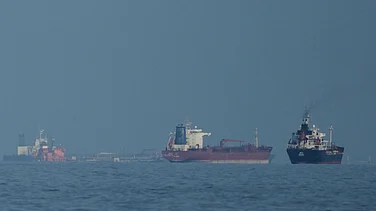
Despite the military option being ready on his desk, President Donald Trump has so far refrained from authorising kinetic action. Instead, he continues to prioritise a punishing naval blockade of Iranian ports and the strategic Strait of Hormuz — a choke-point for approximately 20 per cent of the world’s oil supply.
“The blockade is somewhat more effective than the bombing,” Trump told Axios. “They are choking like a stuffed pig. And it is going to be worse for them. They can’t have a nuclear weapon."


The shift toward military considerations follows a complete breakdown in mediated peace talks. Iranian Foreign Minister Abbas Araqchi left Pakistan empty-handed over the weekend after presenting a three-stage proposal to end the war. President Trump responded by canceling a planned trip to Islamabad by his envoys, Steve Witkoff and Jared Kushner.
Tehran’s proposal would have prioritised reopening the Strait of Hormuz and lifting the US blockade before addressing the nuclear issue. Trump rejected that sequencing outright, insisting that any agreement must begin with guarantees over Iran’s nuclear ambitions.
“They want to settle. I don’t want to [lift the blockade], because I don’t want them to have a nuclear weapon,” Trump said.
On Wednesday, Trump took to Truth Social with a stark warning. Featuring a mock-up image of himself in dark glasses wielding a machine gun with the caption “No more Mr. Nice Guy,” he wrote that Iran “couldn’t get its act together” and “doesn’t know how to sign a nonnuclear deal. They’d better get smart soon!”
Tehran has responded defiantly to what it terms “imposed negotiations under threats.” President Masoud Pezeshkian told Pakistani Prime Minister Shehbaz Sharif by phone that Iran would not enter talks while facing a blockade.
An Iranian security source warned Axios that the US naval blockade “will soon be met with practical and unprecedented action,” adding that Tehran’s patience “has limits”.
The internal situation in Iran is growing increasingly dire. The national currency fell to a record low of 1,810,000 rials to the US dollar on Wednesday, dropping nearly 15 per cent in just two days. Annual inflation has hit 65.8 per cent according to the country’s central bank.
Iran currently possesses approximately 440 kilograms of uranium enriched to 60 per cent — material that could be further refined for several nuclear weapons if diplomacy ultimately fails.
The standoff has already sent shockwaves through global energy markets. Brent crude climbed to a one-month high above $107 per barrel as the Strait of Hormuz remains virtually impassable. The International Energy Agency has described the current disruption as the biggest supply shock in history.
US Secretary of State Marco Rubio acknowledged the deadlock on Monday, telling Fox News that while Iran’s latest proposal was “better than what we thought they were going to submit,” no progress had been made on the core US demand regarding nuclear weapons.
“That fundamental issue still has to be confronted. That still remains the core issue here,” Rubio said. “We can’t let them get away with it.”
According to The Wall Street Journal, Trump has instructed aides to prepare for an extended blockade, potentially lasting months, as his primary lever of pressure. Officials said the president views resuming bombing or walking away from the conflict as riskier options.
The war has already cost the US military an estimated $25 billion, and domestic pressure is mounting on Trump to end the conflict. His approval rating has fallen to 34 per cent, the lowest of his current term, according to a Reuters/Ipsos poll, as Americans struggle with surging gasoline prices.
Israeli Prime Minister Benjamin Netanyahu has meanwhile ordered troops to attack Hezbollah targets in Lebanon, further testing a fragile three-week ceasefire on a second front.
As the world watches, the US Navy continues to intercept and redirect Iranian vessels in the Arabian Sea. CENTCOM reported that 38 ships have been turned back since the blockade began.
For now, the “short and powerful” strike option remains on the shelf. But diplomatic sources in the region acknowledge that the window for a peaceful resolution appears to be closing.