Trump says he will ask the Supreme Court to rehear its 6-3 decision striking down his executive order to restrict automatic birthright citizenship for some children born in the US.
Experts say a rehearing is unlikely as the Supreme Court rarely revisits decided cases.
Any attempt to restrict birthright citizenship through legislation would likely require a constitutional amendment.
US President Donald Trump said on Wednesday he would ask the Supreme Court to rehear its recent ruling striking down his executive order to end automatic birthright citizenship for some children born in the United States, calling the decision "wrong" and renewing his push to restrict a constitutional guarantee that has existed for more than 150 years.
"AMERICAN CITIZENSHIP IS NOT FOR SALE! In fact, that is a crime, and therefore, the Supreme Court’s ruling is wrong," Trump wrote on his social media platform, Truth Social. "I will be asking for a Rehearing by the United States Supreme Court, IMMEDIATELY."
The court's 6-3 ruling last month dealt a major blow to Trump's efforts to reshape US immigration policy, rejecting his executive order that sought to deny automatic citizenship to children born in the United States to parents who are in the country illegally or on temporary legal visas.
Trump signed the order on his first day back in office on Jan. 20, 2025. It stated that, after a 30-day implementation period, babies born in the United States would no longer automatically receive citizenship documents if their parents had entered the country illegally or were undocumented immigrants.


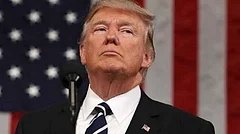

In a landmark 6-3 decision, the Supreme Court ruled that people born in the United States are citizens regardless of their parents' immigration status and rejected Trump's executive order seeking to limit the constitutional guarantee.
Writing for the majority, Chief Justice John Roberts said Trump's directive violated the Citizenship Clause of the 14th Amendment, which grants citizenship to those born in the United States who are "subject to the jurisdiction thereof."
The majority opinion further held that "Children born in the United States to parents unlawfully or temporarily present are ‘subject to the jurisdiction’ of the United States and are citizens at birth under the Fourteenth Amendment’s Citizenship Clause."
Trump also urged Republicans in Congress to pursue legislation restricting birthright citizenship, although such an effort faces significant legal and political hurdles. Public opinion polls have consistently shown broad support for birthright citizenship, while the court's majority opinion suggested that changing the policy would likely require a constitutional amendment.
The president's chances of securing a rehearing are considered slim. The Supreme Court rarely grants such requests and has not agreed to rehear a fully argued case after issuing a decision in decades, Al Jazeera reported.
The ruling marked one of the few immigration-related setbacks for Trump since returning to office. In recent months, the court has largely sided with his administration, allowing it to end Temporary Protected Status for some migrants from crisis-hit countries and permitting a controversial policy preventing asylum seekers from physically reaching US territory, where they would otherwise have the legal right to seek protection.
The case centred on the 14th Amendment to the US Constitution, adopted in 1868 after the American Civil War to guarantee citizenship to formerly enslaved people.
Section 1 of the amendment states: "All persons born or naturalized in the United States, and subject to the jurisdiction thereof, are citizens of the United States and of the State wherein they reside."
It further states that no state shall make or enforce any law that abridges the privileges or immunities of US citizens, deprives any person of life, liberty or property without due process of law, or denies any person within its jurisdiction the equal protection of the laws.
Although originally intended to guarantee citizenship to formerly enslaved people, the amendment has long been interpreted to apply broadly to anyone born on US soil, regardless of their parents' immigration status.
Reaffirming that principle, Roberts wrote: "Citizenship, then and now, was the right to have rights - to freely participate in our political community."
He added that "The Framers of the Fourteenth Amendment extended that promise to 'every free-born person in this land'," concluding: "We keep that promise today."