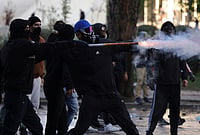
For a long time, the US has viewed Venezuela, Cuba and Nicaragua as a “triangle of terror
The Monroe Doctrine of 1823 declared North America and South America off-limits to European colonising countries
United States involvement in regime change in Latin America is suspected in Bolivia, Brazil, Chile, Cuba, Dominican Republic, Ecuador, Guatemala, Haiti, Mexico, Nicaragua, Panama and Venezuela
Venezuelan President Nicolas Maduro and his wife were captured by US forces from Fuerte Tiuna in Caracas on January 3, 2026, and were transported to the Metropolitan Detention Center in Brooklyn, New York.
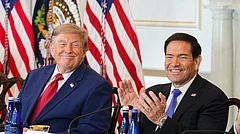
Maduro faces a four-count indictment on the charge of leading a 25-year narco-terrorism conspiracy. Meanwhile, US President Donald Trump has implicitly warned Colombian President Gustavo Petro when he told reporters on Sunday: “Colombia is very sick too, run by a sick man who likes making cocaine and selling it to the United States. And he’s not going to be doing it very long. Let me tell you”.
When asked if the U.S. has similar plans for Cuba, President Trump said that Cuba “literally is ready to fall”.
It should be noted that for a long time, the US has viewed Venezuela, Cuba and Nicaragua as a “triangle of terror” or the “three stooges of socialism”. Last year, the United States designated Colombia's largest criminal group — the Gaitanist Army of Colombia (EGC), as a foreign terrorist organisation. But it now seems President Trump has included even the Colombian leader in this grouping.



For nearly two centuries, the US has dominated Latin America, what has been unfortunately been called over time as “the American backyard”. In fact, the US has had a long history of intervening in Latin American states, with methods that have ranged from taking direct military action, alleged CIA-backed coups, imposition of economic sanctions as well as extending open support to brutal dictatorships like that of Fulgencio Batista of Cuba and Augusto Pinochet in Chile.
The roots of the US’ imperialist behaviour against Latin American countries begins soon after the time of its own independence from British rule in 1776. In the beginning, the US consisted of 13 states (erstwhile British colonies), and the process of formal expansion apparently ended only in 1959 when the country admitted Hawaii as its 50th state. Most of the states incorporated into the US were territories previously held by a nearly 300-year-old collapsing Spanish empire (through Adams Onis Treaty in 1819) or from states like Mexico that had declared independence from Spain. In fact, the Treaty of Guadalupe Hidalgo after the Mexican-American War (1846-1848) ceded nearly half of the Mexican territory to the victorious United States. Thus, the states of Florida, California, Nevada, Utah, Arizona, New Mexico, Texas, Colorado, Wyoming and Louisiana, were once part of the Spanish empire.
It is in this context that U.S. President James Monroe issued the Monroe Doctrine in 1823, which declared North America and South America off-limits to European colonising countries. This policy asserted US hegemony over the Americas and since then a policy of active intervention in Latin and South America gradually began.
In fact, The Roosevelt Corollary of 1904 amended the Monroe Doctrine to grant the US the power to militarily intervene in Latin American countries to correct “chronic wrongdoing” or instability.
These US policies led to its multiple military incursions into Central America and the Caribbean in early 20th century to promote its “commercial interests”. By making the Caribbean an “American lake”, the US held its sway over the banana industry of Panama and Guatemala (through the Banana Wars from 1898 to 1934), the coffee industry of Haiti and El Salvador and the sugar industry of the Dominican Republic. Thereafter, American firms made inroads into Colombia, Argentina, Brazil, Peru, Colombia, and Venezuela.

In the wake of US’ economic policies, influence of communist parties, grew in the working class of Latin and South American states in the mid-20th century. To stop the growing influence of Soviet Union, the US increased its economic influence, military intervention and promoted coup d’etats in the region.
For instance, the Jacobo Arbenz coup is widely regarded as a 1954 CIA-orchestrated coup of the democratically elected President of Guatemala — whose ambitious agrarian reform, Decree 900, aimed to redistribute large, unused estates (including those of the US-owned United Fruit Company) to landless peasants. Similarly, the US openly expressed its intention to destabilise socialist Salvador Allende's democratically elected government in Chile in the early 1970s, which led to his coup and execution in 1973. The US then supported the rule of Augusto Pinochet, whose brutal 17-year dictatorship was marked by severe human rights abuses. The CIA’s hand is widely suspected in the coups of Joau Golarte (Brazilian president toppled in 1964), Juan Bosche (the 1963 Dominican coup d'état), and several others. In fact, the Marudo-like US imprisonment reminds one of the American capture of General Manuel Noriega, the de facto ruler of Panama, in December 1989.
In fact, the history of United States involvement in regime change in Latin America extends to a host of countries, including Bolivia, Brazil, Chile. Cuba, Dominican Republic, Ecuador, Guatemala, Haiti, Mexico, Nicaragua, Panama and Venezuela.
Dr Adil Rasheed is a well-known research analyst and political commentator
Views expressed are personal