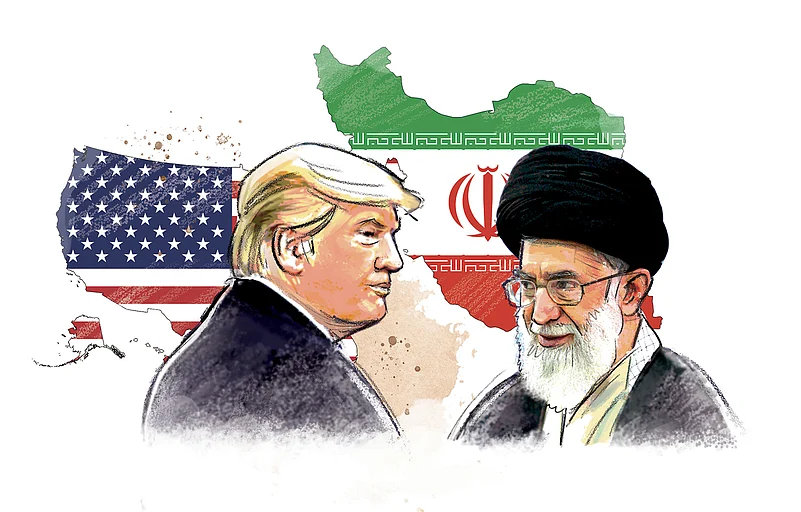
Vance said Iran showed flexibility in talks but failed to meet US demands on nuclear enrichment.
The deal stalled as Iranian negotiators lacked authority and must seek approval from Tehran.
The US insists Iran must abandon nuclear ambitions, with further talks dependent on Tehran’s next move.
Vance said it was for the first time that the governments of the US and Iran had met at such a high level. "So that's, I think, a positive—and again, we did make some progress in the negotiation," he said.
Vance said the rising energy prices were "painful" but will not be around forever.
"We know the American people are hurting, that's why we're negotiating so aggressively to try to get the energy prices to come down. We're going to keep on working at it," he said. Iran has made progress toward ending the conflict during the peace negotiations in Islamabad, according to US Vice President J. D. Vance, and it is now up to Tehran to forward the talks.
During the 21-hour marathon peace talks in Islamabad over the weekend, the US and Iran were unable to come to a consensus because Washington insisted that Tehran would not cede its ability to enrich nuclear material.
"I wouldn't just say that things went wrong. I also think things went right. We made a lot of progress," Vance told Fox News.
"They moved in our direction, which is why I think we would say that we had some good signs, but they didn't move far enough," said the US vice president, who led the delegation comprising Special Envoy Steve Witkoff and Jared Kushner, for the talks with the Iranian delegation.




Foreign Minister Abbas Araghchi and Speaker of the Iranian Parliament, Mohammad Bagher Ghalibaf, were among the delegates.
If the United States' "red lines" over Iran's nuclear aspirations are crossed, Vance emphasised, "then this can be a very, very good deal for both countries." "Whether we have further conversations, whether we ultimately get to a deal, I really think the ball is in the Iranian court, because we put a lot on the table," Vance stated.
"What we figured out is that they were unable, I think — the team that was there, was unable to cut a deal," he explained.
"They had to go back to Tehran, either from the supreme leader or somebody else, and actually get approval to the terms that we had set." Vance asserted that he agreed 100 per cent with US President Donald Trump on Iran not having nuclear weapons.
"I 100 per cent agree with @POTUS on the fact that Iran can't have a nuclear weapon... If they're willing to engage in economic terrorism on the entire world, what would it mean — what leverage would they have — if they had a nuclear bomb in Tehran," he asked.
Vance said it was for the first time that the governments of the US and Iran had met at such a high level. "So that's, I think, a positive—and again, we did make some progress in the negotiation," he said.
Vance said the rising energy prices were "painful" but will not be around forever.
"We know the American people are hurting, that's why we're negotiating so aggressively to try to get the energy prices to come down. We're going to keep on working at it," he said.