



US-Iran provisional agreement opens 60-day window for nuclear negotiations
Enriched uranium, sanctions relief and Hormuz access remain unresolved issues
Political opposition and trust deficits could still derail the peace deal
The United States and Iran announced a provisional agreement late on Sunday to halt their fighting and reopen the Strait of Hormuz — but analysts and officials on both sides were already flagging the formidable obstacles that lie ahead, even as the ink on the memorandum of understanding has yet to dry.
The deal, announced on June 14 — President Donald Trump's 80th birthday — will be formally signed on June 19. That five-day gap has itself raised concerns that details in the text remain unresolved and that the signing could yet be derailed.
The agreement opens a 60-day window to negotiate the thorniest outstanding issues, principally Iran's nuclear programme — a subject that confounded US policymakers for decades and led to the collapse of the 2015 Obama-era deal after Trump withdrew from it in 2018.
What happens to Iran's stockpile of highly enriched uranium, how much sanctions relief Tehran receives and what restrictions are placed on further enrichment remain unresolved. Iran's ballistic missile programme and its support for proxy groups including Hezbollah and Hamas are not even confirmed to be on the agenda for the subsequent talks.


Trust Deficit, Political Obstacles
Iranian officials note that the US bombed the country twice during the negotiation period itself, killing much of its senior leadership including Supreme Leader Ayatollah Ali Khamenei. Iranian Deputy Foreign Minister Kazem Gharibabadi said Tehran would "remain prepared for any conspiracy by its enemies" even if the 60-day talks produced a final agreement, Bloomberg reported.
On the US side, hawkish advisers within the Trump administration argue Iran will look for any opportunity to undermine the deal, and Congress presents an additional structural hurdle. Under the 2015 Iran Nuclear Agreement Review Act, any extensive sanctions relief requires Senate approval — a provision put in place specifically to constrain executive latitude on Iran deals, and one that is unlikely to be easily navigated.
Republican Senator Lindsey Graham, a Trump ally and long-standing Iran critic, said he was "somewhat concerned that Iran's view of the agreement seems different than what the American negotiating team is claiming."
Israeli Prime Minister Benjamin Netanyahu adds another layer of uncertainty. Trump is said to have grown frustrated with Netanyahu in recent days, demanding that Israel halt its attacks on Lebanon, which had repeatedly threatened to derail the negotiations.
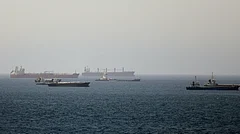
Even the mechanics of reopening the strait — the centrepiece of the agreement — remain to be finalised, according to Nate Swanson, a senior fellow at the Atlantic Council who worked on Iran issues at the State Department until 2025. "Yes, we will see an increase in traffic, but the status quo is still fragile," he told the news agency.















