US Vice President JD Vance is in Islamabad, Pakistan, for discussions with Iran which will take place later today. He arrived around 10.30 am local time at Nur Khan Air Force Base, where he was greeted by Pakistan’s Foreign Minister Ishaq Dar and Field Marshal Asim Munir.
A young boy offered him flowers after which he made his way to the red carpet that was guarded by an honour guard. Steve Witkoff, President Trump’s special envoy, and Jared Kushner, who came on their own, were there to meet him immediately afterwards.
Vance and the US negotiating team departed the United States on Friday. Before leaving, the vice president said he was “looking forward to negotiations”, but warned that if Iran attempted to “play us”, Washington would not respond favourably.
The US delegation is in Islamabad for what Pakistani Prime Minister Shehbaz Sharif has described as a “make or break moment”. Both the American and Iranian teams are expected to meet Sharif before formal negotiations begin later in the day.
Pakistani officials say extraordinary security measures have been put in place, with support from several friendly nations including China, Qatar, Saudi Arabia, Egypt and Türkiye, all of whom have backed Pakistan’s efforts to bring the two sides together. Across Islamabad, banners have been displayed reading “Islamabad Talks April 2026”, alongside the flags of Pakistan, the United States and Iran.



Iran’s delegation arrived in the Pakistani capital late last night. It includes Foreign Minister Abbas Araghchi and Parliament Speaker Mohammad Bagher Ghalibaf, who is leading the team. According to Iranian reports, the delegation met Pakistan’s army chief and foreign minister shortly after landing.
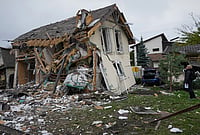
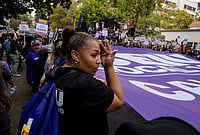
Ghalibaf said Iran had come to Islamabad in good faith, although he stressed that Tehran still does not trust the United States, citing Washington’s failure to honour previous commitments. He also shared images from the delegation’s aircraft showing burned school bags and photographs of schoolgirls killed in an air strike on the first day of the war.
Accoridng to Al Jazeera, key members of the Iranian delegation attending the talks in Pakistan include Mohammad Bagher Ghalibaf, Speaker of Iran’s Parliament and head of the delegation, Foreign Minister Abbas Araghchi, Ambassador to Pakistan Reza Amiri Moghadam, and Ali Akbar Ahmadian, a member of the Supreme National Security Council. Also present are Ali Bagheri Kani, deputy to the Supreme National Security Council, Esmail Ahmadi Moghadam, president of the National Defence University, and Mohammad Jafari, assistant to the secretary of the Supreme National Security Council.
Economic representation includes Central Bank Governor Naser Hemati. The diplomatic team is further supported by deputy foreign ministers Kazim Gharibabadi, Majid Takht-e Ravanchi, Valiollah Nouri, and Esmaeil Baghaei, who also serves as ministry spokesperson. Parliamentary members Abolfazl Amouei and Mohammad Nabavian are also part of the delegation.
When American and Iranian officials meet later today, it will mark the highest-level contact between the two countries since the 1979 Islamic Revolution. It will also be their first official face-to-face negotiations since the 2015 nuclear agreement on Iran’s atomic programme. President Trump withdrew from that deal in 2018 during his first term, and later that year Iran’s Supreme Leader Ayatollah Ali Khamenei banned further direct talks. Khamenei was killed in a US-Israeli strike at the start of the conflict six weeks ago.
There is cautious optimism that some progress could be made. Previous talks in Muscat, Oman, ended without a breakthrough, but Vance’s presence has raised expectations that negotiations may carry greater political weight this time.
The stakes remain extremely high for both sides. The war has become deeply unpopular in the United States, with President Trump seeking a path out of the crisis. Iran, meanwhile, has suffered extensive air strikes that have severely damaged infrastructure and left its economy in turmoil. Despite the diplomatic push, the ceasefire announced on Tuesday remains fragile.
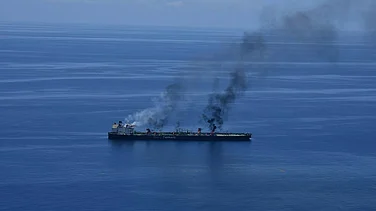
For a third consecutive day, attention has focused on Israel’s continuing military operations in Lebanon. Tehran says the assaults breach its understanding with Washington, under which US and Israeli attacks on Iran would cease in return for safe passage of shipping through the Strait of Hormuz.
Meanwhile, Hezbollah said it had launched missiles and drones at Israeli troops near the Kiryat Shmona settlement in northern Israel. The group also claimed to have fired rockets at military barracks in Ya’ara.
Pakistan’s Foreign Minister Ishaq Dar said he hoped both sides would engage constructively and reaffirmed Islamabad’s commitment to helping secure a lasting and durable resolution to the conflict. With both delegations now in the city, the first hurdle has been overcome — but far greater challenges remain.