This targeted killing is an attempt to dismantle Iran’s command-and-control structure through precision strikes.
But the Iranian state retains resilience, with core institutions like IRGC and interim leadership mechanisms that is functioning effectively
As a key architect of Iran’s strategic engagement, his death may alter the balance between pragmatists and hardliners within the Iranian political system.
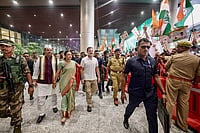
The ongoing US–Israel-Iran conflict has entered a qualitatively new phase marked by a systematic decapitation targeting the upper echelons of the Iranian political and security establishment. The reported killing of Ali Larijani, one of the most influential figures in Iran’s contemporary power structure, represents a critical disruption.
The veteran leader was a central figure in Iran, playing a key role in shaping its security strategy and serving as a trusted adviser to Ayatollah Ali Khamenei until the Supreme Leader was killed in an airstrike last month.
This development intensifies the strategic uncertainty surrounding Iran’s internal stability, its decision-making architecture, and its broader regional posture. As head of the Supreme National Security Council and a long-time insider with experience spanning legislative, diplomatic, and security domains, he functioned as a bridge between Iran’s clerical authority and its security establishment.
His role became even more central following Ayatollah Khamenei’s death. The attack has intensified an already volatile conflict. Iran responded with missile and drone strikes targeting Israel and Gulf Arab neighbours, while the United States conducted heavy airstrikes on Iranian missile sites near the Strait of Hormuz.



This targeted killing reflects a deliberate attempt to dismantle Iran’s command-and-control structure through precision strikes. This approach is aimed to paralyse the Iranian system by removing nodes of authority and disrupting communication channels. The earlier elimination of Ayatollah Khamenei and several senior military officials had already created a leadership vacuum.
Larijani’s death compounds this disruption by removing a central coordinating figure who could have potentially stabilised the transition.
However, the strategic effectiveness of such a decapitation strategy remains contested. While the loss of senior leadership undoubtedly weakens institutional cohesion in the short term, it does not necessarily translate into regime collapse. The Iranian state retains significant resilience, with core institutions like Islamic Revolutionary Guard Corps (IRGC) and interim leadership mechanisms that is functioning effectively. This resilience is rooted in the ideological and organisational depth of Iran. Historically also, Iran has demonstrated the ability to absorb shocks and reconstitute authority structures under pressure.
Moreover, the assassination of Larijani has significant implications for Iran’s external posture. As a key architect of Iran’s strategic engagement, his death may alter the balance between pragmatists and hardliners within the Iranian political system. This attack has increased the risk of escalation in the greater West Asian region.
The statements have been made by the Iranian military leadership warning of retaliation, with missile and drone strikes already being launched against Israeli and regional targets. Such responses are consistent with Iranian strategy demonstrating both capability and resolve. However, the effectiveness of this approach in the current context is uncertain.
Will the conflict widen?
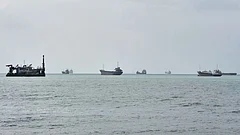
The broader regional implications of these developments are equally significant. The escalation of hostilities, combined with the targeting of top leadership, raises the risk of a wider conflict involving multiple actors across West Asia. The strategic significance of the Strait of Hormuz has brought global economic concerns to the forefront, particularly as the US-Israel strikes have targeted Iranian missile infrastructure. As one of the world’s most critical maritime chokepoints, Hormuz plays a central role in the flow of global energy supplies. Any disruption to its stability would have significant and far-reaching consequences for international trade and global energy markets.
Furthermore, the current crisis highlights the evolving nature of modern warfare, where technological superiority, intelligence capabilities, and targeted operations are increasingly shaping the outcomes. The capabilities of external actors to accurately identify and conduct targeted operations against senior leadership within Tehran, highlights a notable exposure within the Iranian society. This development not only calls into question the regime’s assertions of effective internal control but also raises broader concerns regarding the long-term viability and resilience of Iranian security framework.
However, it would still be premature to say that these developments will lead to the collapse of Iran. Historical experiences suggest that whenever regimes face external threats, they often consolidate internally, eventually reinforcing state cohesion. In case of Iran, the narrative of resistance against external aggression remains a powerful mobilising force, capable of balancing internal divisions and legitimising continued authoritarian control.
The assassination of Ali Larijani represents a critical juncture in the ongoing US–Israel–Iran conflict, amplifying both the immediate volatility and the long-term uncertainty of the security situation in the West Asian region. While the decapitation strategy has succeeded in disrupting Iranian leadership structure, its ultimate impact on regime’s stability remains uncertain. However, it can be said that the current crisis has entered a new and more critical phase, characterised by heightened escalation risks, institutional strain, and profound geopolitical implications.
Anu Sharma is an Assistant Professor at the Amity Institute of Defence and Strategic Studies (AIDSS), Amity University, NOIDA. She has published and presented various papers on foreign and domestic politics of Iran and the broader West Asian region.
Views expressed are personal