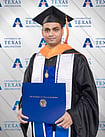
Srikanth Chakravarthy Vankayala is a Senior Solutions Architect with 18 years of experience spanning enterprise software engineering, quality assurance, and AI-driven system design across healthcare, financial services, and workforce management domains. He holds Senior Member standing in IEEE (2026) and Professional Membership in ACM (2026) — the two foremost international professional bodies in computing — along with concurrent membership in several additional international research and professional organisations.
His work is focused on a single, coherent architectural challenge: transforming enterprise quality engineering from a reactive, manually intensive discipline into an intelligent, self-optimising system capable of operating autonomously at enterprise scale. From his earliest peer-reviewed publications in 2022 through his most recent research in 2026, every contribution he has made advances this thesis — progressively, architecturally, and with practical enterprise applicability at each stage.
That work has been formally recognised by two independent national patent offices, five international scientific journal editorial boards, the conference leadership of multiple IEEE- and Springer-sponsored forums, international award bodies across three consecutive years, and senior credentialed academics whose formal attestation letters characterise his expertise as exceeding the ordinary level encountered in the field.
Why Conventional Quality Practices Are No Longer Sufficient for AI-Era Enterprise Systems
Modern enterprises operating across cloud-native, microservices-based, and AI-integrated architectures face a fundamental and growing tension: the complexity, velocity, and scale of contemporary software systems have decisively outpaced the capacity of conventional quality engineering practices to ensure reliability.

Traditional approaches — built on static test scripts, manual triage, threshold-based monitoring, and periodic release cycles — were designed for monolithic systems with predictable failure patterns. They cannot detect the emergent, multi-layered failure modes of distributed architectures. They cannot adapt dynamically to shifting workload patterns. They cannot provide the continuous, real-time assurance that cloud-native and AI-integrated systems demand.
Vankayala’s research program, developed across 2022 through 2026, addresses this challenge through a series of progressively more capable frameworks — from predictive quality engineering and contract testing, through observability-driven assurance and LLM-augmented testing, to genuinely autonomous quality agents and unified agentic AI architectures for cloud-native financial systems. Each publication builds on the last, and taken together they constitute one of the most architecturally integrated research programs published by any practitioner-scholar working at the intersection of AI, software quality, and enterprise systems engineering.
A Multi-Year Peer-Reviewed Research Program: Building the Intellectual Architecture of Autonomous Quality Engineering
Vankayala’s peer-reviewed publication record spans a sustained body of work across four years — a continuous sequence of contributions, each peer-reviewed and published in international scientific venues, addressing a distinct dimension of the intelligent quality engineering problem. The breadth of that record, covering more than forty peer review engagements across journals and conferences, reflects not only the volume of his scholarly output but the consistency of the field’s recognition of its quality.
His 2022 publications established the foundational argument for the field’s transformation. The first, on predictive quality engineering for Azure cloud environments, made the case that quality assurance must shift from reactive defect detection to proactive, data-driven risk anticipation. The second introduced consumer-driven contract testing as an architectural discipline for microservices reliability — providing a systematic framework for preventing integration failures in distributed systems where service boundaries are the primary source of instability. A third 2022 paper addressed tail-latency quality assurance: the challenge of ensuring performance at the edges of the distribution, where conventional averages conceal the failure modes that affect real users in production.
In 2023, his research extended into LLM-augmented exploratory testing — proposing a structured human-AI collaboration model in which large language models serve as intelligent co-pilots for boundary-case identification within enterprise testing workflows — and into observability-driven quality assurance for serverless and PaaS architectures, providing a framework for deriving quality signals from distributed telemetry and runtime behavioural patterns across environments that lack persistent infrastructure.
The 2024 publication on continuous compliance automation addressed the manual overhead of maintaining compliance across CI/CD pipelines in regulated industries, embedding compliance validation as a continuous, automated discipline within the delivery pipeline rather than a periodic, retrospective audit activity. For enterprises in financial services and healthcare, this shift directly reduces both audit risk and engineering overhead.
The 2025 publications mark the intellectual apex of his research program to date. His January 2025 paper introduced autonomous quality agents — software systems capable of independently executing test planning, orchestration, analysis, and remediation without continuous human direction. The October 2025 paper established natural-language interfaces as a unifying abstraction layer across the entire testing workflow, enabling engineers to specify, orchestrate, and analyse testing through human-readable instructions while integrating large language models with existing CI/CD pipelines, observability platforms, and defect analytics systems.
His 2026 publication on a unified agentic AI framework for cloud-native financial architectures extends the program to its logical conclusion: quality systems that are not AI-assisted but genuinely autonomous — capable of continuous self-improvement through dynamic planning, real-time adaptation, and multi-agent coordination across complex distributed financial infrastructure. The framework integrates the MAPE-K autonomic computing loop with multi-agent cognition cycles encompassing perception, reasoning, action, and reinforcement learning.
Engineering Scalable Architectures That Perform Under Real-World Enterprise Pressure
A consistent thread running across Vankayala’s research program is the practical challenge of designing quality systems that scale — not in theory, but under the unpredictable load patterns, service interdependencies, and compliance constraints that characterise real enterprise environments in healthcare, financial services, and workforce management.
His contract testing and tail-latency frameworks directly address the architectural brittleness that emerges as microservices counts grow: the point at which integration assumptions break silently and performance degrades at the edges of the user distribution without triggering conventional alerts. Rather than prescribing workarounds, his frameworks embed architectural discipline at the design stage — making reliability a structural property of the system rather than a property to be verified after the fact.
The progression from those 2022 foundations through the 2026 agentic AI framework reflects a deliberate architectural philosophy: each layer of intelligence added to the quality system must be composable with the layers beneath it, governable within regulated enterprise contexts, and executable without requiring the organisation to rebuild its delivery infrastructure from scratch. This emphasis on practical composability — frameworks that extend what enterprises already have rather than replacing it — is what distinguishes his work from purely academic proposals and what has made it relevant to engineering teams operating at production scale.
Turning Operational Data Into a Continuous Reliability Signal
At the heart of Vankayala’s observability and autonomous agent research is a proposition that is straightforward to state but technically demanding to execute: the data that enterprise systems already generate — distributed traces, structured logs, runtime metrics, and deployment telemetry — contains enough information to detect, diagnose, and in many cases correct reliability problems without waiting for a human to interpret a dashboard.
His 2023 work on observability-driven quality assurance for serverless and PaaS architectures operationalised this idea for environments where traditional monitoring infrastructure does not apply. By treating telemetry streams as the primary quality signal rather than a supplementary diagnostic tool, the framework enables engineering teams to identify early indicators of degradation — latency drift, error-rate inflection points, dependency timeout patterns — before they propagate into user-visible failures.
The autonomous quality agents introduced in his January 2025 paper extend this further: rather than surfacing data for a human to act on, the agents interpret the operational signal, reason about probable root cause, and execute corrective actions within predefined governance boundaries. In regulated industries where downtime carries direct financial and compliance consequences, this shift from reactive human-in-the-loop response to proactive, data-governed autonomous remediation represents a qualitative change in how enterprises manage system reliability at scale. Vankayala’s frameworks provide the architectural specification for making that shift in a way that satisfies both the operational teams responsible for uptime and the compliance functions responsible for auditability.
Dual National Patent Grants: Original Innovation Recognised Across Two Independent Jurisdictions
In December 2025, Vankayala’s contributions to original innovation received formal recognition through the grant of design patents in two distinct national jurisdictions: a United Kingdom design patent granted on 12 December 2025, and an India design patent granted on 17 December 2025 — both within the same calendar month.
The UK Intellectual Property Office and the Indian Patent Office each operate under their own substantive examination standards and independent review processes. The grant of patents in two separate jurisdictions within days of each other establishes that the underlying contributions met the originality and novelty thresholds of both authorities independently — a convergence of formal intellectual property recognition that is verifiable through the public records of both offices.
The timing of these grants coincided with the IIRAC International Outstanding Innovation Award received on 21 December 2025, creating a convergent pattern of recognition for original inventive contribution evaluated independently by three separate bodies within weeks of each other.
Keynote Leadership and Session Chair Appointments at IEEE- and Springer-Sponsored International Conferences
Across 2022 through 2026, Vankayala has served as Keynote Speaker at four international conferences and as Session Chair at four international forums, several of these roles held concurrently at the same conference and all under the institutional sponsorship of IEEE, Springer, or Scopus.
His conference leadership began with the keynote address at ICMCCT-2022 and an invited talk at MIT-World Peace University. In 2023, he served as Session Chair at ICIET 2023 and at the Global Conference on Sustainable and Futuristic Technologies (GConSFT, 14–15 December 2023). In 2024, he delivered an invited talk and paper at ICAETBM (24–25 May 2024). On 30 July 2025, he delivered the keynote at ICEAMT-2025, and in December 2025 he served as Expert Speaker at the THREWS Global Conclave.
On 27–28 December 2025, Vankayala served concurrently as both Keynote Speaker and Session Chair at ICS-AITA 2025 — an IEEE/Springer/Scopus-sponsored international forum. On 21–22 February 2026, he again served concurrently in both roles at IC-AIFD 2026, also sponsored by IEEE Delhi Section, Springer Communications in Computer and Information Science, and Scopus. Concurrent appointment to both roles at the same international conference, in back-to-back years, represents a sustained pattern of dual institutional trust that is meaningfully distinct from either appointment in isolation.
Dr. Pawan Whig — Conference Chair of both ICS-AITA 2025 and IC-AIFD 2026, and Dean of Research (AI/ML) at VIPS-TC Delhi — has formally attested to the quality of Vankayala’s contributions at both conferences.
“Being entrusted with both roles concurrently reflects a high degree of institutional confidence in his expertise, professional judgment, and leadership capability. Such dual responsibility signifies recognition that extends beyond standard conference participation and underscores his respected standing within the international artificial intelligence community.”
— Dr. Pawan Whig, Conference Chair, IC-AIFD 2026 | Dean of Research (AI/ML), VIPS-TC, Delhi
At ICS-AITA 2025, Dr. Whig additionally affirmed that Vankayala’s contributions were “substantive, distinguished, and representative of expertise beyond the ordinary level encountered in the field” — an assessment grounded in his direct oversight of the conference as its Chair.
Independent Validation From Practitioners Across the Global AI and Enterprise Engineering Community
Formal academic attestation is complemented by independent endorsement from senior practitioners. Madhava Rao Thota, a Database Administrator and Architect based in the United States and an invited speaker at ICEAMT-2025, provided a formal assessment of Vankayala’s contributions to enterprise AI-driven quality engineering.
“Artificial intelligence is fundamentally transforming software quality engineering. The integration of automation, predictive analytics, and intelligent decision-making is enabling a shift from reactive testing approaches to proactive, continuously evolving, and self-optimising quality assurance systems. This evolution underscores the growing importance of AI-driven methodologies in achieving scalable, reliable, and high-quality software delivery in modern enterprise environments. Srikanth’s contribution toward AI is impactful.”
— Madhava Rao Thota, Database Administrator and Architect, USA | Invited Speaker, ICEAMT-2025
Prof. Fawwaz Al-Abed of Hashemite University has provided a separate formal endorsement of Vankayala’s 2022 foundational research. Jaya Ram Menda, a Senior Consultant based in the United States and a keynote speaker at ICAETBM-2024, has additionally endorsed his AI/ML contributions to enterprise systems. Endorsement from multiple independent senior practitioners — none affiliated with a common institution — reflects how his contributions are perceived across the broader working AI/ML and enterprise engineering community.
Editorial Board Service Across Five International Scientific Journals
Vankayala currently serves on the editorial boards of five international scientific journals: IJSRSET (since January 2024), IJSRST (since March 2024), IJSRCSEIT (since February 2025), IJSET (since December 2025), and JSAER (since February 2026). On 16 April 2026, he was additionally appointed to the International Advisory Board of the International Scientific Board.
Prior to his editorial board appointments, he served as a peer reviewer for the European Journal of Advances in Engineering and Technology (EJAET) in consecutive years — 2021 and 2022 — establishing a record of evaluating the research of others that predates and runs continuously through his subsequent editorial service. Concurrent editorial board appointments sustained across consecutive years, supplemented by international advisory board service, describes a pattern of peer-level judging that few practitioner-scholars achieve.
International Awards Recognising Innovation and Research Leadership Across Three Consecutive Years
Vankayala’s contributions have been recognised through multiple international award programmes across three consecutive years. In July 2023, he was conferred the Einstein Foundation Lifetime Achievement Award. In 2024, he received the Asia Research Awards International Lifetime Achievement Award, selected from a documented field of more than 2,350 applicants. On 21 December 2025, he received the IIRAC International Outstanding Innovation Award — in the same calendar month as his dual national patent grants. In January 2026, he received the Global Leader — International Impact recognition.
Across three consecutive years and four distinct recognising bodies, this award record reflects a pattern of independent recognition that has accumulated across multiple institutional and organisational contexts rather than arising from any single relationship or nomination pathway.
Fellowship and Membership Recognition Across Leading Global Professional Bodies
Vankayala was elevated to Senior Member of IEEE in 2026 — a grade conferred to fewer than ten percent of IEEE’s global membership, requiring peer nomination and evidence of significant contributions to the field. He holds Professional Membership in ACM (2026), the premier international computing society. Additional international memberships include Eminent Fellow of the World Research Council (since February 2024), Member of the American Chamber of Research (since August 2025), RES Life Membership (2026), and ISS Lifetime Fellow Membership (since April 2026).
Recognition by multiple independent international professional bodies — each evaluating his credentials under their own criteria and across consecutive years — describes a pattern of institutional acknowledgement that has crossed organisational boundaries consistently over several years.
Shaping the Future of Enterprise Technology: From Research to Global Practice
The cumulative impact of Vankayala’s work is most clearly understood through its integration across research, practice, and independent recognition. His peer-reviewed publications do not address isolated dimensions of quality engineering — they construct a comprehensive, architecturally grounded framework for how enterprises can build quality systems capable of meeting the demands of the AI era.
For industries where quality failures carry direct operational, financial, and regulatory consequences — financial services, healthcare, cloud platform operations — his frameworks offer a structured, practically executable path from conventional quality practice to autonomous, self-improving assurance. The shift from reactive testing to intelligent, continuously evolving quality systems is not merely a theoretical proposition in his work; it is specified architecturally, supported by peer-reviewed research, protected by internationally granted patents, and validated independently by senior practitioners across both academic and enterprise contexts.
Through sustained peer-reviewed research, internationally granted patents, formally attested conference leadership across back-to-back years, multi-institution editorial and advisory board service, and independently earned recognition from professional bodies on multiple continents, Srikanth Chakravarthy Vankayala has established himself as a defining practitioner-scholar in autonomous quality engineering. His work continues to shape how enterprises design, validate, and continuously improve the intelligent systems that underpin global digital infrastructure — and how the international research community understands the architecture of quality in the AI era.