A debut novel blending magical realism with a meditation on resilience, self-belief, and human goodness.
Explores self-belief, forgiveness, resilience, and healing in the face of loss and adversity.
Written in accessible prose that reflects India’s oral storytelling tradition and emotional depth.
Shivi Sethi’s debut novel Bound By Belief is a lyrical meditation on life and its by-lanes of love, loneliness, revenge, companionship, hope and healing, forgiveness and mortality. The narrative, as well as her narrative stye, on its surface is quite simple with a deceptively straight forward plot. But weaved through the seemingly simple mystical tale, is a complex exploration of the inherent goodness within us and what it takes, despite all the pessimism and prejudices, to stay on course to self-discovery.
The novel deftly uses magical realism, with a book-within-a-book literary device, to blend its strong characters and mythical elements with deep insights on life and its many trials and tribulations. Rose, the protagonist working for a local magazine, picks up an old book from an antiquarian bookshop only to discover that the book holds its own secrets. The book immediately transports Rose to another point in time and space - into the world of Aara, her husband Aameen and a sentient soul, Vaani. As Rose delves deeper into the lives of Aara and Ameen, she is inspired by Aara’s defiance against all odds and, at the same time, becomes acutely conscious of how her own fate seems to be connected to Aara’s. Rose is seeking to start a new life but her past catches up with her and puts her in a flight-or-fight situation where every decision comes with its own set of consequences.


The novel is interspersed with short parable-like chapters which are simple and poetic in style but profound in their insights on the underlying themes. Rose navigates her own inner demons and confronts the existential questions that she had been evading most of her life. The hallmark of the story-telling is in its simplicity and felicity of expression –blending the magical elements with the mundane.
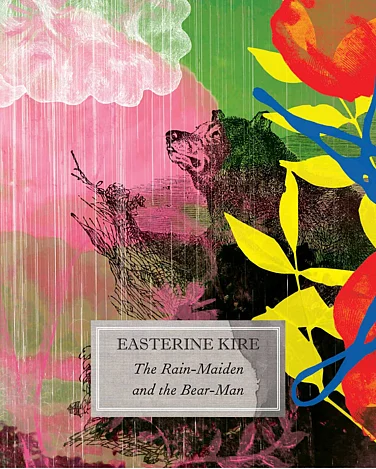
The lucidity with which Shivi Sethi introduces the complex themes of life with its myriad hues of love, companionship, self-doubt and inner resilience, motherhood, healing, revenge and forgiveness etc is akin to our rich oral tradition of storytelling. The dreamlike floating state of the novel’s narration is deliberate. Shivi’s reflective yet poetic writing style is refreshingly unique and some readers may find her writing to be an interesting blend of Paul Coelho and Esterine Kire.

Obstacle is the way
One of the main themes in the novel is the way we view challenges in life and to find the inner resolve to deal with them. The author notes:
You are where you are meant to be, if only you can surrender to life’s lessons. We each walk a journey meant for us. Life trains and teaches us lessons designed to foster the greatness we seek. So when the moment arrives, we must believe we are precisely where we need to be. Every obstacle, every crossroad we tread, is in reality a testing and training ground, taking us a step closer to our dreams.
One consistent theme through the novel is that we are the masters of our own destiny and we can achieve whatever we set out to achieve, with or without external help. Anant, the talking book, poignantly reminds Rose:
– “When a person realises that there is no knight in shining armour to save them, that the strength to fight, survive and live the life they dream of lies within them, they transform. They turn over a new leaf, one that is as fresh as it is powerful, capable of weathering any turmoil life may throw at them. Challenges will continue to arise, and their intensity may magnify, but these hardships are not without purpose. They prepare you for the world you asked for, the life you envisioned.”
Believing the Magic: from Self-doubt to self-belief
The most dominant theme of the novel is finding hope, resilience and resolve within oneself even when one is faced with grave despair and tragedy. Shivi’s meditations on self-belief, hope and persistence are the bedrock which holds the other sub-themes together. The power to endure lies within us and it is beautifully expressed in the following excerpts:
Sunshine grants its warmth only to those who endure the chill and stillness of the darkest nights. The fire of strength and self-belief ignites only when you shed the tears of helplessness. Actual growth occurs when you find yourself alone and it no longer haunts you when you accept that you are your own knight, the sole force capable of walking yourself out of the dark tunnel of self-doubt.
Sometimes belief is all you need, not only to fully recognise but also to accept yourself.
Everything lies within you. The solution to every problem, every ailment, is within reach of your soul. All you need to do is quiet your mind and prepare yourself to listen.
Shivi’s use of suffering and surrender as necessary ingredients towards building a resilient character is also evident from the following passages:
Only when you completely surrender will you conquer. The darkness can be devious, violent, and cruel, but it is nothing more than the amount of fear and self-doubt you pour into it. Only when you fully accept the fears and embrace your past, the hardships that have shaped you, will you finally be able to see through the self-doubt, and it too shall cease to exist.

You are who you are because of the pain and hardships you have endured. Like soft clay coming to its true form, only after withstanding the blazing fire, your past has shaped you into someone who brings light wherever you go. Darkness will always be part of the light, but it shall always remain beneath it, signifying where strength lies.
The power of being your own person, the power to look adversity and betrayal in the eye, that’s what made you who you are today.
Many shades of love
One beautiful aspect of the novel is its treatment of ‘love’ as an emotion and how it doesn’t limit itself to only ‘romantic’ or ‘spousal’ love only but transcends much beyond that. Shivi’s exploration of love is one without boundaries involving more empathy and compassion towards both friends and foes. For example, the way Anant, the book, describes its connection with Rose can easily be mistaken for a lover’s lament:
She was relentless. She was the fire I would gladly let consume me… Little did I know, this love was destined to consume me.
Finding someone who is not only glad to have found you but also lets you be yourself without judgment. Everything feels like magic with them…The little step of not only acknowledging the other person as different but also granting oneself the chance to understand them better…at the very least, I could allow this relationship to be based on the ultimate truth about myself and let her see my whole self.
Like a lover bound by an unspoken connection, all I can do is open my heart, surrendering myself to reveal everything within.
The minor characters in the book are also equally powerful. Rose’s mentor Ramanuj Ray and his wife Naazuk are two endearing characters. Her guilt of being unable to bear a child and not sharing the same with Ramanuj makes her wonder if she deserves the unconditional love that she receives from her husband. Ramanuj never brings up the issue with her; but rather tells others that it is because of his own deficiency that they are unable to have a child. Their childless marriage and Ramanuj’s unconditional love towards her poses great unrest within Naazuk; an inner turmoil which finds expression in this moving passage:
His silent sacrifice only deepened my guilt. I wanted to confess, to thank him for his unwavering love, but I was too ashamed, too scared. Over the years, that silence has turned to resentment. I resented myself for not having the courage to speak, and I resented him for loving me so wholly, so selflessly.

Human goodness as part of the intrinsic human experience
Shivi sees human goodness as something intrinsic to being human. She stresses on the importance of emotions in this beautiful passage where Anant explains Rose’s natural propensity to empathy:
Anant had always known that Rose’s life couldn’t have been simple. The lives of those who are deeply attuned to emotions rarely are. Their heightened ability to understand both their own feelings and those of others makes them vulnerable to hurt and disappointment. This heightened sensitivity not only intensifies their emotions but also tends to draw negative energy and people into their orbit.
Anant’s sage advice to Rose on rebuilding oneself after a setback is beautifully captured when he notes:
You need to give Aara the benefit of the doubt. Strength isn’t something she was born with; it’s something she built over time. She stood her ground to prove her worth and knew the difference between right and wrong. Yes, she’s at a turning point, joining a new family where no one truly knows her or sees her potential. But listening to her story is important because it teaches us how challenges come and go, and what remains are the lessons we learn from them. Even if situations break someone, it’s up to that person to choose which pieces to leave behind and which to gather to rebuild themselves.
The will to protect shall always be greater and stronger than the power to destroy.
Enduring life through purpose, self-belief, resilience & compassion
Bound by Belief is also an appeal to find our real purpose in life, to find one’s true calling –which determines how we face the challenges that life throws at us. Shivi writes:
When life finds a purpose, and you seem to understand the true meaning of peace and contentment, acknowledging a sense of belonging to the world and the people around you, when you smile and others smile with you because they also feel safe around you, the world becomes a better place. You start enjoying life, living it as it’s meant to be.
Every experience in life comes with a purpose, Rose. Whether it feels like a blessing or a burden, it’s there to teach us something vital. Nights, with their shadows, are always followed by days, just as days full of lessons lead to nights of trials. It’s through this cycle that life shapes us, sharpens us, and reveals our true purpose. Loss and devastation are part of what makes us human. Just like the brightest joys, they demand to be endured. And it is in enduring them that we learn resilience.
However, life’s moments of peace are often fleeting, shadowed by oncoming trials.

Shivi reflects on the nature of failure and setbacks and the need to understand that not everything happens for a reason, sometimes it is just plain bad luck. She observes:
Sometimes bad things happen, and there is no rhyme or reason for it.
Remember, neither of you is to blame. Sometimes, life’s cruelties defy reason. Humanity, in its complexity, often disrupts nature’s balance, but destiny is unchangeable. Life requires sacrifice, and love demands protection.
Life, she realised, was a delicate balance, like yin and yang. Joy and sorrow, triumph and failure, each played its part in the rhythm of existence. A heartbeat, after all, was only alive when it carried both rise and fall, expansion and contraction.
In a world full of unseen battles, silent struggles, and hidden demons, comfort was the least one could offer. And sometimes, it was everything…We don’t know the battles others fight. But we can make sure no one fights them alone.
Rose knew that while sorrow was inevitable, so too was the strength that followed it.
The darkness of an unrestful mind cannot shake a person who is at peace within. Know who you are, accept the beauty in your power and stand upright to heal, not to fight…even when one doesn’t completely understand a situation, one must trust the voice within.
Forgiveness & Healing
Some of the most reflective meditations in the novel are the author’s thoughts on forgiveness as an essential means to holistic healing. Forgiveness is often viewed as something that is done to others; but Shivi sees it as something internal; and as part of self-love. Both Rose and Aara, in their respective journeys, find themselves at these critical crossroads where they had to choose between forgiveness and vengeance. The following passages are as lyrical as they are profound:
Forgiveness is not only for others but also for oneself. It’s a journey one takes to heal. Sometimes, we feel compelled to forget before we fully forgive, either the wrongdoer, or ourselves for allowing it to happen. But healing is not just about letting go; it’s about growth. To truly heal, one must embrace the lessons learned from the experience, no matter how painful. Only then can we move forward.
Healing comes not just from letting go of anger or resentment, but from seeing the bigger picture of life. Sometimes, wrong and hurtful things happen, but it is our choice to learn from them and grow. You cannot live fully in the present if you are still bound to the past. To heal, you must release the hurt and take the lessons with you, so that you move forward and create a better future.
She knew that forgiveness didn’t absolve the wrongdoer but was a gift to oneself –to free one’s soul from the weight of bitterness and resentment.

Forgiveness may seem impossible, but it’s the key to freeing yourself from the past. By forgiving, you would help your mother’s soul find peace and, in turn, you begin to live a life free from fear and silence.
Patriarchy, Revenge and Hatred
Interestingly the novel’s main characters – Rose, Aara and Vaani – are women. Shivi’s characters see patriarchy as a contemporary social reality which is so pervasive in every aspect of human relationships that it should be addressed by reason, defiance or tact. Even in the most loving relationships, like the one between Aara and Aameen, one sees the dilemmas that confront Aara in a patriarchal familial setting. Aara tries making sense of it thus:
It’s time you understand that our society is built on patriarchal values. Men are raised to believe they are providers ad protectors, the saviours of those thy care for. When that belief is challenged, it can strike at the very core of their identity…He can either choose to see you, his companion, as an equal, or he might end up seeing this as a challenge to his pride and imagined beliefs. For men like Aameen, the eldest son in his family, accustomed to having the right to speak, choose for himself, and make decisions while his family quietly abides, recognises the strength, and capability of a woman can be difficult, not because of any lack of love or respect, but because of the fear that their role as protector is no longer needed. This realisation, if not guided by wisdom and openness, can lead to insecurity and conflict. That is why I want you to help Ameen see past this and understand that your strength does not diminish him or his abilities but completes the bond you share…Misunderstandings fuelled by pride lead to paths of hurt and separation.
At the same time, we also see the wrath of a mother (Rose’s mother-in-law) when her son, Tapas, is taken from her in lieu of money. The angry mother retorts:
He is my blood, my son. The man was merely a seed-giver, but it was I who bore him for nine months inside me…Paper cannot compensate for blood. The only thing that comes close to blood is blood in return.
Likewise, hatred, as an emotion and human feeling, is also examined closely. The author notes:
Sometimes hatred runs so deep that, with time, you forget the original reason for your bitterness. All that remains is the bitterness itself.
It’s not others you seek to take revenge on but your own fate.
Death & Mortality
The other major theme in the book is facing our mortality, that everything is ephemeral. Shivi’s meditations on death are expressed lucidly when she writes:
Immortality is a vice that humans should not pursue. Mortality is a blessing that people often overlook -it is mortality that brings humanity, compassion and love. Knowing they will die one day teaches them to love fully today and be their best selves.
Being born means one must perish when the time comes. Death is inevitability, and one cannot fight it; instead, it must be accepted to truly live and fulfil one’s dreams.

Closing comments
The other sub-themes that are explored and examined in the novel, in its lyrical prose, are on motherhood, companionship and fate, the art of giving (or helping) and evoking the divine feminine within us. Our growing disconnect with the natural world is a crying alarm throughout the novel. Shivi laments – ‘In the rush and noise of city life, we have lost our tether to the natural world, the part of us that aches to reconnect.’
This debut novel is a lyrical ballad effortlessly weaving folklore, ancient wisdom and vibrant natural imagery into a deceptively simple narrative, exploring themes of identity, resilience and the intrinsic human goodness within us. Shivi employs magical realism and folk-talk that are both metaphorical and edifying. Her poetic prose has the quality of speech that can be enjoyed by anyone from 9 to 90 years. This oral quality and simplicity of expression naturally flow from Shivi’s experience as a storyteller and an early child educator. Her writing style is unique in that it is always understated and a lot of the sub-text lies in its silences, in what is between the lines or has been left unsaid for the discerning reader’s sensibilities.
To conclude, Bound by Belief is a powerful debut novel from an author with rare emotional poise, poignancy and balance. The fluid, unpretentious literary style makes it a fast and enjoyable read. But the hauntingly beautiful voices of its characters will stay with you long after you have completed the novel. It seems apt to conclude this review with a passage from the ending which succinctly captures the emotions of this brilliant literary debut:
Rose looked at the towering ash tree, standing tall as a silent observer of the simple attributes of seeking and granting forgiveness in a world that can turn dark and cruel in the blink of an eye, yet able to save itself only through pure, unconditional love towards one another and, more importantly, for oneself.
Krishnayan Sen is a partner at Antares Legal and Advocate-on-Record at the Supreme Court of India.