Todd Haynes' second feature, Safe, didn't hit the ground running.
It marked the first of his five collaborations with Julianne Moore, most recent of which was May December (2023).
Thirty years since release, the film has only grown in terrifying power.
In 1995, Todd Haynes lit up the American indie scene with his second feature Safe. Premiering at the Sundance Film Festival, the film wasn’t instantly embraced—its deliberate, almost obstinate ambiguity daring audiences to think beyond comfort. While it did notch a few Independent Spirit Award nominations, it took years till the film found its now-passionate takers. Safe occupies a firm place in the contemporary cultural consciousness on several fronts.
Firstly, it’s a bone-chilling portrait of imperceptible, unknowable malaise. Haynes withholds answers and resolutions as his heroine, a well-heeled Californian homemaker, Carol White (Julianne Moore), slips deeper into illness that defies diagnosis. Second, the 1987-set Safe presciently taps a deep sense of the uncanny, tying into how the world treats its marginalized. Carol gets pushed to the periphery as all claim absolute unfamiliarity with her crumbling health. Neither can she articulate what’s exactly going on.
The first sign of breakage is car fumes. Suddenly, Carol struggles to breathe till she seems wholly enveloped. Suggestions of an asthmatic attack are dispelled. At social dinners, Carol feels disconnected. She’s sanded into an out-of-body state whose details evade comprehension. The doctor assures her of no abnormalities. Both she and her husband initially put it down to stress and over-exertion. But rest is no cure. She’s discredited, her confused assertions tainted with disbelief. No one knows what to do with her. She’s a glitch in the system. Soon, her body begins to reject everything in her immediate vicinity. She wonders if it’s the chemicals but the doctor gaslights her furthermore. Recourse to a psychiatrist also fails. When she chances across a flyer cautioning about fumes, she’s drawn to a close-knit circle of environmental illness activism.




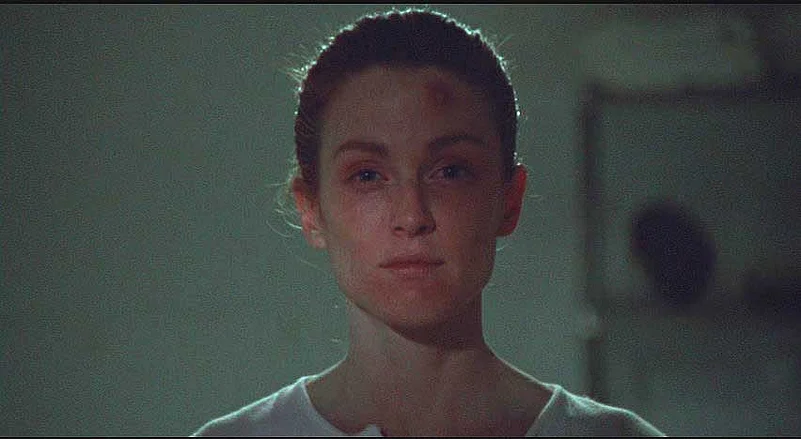
Haynes creates a cocoon. As much as Carol believes it to be a haven to remedy her ailment, the spectator’s illusion increasingly breaks. Wrenwood, a New Age desert retreat led by a guru Peter Dunning, shows herself as a way out. How much of a reprieve is Wrenwood truly? Is it a hoax? Is it really the community it purports to be? It’s like a sweet booby trap that primes alternative ways of being. Is it a rescue at all?
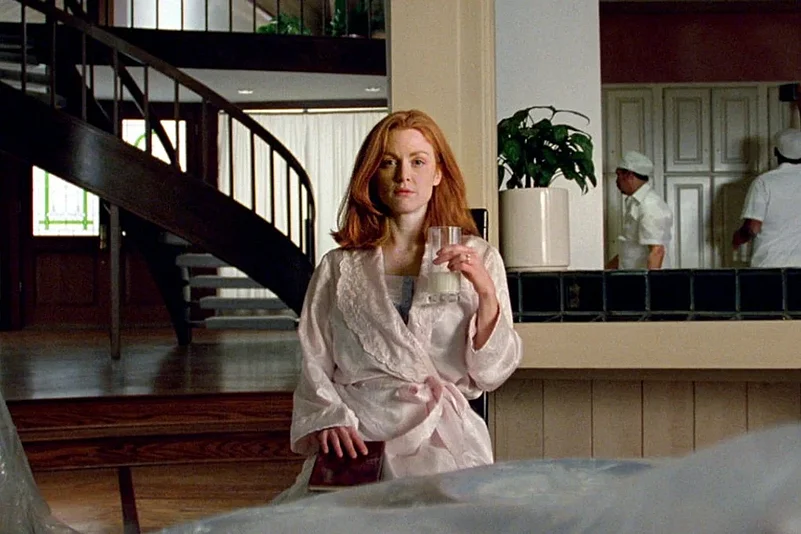
Haynes swings between two opposites. One is Carol’s former life, replete with privileges; the other tucked away at Wrenwood’s remote stretch. As she makes the journey, her access to home and friends snips off. She becomes increasingly alienated—an anomaly amidst industrial urban life. Her isolation, though, has been evident from the start. She’s a bundle of jumpy nerves in her own house. There are unmistakable dissonances between her and an impeccably honed suburbia. However, make no quick conclusions. Haynes sets up with a Stepford Wives-artifice but you see how ill and queasy Carol fits into her environs. She might have the airs of a quintessential hostess, but you notice her tightly coiffed bearings. A parlor visit disorients with horror. She starts bleeding. At another social occasion, she skids into a panic attack.

A wrong delivery of a couch sets her off. Her domestic interiors reflect a blanched sensation—a home stripped of human feeling and filled with cold tastefulness. Any mess is removed from view, Carol’s home-making an exemplar of unruffled precision. The camera sizes up her being lost and constricted within a veneer of respectability. It's all polished facades with her being like a fly bottled. Through mostly medium wide shots, Carol is always placed within a certain context. Haynes abjures close-ups, putting a veil between the protagonist and the viewer. You get a semblance of her inner state, which is nevertheless limned with mystery. Tension between heightened subjectivity and a discernible remove powers Safe’s tricks. The social environment creaks with terror—an industrial hum producing unease.
Her escape from these confines, out into the retreat’s faraway space, promises relief and liberation. You want to believe the hippie-like retreat, cloaked in leftist rhetoric, means her well. Yet, it too fortifies its scope. It allows only certain delineations for health and illness, an identity to organize and move in limited parameters. There’s a straitjacketing that denies specificities and trumpets glib values. The wellness commune proposes love and benevolence between oneself and the world. But Carol’s grievances aren’t really heard, rather goaded into agreeable shape. For all the posturing around a sedate environment where everyone’s anxieties can find a vent, there’s dismissal and apathy. The minute Carol lands at the retreat, she’s met with a terrifying incursion. A patient rails at her to get away. Peter and his aides smooth-talk down Carol’s triggered anxiety, welcoming her into a site of great emotional desolation. Wrenwood worships at the cult of self-help, echoing gospel falsehoods at other retreats like Osho’s. Today’s wellness influencers speak the same language. “This notion that people were somehow to blame for their illness, and the so-called empowerment this provides, really upsets me,” Haynes told The Independent in 1996. “I’m disturbed [by] how New Age thought has become so similar to right-wing thought. You’re responsible for your own shit. No special privileges for the disenfranchised. Go out there and compete.”

Carol’s friend pities her, while professing admiration for her sharply altered routine. You might almost think Haynes is punishing Carol before he shakes it all up. The scrutiny lands, tight and bracing, on structures of New Age solutions presented. Peter is posited as a messiah—someone with the answers, the panacea to Carol’s problems. Slyly, Haynes broadens cracks between Peter’s seeming homilies. Peter appeals to the Wrenwood inmates to reflect on their vulnerability. This only reveals itself as yet another form of manipulation. Even as Carol fitfully and incoherently gathers thoughts on her illness, she’s cheered on. She’s greeted with hollow words and reassurance. This alternative state of living cuts her out entirely from the outer world. How can the quarantine bubble ever be all that she needs?
In a 2014 interview with The Dissolve, Haynes mentioned, “I wanted to bring up the behavior that we all exhibit around illness, particularly in the way we try to attach meaning and personal responsibility to illness and how much illness and identity are mixed up with each other,” he said. “Safe feels like this allegory about all kinds of indeterminate and imprecise notions of health, well-being, and immunity in peril.”
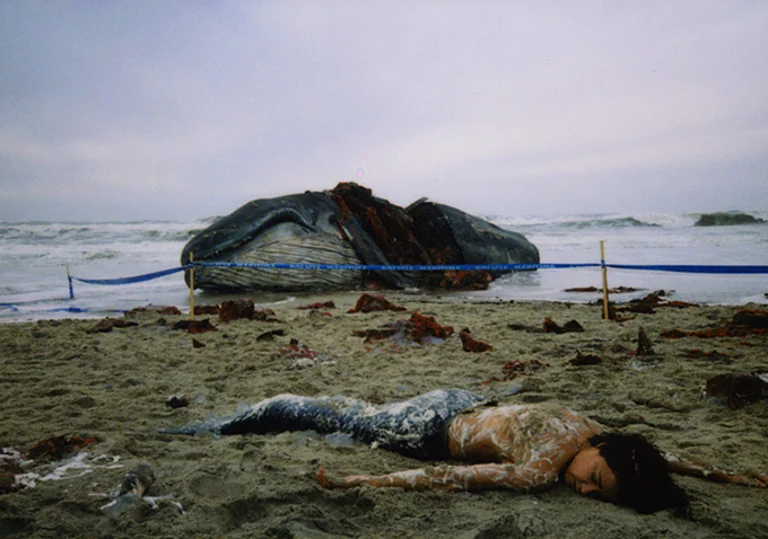
Haynes leads you through multiple red herrings. AIDS hovers over Safe, insinuated especially owing to Haynes’ own documented activism. However, Carol’s auto-immune disorder splays against this disease. Peter’s queerness also wrong-foots you into trusting him. Neither grows in credence. All have trappings that slowly come apart. Wrenwood offers a utopia which eventually emerges as a skewed reflection of Carol’s San Fernando idyll. Carol’s illness remains elusive, uncategorisable till the end. Every thread, each façade preens itself as redeeming, solvable, to be soon interrupted, rendered mistily unfathomable. The clinical world of Safe ruptures into an abyss. In forging her escape from domestic trap, Carol ends up sealing herself back in.