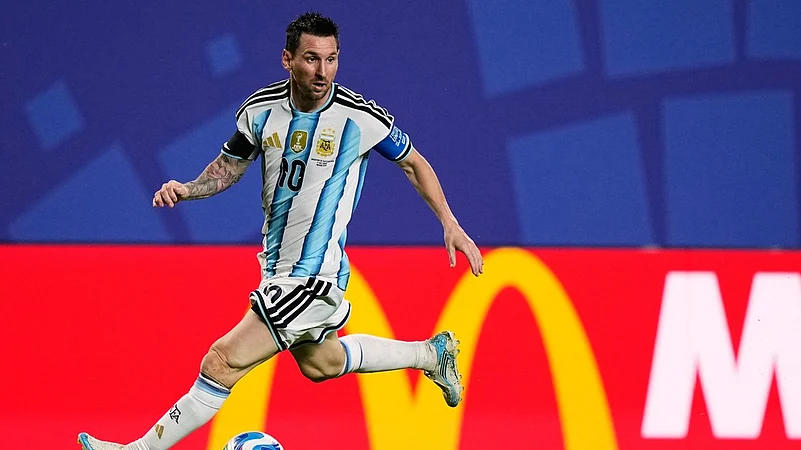
From explosive winger to tactical mastermind, Messi has reinvented his game for every era
Now a genius of economy, he uses calculated walking to dictate play and preserve his brilliance
Supported by a selfless midfield, the 39-year-old GOAT focuses purely on his final pursuit of glory
Read this as a Lionel Messi primer ahead of the FIFA World Cup 2026 Argentina vs England semi-final scheduled for early Thursday morning, India time. He already has an unrivalled career, but another World Cup knockout brings forth a fresh outlook and new talking points.
La Pulga, the Flea, has scored eight goals and made two assists en route to the last four. And his first outing against England will provide the record eight-time Ballon d'Or winner another chance to further his legacy.
The Architect of Destiny: From Rosario to Global Icon
Messi's journey from a fragile boy in Rosario to the orchestrator of the footballing destiny of millions is a story of constant reinvention.
At 39, the lightning bursts that once petrified defenders have softened into calculated steps -- a transformation currently powering Argentina's title defence.
To truly appreciate the maestro today, one must understand that he no longer beats teams with his legs. It's something else now: the ultimate football intelligence.
The genesis of this evolution began in Barcelona's La Masia, where Messi was nurtured as a pure, touchline-hugging winger.
When Frank Rijkaard unleashed him into the first team, a 17-year-old Messi arrived as an agent of chaos, relying on a low centre of gravity and explosive acceleration to cut inside from the right flank.
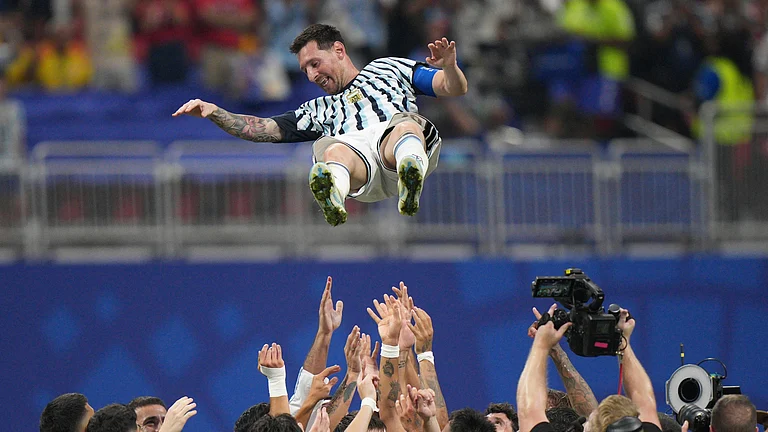
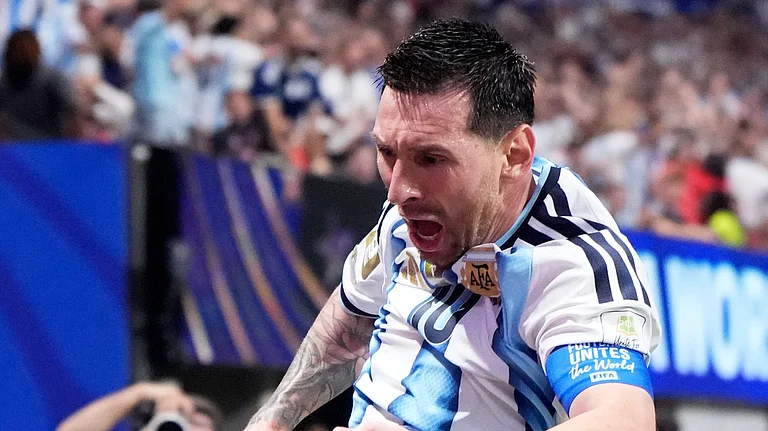
Tactical Evolution: The Master of Adaptability
However, the true tactical revelation occurred under Pep Guardiola, who moved Messi into the centre as a "False 9."
This role allowed Messi to drop deep into midfield, drag central defenders out of position, and often nullify opposing tactical setups. The game was revolutionised again.
During this golden era, he was the ultimate hybrid scorer and playmaker, as witnessed in an unprecedented 91 goals in a single calendar year (2012).
But as managers and teammates changed, so did Messi's responsibilities, most notably the departures of Xavi and Andres Iniesta.
Under Luis Enrique, he adapted seamlessly to accommodate Luis Suarez and Neymar, moving back to the right wing but functioning as the team's primary creative engine in the legendary 'MSN' trio.
When he eventually moved to Paris Saint-Germain, stripped of his peak physical ability, Messi fully embraced the role of a deep-lying playmaker, feeding Kylian Mbappe.
The Quarterback Mentality: Mastering the Art of Walking
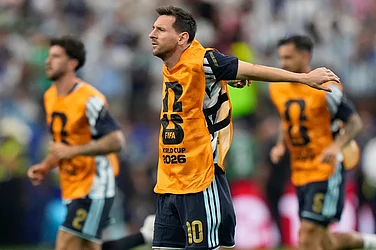
Today, at Inter Miami, he operates almost like an American football quarterback, conservative with his movement but lethal with his distribution, setting the tempo and the result of the match.
Here, one unmissable note about his physiological adaptation is that Messi has spent years mastering the art of walking.
Performance data reveals that he frequently clocks the most distance covered at walking pace, not running -- a deliberate tactical choice that allows him to map the pitch, find blind spots in the opposition defence, and also save his energy for explosive, match-winning involvements.
This calculated economy of movement has defined his tumultuous yet ultimately glorious relationship with the Argentina national team.
The Unspoken Contract: A Nation’s Sacrifice
For over a decade, Messi bore the crushing weight of a football-mad country's expectations, enduring agonising defeats in Copa America and World Cup finals that even led to a brief international retirement.
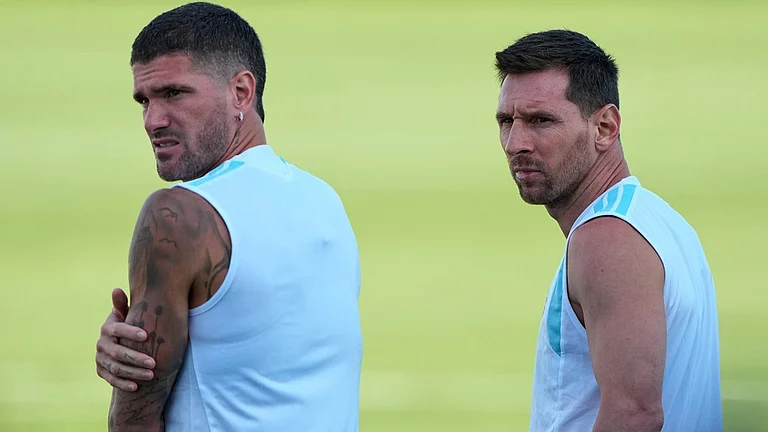
But that narrative shifted dramatically and for good for Albiceleste when Lionel Scaloni built a tireless, industrial midfield designed specifically to run for Messi, freeing the captain to deliver the Copa America 2021 and the historic World Cup title the following year.
When pundits say every player in the Argentinian camp will sacrifice themselves for Messi, it should be taken quite literally. In a way, it's an unspoken contract to preserve the ageing superstar.
Now, as the world waits for the Argentina vs England semi-final with bated breath, Messi stands as a footballing GOAT, who's slower but infinitely wiser. He no longer hunts the ball. The ball seeks him instead, because he knows where the action will happen.
For ordinary fans, watching him now requires looking away from the ball to see how he positions himself minutes before a play even develops.
As they say, genius does not fade with age; it merely refines itself.