Spain’s clinical semifinal win secures a shot at a historic Euro-World Cup double
A tactical evolution toward vertical, direct football has redefined their identity
Resilience forged by an early-tournament setback now fuels their pursuit of the trophy
Spain is standing on the precipice of history, moving within touching distance of their second FIFA World Cup title after a masterclass performance in the semi-finals. La Roja comfortably dismantled France with a clinical 2-0 victory at Dallas Stadium, silencing the tournament favorites and reaffirming their status as the continent's dominant force.
Mikel Oyarzabal set the tone early, coolly dispatching a penalty, before Pedro Porro doubled the lead with a sublime finish that effectively extinguished French hopes.
While the scoresheet belonged to Oyarzabal and Porro, the victory was built on a collective brilliance that left France chasing shadows. Lamine Yamal’s electrifying pace and vision constantly disrupted the French backline, while Rodri anchored the midfield with his trademark composure.
Marc Cucurella and Fabián Ruiz were instrumental in the transition, stifling the French attack while effortlessly dictating the tempo of the game. Now, with a spot in the final secured, Spain awaits the winner of the Argentina versus England showdown, ready to prove that their tactical evolution is the ultimate benchmark for modern football.
From Continental Dominance To Global Conquest


Spain’s ability to seamlessly translate their continental dominance into World Cup success has been nothing short of extraordinary. Having arrived in North America as the reigning European champions, La Roja have carried that winning momentum with clinical precision, proving that their tactical identity is not just a regional phenomenon but a global blueprint.
By maintaining the same relentless pressing and fluid positional interchange that defined their Euro campaign, they have successfully navigated the varied pressures of the international stage, transforming from tournament favorites into a ruthless, singular force.
Now, sitting just one game away from immortality, Spain stands on the precipice of achieving what only the greatest sides in history have managed: holding both the European and World Cup titles simultaneously.
This is a feat La Roja famously accomplished before, most notably when they captured the Euro 2008 title followed by their historic 2010 World Cup victory. Replicating that double success would represent the ultimate validation of their current philosophy, a chance to cement this specific group of players as the architects of a new golden era.
Whether they face Argentina or England, they head into the showpiece with the undeniable confidence of a side that has mastered the art of winning when the stakes are highest.
Evolution of the Guard: Beyond Tiki-Taka
The current squad is often compared to the legendary "Golden Generation" that conquered the world in 2010, yet they operate with a distinct and more lethal identity. While the iconic 2010 side was defined by the mesmerizing, possession-heavy tiki-taka that some critics occasionally labeled as passive or overly patient, this 2026 iteration offers a more dynamic evolution.
They have successfully shed the shadow of those historical expectations by embracing a brand of football that is significantly more vertical and direct, prioritizing rapid transitions and lethal wing play that keeps opponents constantly on the back foot.
This tactical shift does not mean they have abandoned their technical roots; rather, they have reinforced them with a more robust, physically imposing midfield. By pairing this steel in the center of the park with explosive wide attackers, Spain now possesses the ability to suffocate teams both with the ball and without it.
They have effectively bridged the gap between historical heritage and modern necessity, proving that the flair of the past can be married to the ruthlessness required to dominate the contemporary game.
The Catalyst of Adversity: Turning Stumbles into Strength
Argentina’s path to their 2022 World Cup glory began with one of the most shocking upsets in tournament history: a 2-1 defeat to Saudi Arabia in their opening group match. Despite Lionel Messi opening the scoring with an early penalty,
Argentina’s 36-match unbeaten streak was shattered by two stunning second-half goals from Saleh Al Shehri and Salem Al Dawsari. However, that wake-up call proved to be a pivotal turning point, as La Albiceleste regrouped, won the remainder of their matches, and eventually captured their third World Cup title in a thrilling final against France.
Spain’s 2026 World Cup campaign began with a similar kind of frustration. As reigning European champions, they were expected to sweep aside tournament debutants Cape Verde in their Group H opener, yet they were held to a persistent 0-0 draw in Atlanta. Despite dominating possession and recording 27 shots, Spain found themselves stifled by a heroic defensive display from 40-year-old goalkeeper Vozinha.
While the result was a historic achievement for the small island nation, it served as an immediate reminder to the Spanish squad that their status as tournament favorites would offer no guarantees on the pitch.
This opening-match struggle echoes Spain's own history; in 2010, they suffered a demoralizing 1-0 loss to Switzerland in their first game, only to demonstrate immense character by winning every subsequent match to claim their maiden world title.
History suggests that such early stumbling blocks are not harbingers of failure, but rather catalysts for focus. Just as Argentina utilized their shock defeat to galvanize their squad in 2022, Spain have used their draw with Cape Verde as a grounding force, forging a resilience that has propelled them through to this final.
If the past is any indication, Spain’s ability to recover from an imperfect start is exactly why they are now poised to go all the way, just as the legends of 2010 and the champions of 2022 did before them.
Lamine Yamal: The Heir Apparent Confirmed
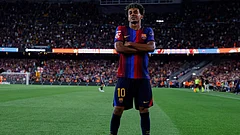
Lamine Yamal’s emergence in this tournament has felt less like a breakout and more like the official coronation of football's next global superstar. Throughout this campaign, he has operated with a maturity that defies his years, constantly acting as the primary catalyst for Spain’s attacking transitions.
Whether he is driving at defenders with his signature low-slung dribbling or threading passes through the eye of a needle, Yamal has proven he is no longer just a precocious talent; he is the undisputed engine of La Roja’s attack.
By stepping up on the biggest stage of all, Yamal has effectively confirmed his status as the heir apparent to the pantheon of all-time greats. His performances have silenced any lingering doubts about whether a player so young could handle the suffocating pressure of a World Cup semi-final, proving instead that he thrives when the stakes are at their highest.
As he prepares for the final, the narrative has shifted from his immense potential to his current brilliance, signaling that the future of football has arrived ahead of schedule and currently wears the Spanish red.
Mikel Oyarzabal: The Heartbeat of La Roja
Mikel Oyarzabal has been the quintessential heartbeat of this Spanish side, providing a level of tactical intelligence and clinical composure that has proved invaluable throughout this tournament. Far more than just a goalscorer, his movement off the ball consistently destabilizes defensive structures, creating the very pockets of space that allow his teammates to flourish.
Whether he is dropping deep to link play or timing a run into the box with surgical precision, Oyarzabal displays a rare footballing maturity that ensures he is always involved in the game’s decisive moments. His ability to remain unruffled under pressure—best exemplified by his nerveless penalty against France—highlights a player who doesn't just play the game, but intuitively understands how to control its outcome when it matters most.
A Silent Guardian: Luis De La Fuente
At the heart of Spain’s resurgence is the steady, transformative leadership of Luis de la Fuente, whose paternal guidance has fostered a squad built on profound trust and collective purpose. By blending his long-standing history with these players from their youth days with a sharp, flexible tactical mind, he has molded a team that defies rigid labels—capable of suffocating opponents with relentless possession or striking with clinical verticality as the match demands.
For De la Fuente, the philosophy is simple: teamwork transcends individual brilliance, and the path to greatness requires a willingness to suffer for one another. As this Spanish side continues to evolve under his calm authority, they look toward the horizon not merely as competitors, but as a group firmly convinced that they have the character and tactical depth to claim the highest honors in world football.