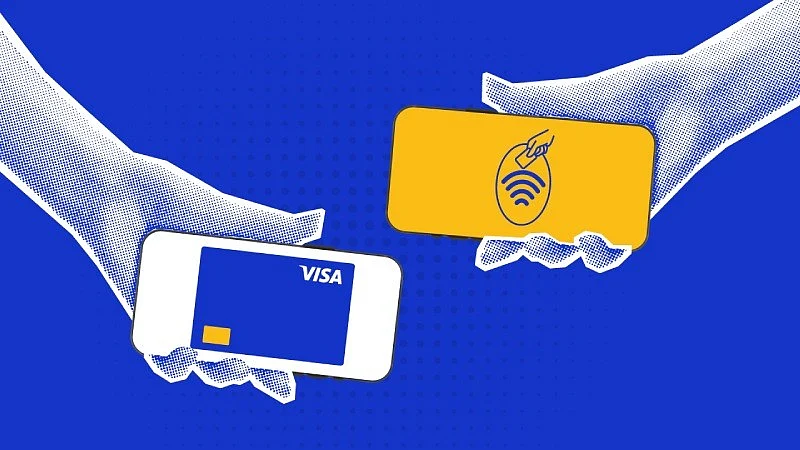
Visa has launched its Visa Payment Passkey service in India, introducing instant fingerprint and Face ID verification to replace traditional text-based OTPs
The system validates transactions locally in under two seconds using device-bound cryptographic keys, eliminating network delays and shielding users from phishing and SIM-swap fraud
The rollout has initially gone live via IDFC FIRST Bank across major payment gateways, though legacy SMS infrastructure will remain active as a fallback during a gradual, multi-year phase-out
The era of waiting for a One-Time Password text message while checking out online is officially beginning to wind down in India. Global payments major Visa has launched its Visa Payment Passkey service in the country. Aligned with the Reserve Bank of India’s alternative authentication framework, this rollout transitions digital commerce from traditional text alerts to device-native security. For India's active digital payment users, the shift promises to significantly cut down transaction failures and strengthen defence lines against evolving cyber fraud.
What Is Visa Payment Passkey?
The Visa Payment Passkey is an authentication layer designed to confirm a cardholder's identity directly through their hardware, completely bypassing the need for an SMS-based verification code. Built on the globally recognised FIDO (Fast Identity Online) standards, the technology treats authentication exactly like unlocking a smartphone. Instead of routing a code through a cellular network, the system encourages the user's device to generate a secure, signed cryptographic key pair to validate the transaction instantly.
How Will Face ID And Fingerprints Replace OTPs?
During an online checkout, consumers will no longer experience browser redirections or text message delays. The system leverages the native biometric and passcode features already integrated into modern smartphones and laptops.



Users can confirm transactions using a quick fingerprint scan or Face ID facial recognition. On devices without biometric sensors, the flow seamlessly falls back to the user's local device PIN, pattern, or password. Because the verification occurs locally on the end-user's device, the entire transaction validates in under two seconds, removing the server round-trips that frequently cause payment drop-offs during peak traffic hours.

Which Banks Have Started The Service?
The OTP-less payment service has officially gone live with IDFC FIRST Bank, serving as Visa's primary banking partner for the initial launch phase. To build out ecosystem compatibility, Visa has integrated the platform with major payment aggregators and gateways, including Juspay, Razorpay, PayU, Pine Labs, BillDesk, Wibmo, M2P Fintech, and Paytm Payments Services.
The service is initially rolling out to select cardholders transacting across prominent consumer platforms including Myntra, Paytm, MakeMyTrip, Tata Starbucks, Reliance Digital, and EatSure. Following a one-time enrolment process within their issuing bank’s existing mobile application, users can deploy their passkey seamlessly across all participating merchants.
Is OTP Going Away Completely?
No, OTPs are not disappearing overnight. The transition away from text-based verification will be a gradual, multi-year phase-out across the broader banking sector. While the RBI’s updated authentication framework explicitly encourages banks and card networks to deploy alternatives to SMS verification, OTPs will remain active as a critical secondary fallback mechanism.
This ensures that users with older, non-compliant feature phones or consumers transacting via legacy banking portals face zero disruption while the ecosystem steadily upgrades its underlying infrastructure.

Are Passkeys Safer Than SMS Authentication?
Cybersecurity experts and payments analysts heavily favor device-based passkeys over traditional SMS infrastructure. Suresh Sethi, Visa’s Group Country Manager for India and South Asia, noted that authentication cannot remain dependent on passwords or one-time codes designed for an earlier digital era, adding that it must become secure by design, invisible to the consumer, and resilient against increasingly sophisticated fraud.
By locking the authentication token securely within the phone's physical hardware, the passkey framework removes the weakest link in digital transactions, which is human error driven by social engineering, phishing links, and deceptive customer care calls. Unlike cellular network routes that are vulnerable to SIM-swap interception and require strong telecom signal strength, the local hardware route is said to be immune to phishing because cryptographic keys cannot be copied, intercepted or shared, and it functions independently of mobile network range.