US backs Pakistan's right to defend itself against terrorism amid Kabul tensions.
Pakistan and Afghanistan remain divided over militant safe haven allegations.
February border clashes killed 28 civilians and deepened regional security concerns.
The United States has reaffirmed its support for Pakistan's right to defend itself against terrorism, as tensions between Islamabad and Kabul continue to simmer following their worst military confrontation in years.
The US State Department said on Thursday that Washington supported Pakistan's right to defend itself against terrorist attacks, adding that the Pakistani people had suffered greatly at the hands of terrorists.
The remarks come months after the two neighbouring countries, once close allies, exchanged strikes in February in what observers described as their most serious military clash in recent memory.
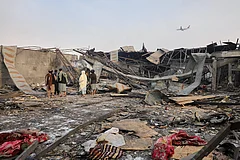
According to the United Nations, Pakistani airstrikes along the Afghan border killed at least 28 civilians and wounded 49 others. Days later, Afghanistan's Taliban government said it had launched retaliatory airstrikes inside Pakistani territory, while Islamabad said its forces intercepted and shot down four rudimentary drones over the resource rich southern province of Balochistan.
A Fraught, Longstanding Dispute
Pakistan, a nuclear armed state with considerably greater conventional military capability than Afghanistan, has repeatedly accused Kabul of providing shelter to militants responsible for planning attacks on Pakistani soil. The Afghan Taliban reject those allegations outright, describing militancy as Pakistan's internal problem and accusing Islamabad of deflecting blame for its own security failures.


The Taliban, who returned to power in 2021 following the withdrawal of US led forces after two decades of conflict, bring extensive experience of guerrilla warfare to any potential confrontation. Washington continues to designate the Afghan Taliban as a terrorist organisation.
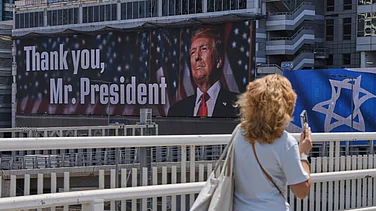
Ties between Pakistan and the United States have strengthened since President Donald Trump returned to the White House, with Islamabad serving as a mediator in efforts to resolve the US and Israeli conflict with Iran. Pakistan holds major non-NATO ally status with Washington, a designation that underlines the strategic weight the US attaches to the bilateral relationship despite periodic strains.