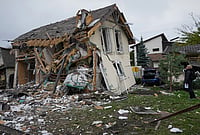
Decades of organised hostility culminated in widespread anti-Ahmadiyya violence across India in 1979.
Kashmir witnessed extreme brutality, exposing both mob violence and state inaction.
The events underline the urgent need for accountability, early intervention and protection of minority rights.
Religious minorities in South Asia have often been targeted under claims of religious purity and majoritarian power. Theological differences are routinely exploited to justify exclusion, dehumanisation and violence. One such persecuted group is the Ahmadiyya Muslim Community, which promotes secular values, liberal humanism, tolerance and peaceful coexistence. Its motto, “Love for All, Hatred for None,” reflects a commitment to inclusive societies. Yet these very principles have made Ahmadis a target of persecution in India, particularly in Kashmir, as well as in Pakistan. Such violence shows how sectarianism, driven by political mobilisation and enabled by institutional inaction, erodes constitutional protections for minorities.
A stark example occurred in 1979, when anti-Ahmadiyya violence spread across parts of India. The violence drew on decades of sectarian rhetoric and was intensified by developments such as Pakistan’s 1974 constitutional amendment declaring Ahmadis non-Muslims. This measure reinforced exclusionary narratives across the region and fostered intolerance, even in areas like Kashmir with long traditions of coexistence.
The wave of violence began in eastern India before moving northward. In Bhadrak, Odisha, Hatim Khan was burnt alive inside his shop. In Bhagalpur, the Ahmadiyya Mission House was attacked and its missionary, Maulana Abdul Rashid Zia, narrowly escaped death. The unrest soon reached Jammu and Kashmir. In Jammu, an Ahmadiyya mosque came under attack but was saved due to timely intervention by security forces. In Srinagar, a large mob surrounded the Ahmadiyya Mission House. Stones were hurled and windows were shattered. According to Maulana Hameed Qowsar, the then missionary in charge, a mob of around 10,000 people gathered on 4 April 1979 carrying petrol cans with the clear intent to burn the mosque. Heavy rain and hail forced the mob to disperse that day. The next day, the mob returned and resumed stone pelting until security forces intervened.



South Kashmir witnessed some of the most widespread destruction. Villages including Asnoor, Mandojan, Manloo, Maishwara, Zrakan, Arwani, and Bejbehara saw homes burnt, shops looted, granaries emptied, livestock killed, and orchards destroyed. Reports published in Ahmadiyya community’s publication Weekly Badar Qadian, dated 19 April 1979, suggest that the attacks were planned and coordinated rather than spontaneous outbursts of anger.
In the rural village of Korel in Damhal Hanjipora tehsil of district Kulgam in southern Kashmir valley, an incident of shocking brutality took occurred. A teacher Noor Ahmed had faith in the goodwill of his students, but he remained unaware of how deeply they had been indoctrinated by hate. He was bound in cloth, doused with kerosene, and burnt alive.
Among all affected areas, Reshinagar faced the most extensive violence. On the morning of 4 April 1979, the village appeared to follow its usual peaceful rhythm. Men had gone to their fields, women attended to household duties, and children played in the open spaces. The atmosphere was calm and no one anticipated the terror that was about to unfold.Within moments, this tranquility turned into horror.
According to local eyewitness Shamim Ahmed Ganaie, a large and aggressive mob of 40,000 people entered the village, shouting slogans and unleashing destruction that continued for several days. Homes, shops, schools, and religious structures were reduced to ashes. A local library containing thousands of books was destroyed. Granaries were looted, livestock was killed, and orchards were cut down. Copper utensils and jewellery were taken away in the name of Maal-i-ghanimat (spoils of war). Mosques and copies of the Holy Quran were also desecrated. The violence went far beyond material damage. Men were severely beaten and women were harassed and molested under the guise of jihad.
Eyewitness accounts reveal what happened. Ghulam Ahmad Banday recalled how he was forced to publicly denounce the founder of his faith. When he refused, he was brutally beaten, his beard was pulled out, and both his house and cattle shed were set on fire. Ab Hamid Banday recounted how intruders urinated on the only meal prepared by his mother. He broke down emotionally while narrating the event years later. A Kashmiri Pandit eyewitness Bindu Singh Janwal remembered how a massive crowd gathered within seconds and transformed the entire village into a blazing inferno. Animals were seen burning alive, their flesh melting as they ran in agony. Women and children cried helplessly, and their screams continued to echo in his memory.
Master Abdul Rasheed Mir, now eighty years old, recalls that the destruction reached every corner of the village and that the fires continued to burn for nearly two weeks. What followed the initial violence was equally brutal. People were left without homes and were forced to live under the open sky, exposed to relentless rain and harsh weather conditions. Survival itself became an everyday struggle. Families stood helpless and shattered, with nothing left to hold on to. For Master Abdul Rasheed Mir, the events represented total ruin and a doomsday for Reshinagar.
Contemporary newspaper reports, including an account published in The Tribune dated 13 April 1979, report the massive scale and intensity of the destruction in Reshinagar. Despite facing such overwhelming violence and loss, the Ahmadiyya community responded with remarkable restraint. It upheld the values of peace, dignity, and humanity, choosing patience and non-retaliation over any form of vengeance.
The events of 1979 were not isolated. Sectarian hostility towards the Ahmadiyya community had been building for decades through religious polemics, political mobilisation and organised campaigns that fostered exclusion and systematic dehumanisation. Anti-Ahmadiyya agitation gathered pace with the Majlis-e-Ahrar movement in the 1930s, supported by influential figures such as Allama Iqbal and Maulana Maududi, which helped entrench hostile narratives. Pakistan’s 1974 constitutional amendment declaring Ahmadis non-Muslims further emboldened these attitudes across the region.
Kashmir, despite its history of communal harmony, became vulnerable amid political uncertainty. Inflammatory rhetoric quickly turned into organised mob violence, as seen in April 1979. The unrest also exposed serious institutional failures: authorities did not act in time, and no meaningful inquiry or reconciliation followed. The absence of accountability deepened the trauma for Ahmadiyya families.

The Constitution of India provides strong safeguards for minorities. Article 14 guarantees equality before the law, and Article 25 protects freedom of religion. These provisions are intended to ensure that no community is targeted for its beliefs. When violence occurs, the state has a clear duty to act decisively and impartially.
The lessons of 1979 are clear. Authorities must act early to prevent mob mobilisation. Hate speech must be treated as a serious threat. Law enforcement must remain impartial and ensure accountability. Vulnerable communities require swift and effective protection. As a secular state, India must commit to firm and timely intervention whenever such risks arise.
Civil society also has a vital role. It must reject hate, defend the vulnerable and oppose all forms of religious targeting. By promoting unity and inclusive values, it can help prevent such tragedies.
Today, Reshinagar is among the more prosperous villages in the district, its recovery reflecting the resilience of its people. Yet the events of 1979 remain a stark warning of the dangers of sectarian intolerance and the targeting of minorities in the name of religion. The brutalities suffered by the Ahmadiyya community in Kashmir and other parts of India, as well as the severe persecution they continue to face in Pakistan, demonstrate how a community committed to secularism, liberalism, and humanistic values can become a target of rigid orthodoxy and organised violence.
Remembering these events with honesty and empathy is essential. It reaffirms the principles of equality, justice and respect for all faiths. Only sustained vigilance, firm legal enforcement and a collective commitment to pluralism can break cycles of religious intolerance.