






India’s youth are not pests infesting the system. They inherit a profound legacy of debate and inquiry, seen in the philosophical dialogues of the Upanishads and the constitutional guarantees of free speech and expression.
Critical thinking has the power to reverse dehumanisation. It restores voices to the silenced and transforms potential "insects" into empowered, articulate humans.
A society that truly listens to its young generation becomes wiser, more resilient, innovative, and equitable.
Media reports of oral observations attributed to Chief Justice of India sparked intense nationwide debate. While presiding over a petition related to the designation of senior advocates in the Delhi High Court, he described certain unemployed young Indians as "like cockroaches." He observed that those who fail to secure employment or establish themselves in professions sometimes turn to social media, journalism, or RTI activism and begin attacking the system and public institutions. He further referred to such individuals as "parasites of society."
The public reaction was swift and powerful. Satirical memes about a "Cockroach Janata Party" went viral, especially among Gen Z users on social media. Opposition parties, lawyers, journalists, and ordinary citizens expressed strong criticism, viewing the language as an attack on the aspirations and voices of India's young generation. In response, the Chief Justice issued a clarification the following day. He stated that his oral observations had been misquoted by sections of the media. He clarified that his criticism was specifically directed at individuals who enter noble professions like law, media, and social media using fake or bogus degrees, not at the youth of the country in general. He emphasised that Indian youth are the "pillars of a developed India" and expressed pain over the way his remarks were reported.
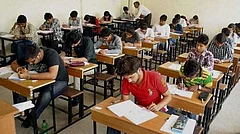



Despite this clarification, the original phrasing continued to resonate deeply. It framed the act of questioning systemic issues, seeking accountability, or highlighting failures as something undesirable and vermin-like according to critics. This incident represents more than an isolated judicial comment. It highlights a broader societal discomfort with critical voices coming from the younger generation. In such moments, literature and philosophy offer powerful tools for reflection. Franz Kafka's novella The Metamorphosis, published in 1915, serves as a profound mirror. It reveals the consequences when societies begin to view their thinkers, critics, and the struggling as pests rather than vital human beings deserving dignity and dialogue.
Kafka's The Metamorphosis opens with one of the most unforgettable lines in modern literature: "As Gregor Samsa awoke one morning from uneasy dreams he found himself transformed in his bed into a gigantic insect." Gregor Samsa is an ordinary travelling salesman. For years, he has dutifully supported his financially dependent family through monotonous and exhausting work. His life revolves around providing for others at the cost of his own desires and freedom. One morning, he wakes up changed into a huge, repulsive insect. His body is no longer human. His voice becomes a series of incomprehensible squeaks. He cannot leave his bed easily, and simple tasks become monumental struggles.
The family's reaction unfolds in heartbreaking stages. At first, there is shock and concern. His sister Grete takes on the responsibility of feeding him and cleaning his room. However, as the reality of his permanent condition sinks in, patience wears thin. Gregor becomes a burden rather than a provider. His father, previously weakened and reliant on him, regains strength and even attacks Gregor violently with apples, one of which lodges in his back and causes lasting injury. The family isolates him in his room, eventually taking in boarders to generate income. Gregor, once the breadwinner, now hides under the sofa to avoid causing fear or disgust. He gradually stops eating, loses his appetite for life, and dies a lonely death. The family then experiences a sense of relief. They move to a smaller but more comfortable apartment, take up jobs, and look forward to a brighter future without the weight of caring for the "monstrous" Gregor.
Literary scholars interpret The Metamorphosis as a rich allegory exploring themes of alienation, dehumanisation, family dynamics under economic pressure, and the absurdities of modern capitalist society. Gregor symbolises the individual whose worth is measured solely by economic productivity. Even before his physical transformation, he lived an alienated existence — trapped in a job he hated, sacrificing personal fulfillment for familial duty. The metamorphosis merely makes visible what was already happening internally. Once he can no longer contribute financially, his humanity is stripped away. His family’s love proves conditional, dependent on his utility. Kafka masterfully portrays how society and even close relationships can reduce a person to something grotesque and expendable when they deviate from expected roles.
This narrative connects strikingly with the recent controversy surrounding the Chief Justice’s remarks. When young people who raise uncomfortable questions about unemployment, examination scams, institutional inefficiencies, or policy shortcomings are likened to cockroaches, a rhetorical metamorphosis takes place. They are transformed in public discourse from concerned citizens into something subhuman, disgusting, and intrusive. Their critiques are not engaged on intellectual merit but dismissed through visceral rejection and disgust. Like Gregor Samsa, their value is judged primarily by how seamlessly they conform to societal expectations of productivity and silence. Any form of deviation invites exclusion, marginalisation, or labelling. The deeper conditions enabling such attitudes were present long before any single remark. In contemporary India, educated youth face immense pressures. Youth unemployment (ages 15-29) stood around 15.2 per cent as of March 2026, with young women experiencing significantly higher rates near 17.7 per cent. Many graduates struggle despite qualifications, leading to frustration and legitimate grievances. When they channel this into RTI applications seeking transparency, social media campaigns highlighting issues, or journalistic efforts, responses sometimes label them as attackers or parasites rather than participants in democratic accountability.
The Insect and the Intellectual
Kafka illustrates how dehumanisation operates on multiple levels — external and internal. Gregor's family does not abandon him overnight, but economic and emotional strain gradually erodes empathy. He internalises their revulsion, begins to view himself through their eyes, and ultimately wastes away. Similarly, repeated societal dismissal of critical youth voices can foster self-censorship. Some young people may withdraw entirely from public life. Others might express discontent in more polarised or unproductive ways. The overall result is a shrinking space for thoughtful, evidence-based dialogue. Society as a whole loses access to innovative ideas and necessary checks that could address root problems like skill mismatches, job creation gaps, and institutional reforms. Kafka’s work also critiques the absurdities of bureaucracy and unchecked capitalism. Gregor’s employer offers no loyalty or support once he becomes unproductive. In parallel, when institutions appear opaque or opportunities feel unequally distributed, natural human responses include inquiry and protest. Branding such responses as parasitic conveniently sidesteps underlying systemic issues and prevents collaborative problem-solving. History provides sobering lessons about the power of vermin metaphors and demonstrates that dehumanising metaphors such as ‘vermin’ or ‘parasites’ have often carried dangerous social consequences when used in political discourse. Such language makes it psychologically easier to justify exclusion, suppression, or worse. In a robust democracy like India, where the judiciary serves as a guardian of constitutional values including freedom of expression, words from the highest offices carry profound cultural influence. They can either nurture a culture of open inquiry or inadvertently foster fear and conformity.
Why Questioning Matters for Intellectual Growth
Questioning authority or the status quo is not inherently destructive. It constitutes the very foundation of intellectual development and vibrant democratic life. This tradition traces back over 2,400 years to Socrates in ancient Athens. Socrates developed a method of persistent, structured questioning known as the elenchus. He would engage citizens in the marketplace, asking them to clarify concepts like justice, virtue, or knowledge. Through careful dialogue, he exposed contradictions and unexamined assumptions in their beliefs. His purpose was not victory in debate but the collective pursuit of truth and self-awareness.
The Oracle at Delphi proclaimed Socrates the wisest because he alone understood the depth of his own ignorance. This radical humility became the engine of his inquiries. Plato documented these exchanges in works such as the Apology, Euthyphro, and Theaetetus. Here, questioning appears as intellectual midwifery — helping ideas come to birth by removing intellectual obstacles. Tragically, Socrates was tried and executed on charges of impiety and "corrupting the youth." This accusation underscores a recurring pattern: established powers frequently perceive critical inquiry as a threat rather than a strength.
Later philosophers extended this foundation. Aristotle advanced systematic logic, empiricism, and observation as tools for testing claims. Skeptical traditions stressed the importance of doubting surface appearances to reach deeper realities. During the Enlightenment, Immanuel Kant delivered a stirring call in his essay "What is Enlightenment?": "Sapere aude" — Dare to know. In his monumental Critique of Pure Reason, Kant rigorously examined the capabilities and boundaries of human reason. He argued that genuine maturity arrives only when individuals rely on their own rational faculties instead of external authorities or traditions. Critical reason, for Kant, serves as a tool to dismantle unfounded dogmas and construct more secure foundations for knowledge and ethics.
John Dewey, a key figure in modern educational philosophy, placed reflective or critical thinking at the centre of learning and democracy. In his influential book How We Think (1910, revised 1933), Dewey portrayed it as an active, persistent, and careful examination of beliefs in light of supporting evidence and likely consequences. The process includes recognising problems, collecting relevant data, forming hypotheses, testing them, and remaining open to revising conclusions when new evidence emerges. Dewey viewed this reflective habit as essential for creating informed, participatory citizens capable of sustaining democratic societies rather than passive subjects.
Building on these ideas, modern scholars such as Richard Paul and Linda Elder define critical thinking as the disciplined art of analysing and evaluating thinking with the goal of improving it. It cultivates key intellectual virtues: humility to acknowledge personal biases, courage to confront difficult truths, empathy to appreciate differing perspectives, and integrity to apply consistent standards.
In the Indian context, these principles hold special relevance. A thriving democracy depends on citizens who actively question corruption, inequality, governance failures, and policy shortcomings. The Right to Information Act and independent journalism function as practical embodiments of Socratic spirit, enabling transparency and course correction. Suppressing or stigmatising such activities risks creating closed systems where problems remain hidden and unaddressed.
Critical Thinking as the Core of Intellectualism
To hold critical thinking as the essence of intellectualism is to reject artificial divisions between "productive" contributors and "troublesome" questioners. Authentic intellectual life fuses doing with deep reflection. Scientists advance knowledge only by rigorously questioning prevailing theories. Engineers must scrutinise the ethical and societal impacts of their creations. Citizens who fail to examine official narratives risk becoming enablers of inefficiency or injustice. The philosophers we have considered highlight what is at stake. Socrates sacrificed his life to foster critical habits in the young. Dewey cautioned that education lacking reflection manufactures compliant automatons ill-suited for self-governance. Kant taught that true moral freedom emerges only through autonomous reasoning. A society that discourages questioning may achieve temporary surface-level stability. In the longer term, however, it invites intellectual stagnation, reduced innovation, and weakened accountability. Major scientific breakthroughs and social reforms — from challenging geocentric models to dismantling discriminatory practices like untouchability or gender-based exclusion — have always originated in persistent, courageous inquiry.
India’s youth possess enormous potential. They navigate challenging education systems, embrace new technologies, and drive entrepreneurial ventures. Legitimate frustrations arising from unemployment and systemic gaps deserve constructive outlets. Embracing critical thinking channels this energy productively toward better policies, skill enhancement programs, and inclusive growth. Labeling questioners as cockroaches, by contrast, deepens alienation and squanders collective talent.
Reclaiming Humanity and Dialogue
The Metamorphosis endures across generations because it captures the universal anguish of being reduced to something less than fully human. Gregor’s quiet endurance, his desperate yet futile attempts to communicate, and his solitary demise stir both compassion and self-recognition. Many readers identify with the pressures whether bureaucratic, familial, or societal that erode personal dignity. The recent judicial episode and the strong public response create a valuable opportunity for national introspection. India’s youth are not pests infesting the system. They inherit a profound legacy of debate and inquiry, seen in the philosophical dialogues of the Upanishads and the constitutional guarantees of free speech and expression. Genuine national development extends far beyond GDP figures. It requires a citizenry equipped for independent, reasoned thought. We must shift from metaphors of disgust toward genuine engagement. Schools and universities should integrate Socratic questioning with technical training. Leaders at all levels can demonstrate willingness to engage criticism constructively. Civil society and media play crucial roles in creating platforms for evidence-based discussion instead of echo chambers or polarisation.
Critical thinking possesses the power to reverse dehumanisation. It restores voices to the silenced and transforms potential "insects" into empowered, articulate humans. A society that truly listens to its young generation becomes wiser, more resilient, innovative, and equitable. Conversely, one that seeks to silence or eliminate questioners remains confined within its own rigid, absurd limitations much like the locked room in which Gregor Samsa spent his final days. Let the youth of India continue asking probing questions. Let them scrutinise policies, demand greater accountability, propose fresh solutions, and envision superior futures. Their inquiries embody not parasitism but the vibrant, living heartbeat of a dynamic and hopeful nation. In safeguarding and encouraging this spirit of critical inquiry lies the most promising pathway to a truly developed and enlightened India.
Disclaimer: The views and opinions expressed in this article are those of the author and do not necessarily reflect the views of Outlook.
















