Seven years after Article 370, Jammu and Kashmir’s promised transformation remains incomplete.
Tourism, infrastructure and connectivity have improved, alongside reduced stone-pelting and violence.
Unemployment, limited state powers and weak public trust continue to persist.
It has been seven years since Article 370 and 35A were read down and the erstwhile state of Jammu and Kashmir was bifurcated into the Union Territories of J&K (with a legislature) and Ladakh (without a legislature); since then, a lot of water has flowed through the Jhelum.
The region has since gone through some significant constitutional and political transformations, justified by the Union Government citing complete integration, improved governance, unhindered development, improved security, and above all equal constitutional rights to all citizens.
Seven years later, the debate over the constitutional changes has been made irrelevant. The moot point now is whether the objectives touted as "transformative" have, in practice, been realized or not.
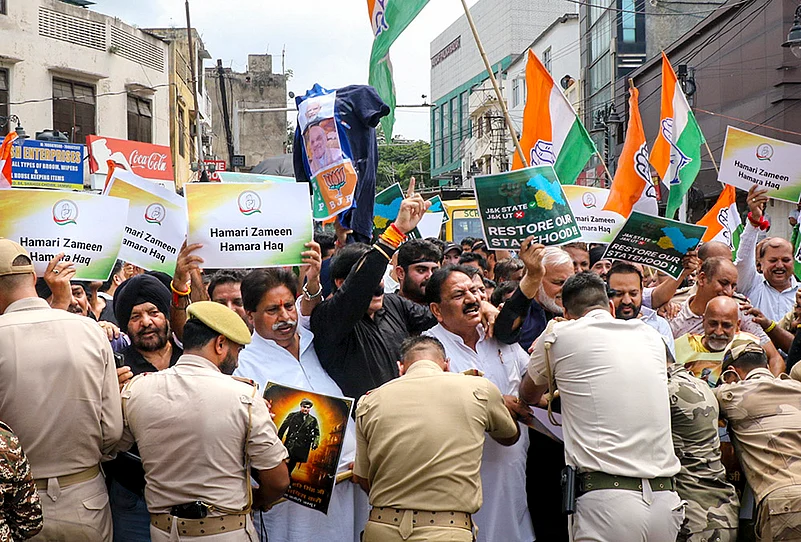
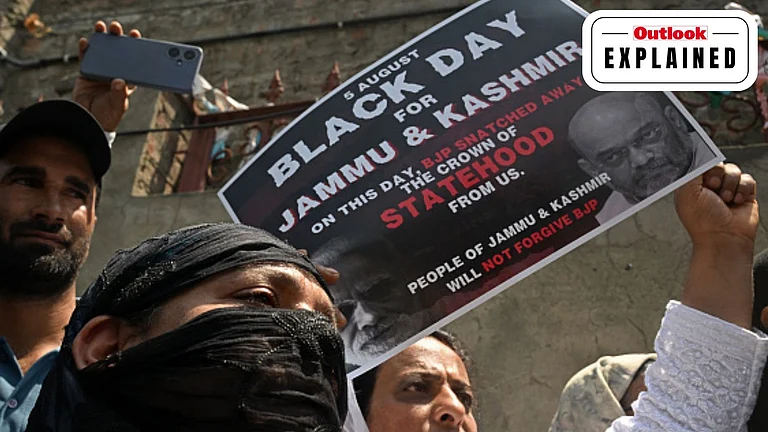
On undoing and restoring a few of the rights snatched from J&K, the Union Government had, on record, assured both Parliament and the Supreme Court that the process of restoration would follow a chronological order, an order devised and mechanized in Delhi, without any consultation with the people of J&K. The sequence was to be delimitation in J&K, which has been completed; Assembly elections, which ended nearly five years of direct Central rule; and finally, the restoration of statehood at an "appropriate time." However, despite an elected government in place, Jammu and Kashmir continues to be ruled from Delhi, at least in some of the important domains. Statehood, the final step in the promised sequence, remains unrestored. Yet, nearly two years later, that "appropriate time" remains subject to the mood of Delhi rather than any discernible constitutional or political timeline.

The structural predicaments of operating in a UT
While there are rising federal tensions across the country, yet, state governments enjoy broad legislative and executive autonomy over subjects contained in the State List. Contrarily, the UT model with an elected cabinet is as good as the will of Lieutenant Governor and, by extension, that of the Union Government. The LGretains extensive discretionary authority and possesses powers that considerably disables the elected government of its niche. The system of diarchy has rampaged the “separation of power” and “checks and balances” of its essence.
Therefore, the unending dilemma of whether, when, or even if statehood will be restored has overtaken the demand for restoration of Article 370. And of course, the question of democratic governance keeps haunting J&K. Delay and denial of something as basic as statehood erodes the essence of popular government and inevitably fosters trust deficit among the people. The kernel of democracy lies with the elected who must possess the authority to govern and therefore be held accountable by the electorate. An elected government without corresponding real authority risks creating institutional ambiguity rather than strengthening democratic governance.
Over the past several years, the national conversation has understandably prioritised development, investment, security, and integration. These are important objectives and deserve recognition. However, constitutional governance cannot be evaluated solely through administrative indicators. Questions of identity, dignity, political representation, constitutional rights, and public trust remain equally significant. For many people in Jammu and Kashmir, the issue is not simply of transformations but whether the relationship between citizens and institutions has become more participatory and dignified.
Thus, the continued absence of full statehood remains one of the most haunting manifestations of this democratic deficit. Democracy acquires meaning not simply through periodic elections but through effective self-government. Elections create legitimacy; meaningful executive authority gives that legitimacy practical expression. Without the latter, democratic participation risks becoming symbolic rather than substantive.
Has the abrogation of Article 370 achieved the legislative intent that accompanied it?
Article 370 has ceased to operate; the Constitution of India now applies uniformly to Jammu and Kashmir. However, change must ultimately be measured not by legal transformation alone but by whether the promised political, social, and developmental outcomes have materialised. Assessed from that broader perspective, the answer appears considerably more convoluted.
The argument drummed up by the BJP before abolishing Article 370 was that the special status has done more harm than any good to Jammu and Kashmir and hindered its economic progress. Once revoked, the BJP assured people that Jammu and Kashmir will see big corporate investments flowing into the state, which would ultimately generate employment, unleash the ear on industrialization, improve overall infrastructure, and help local businesses benefit from the country’s growth story.
No doubt, initially there were visible changes on the ground, especially in the tourism sector as post 2019 saw record number of tourists arriving in the Kashmir valley, thus significant an uptick in the investment. It was complemented by improved connectivity between Kashmir and Jammu regions as new highway projects were undertaken. But most importantly, the Kashmir valley got connected with the railway network, helping flow of people and goods during difficult winter months.
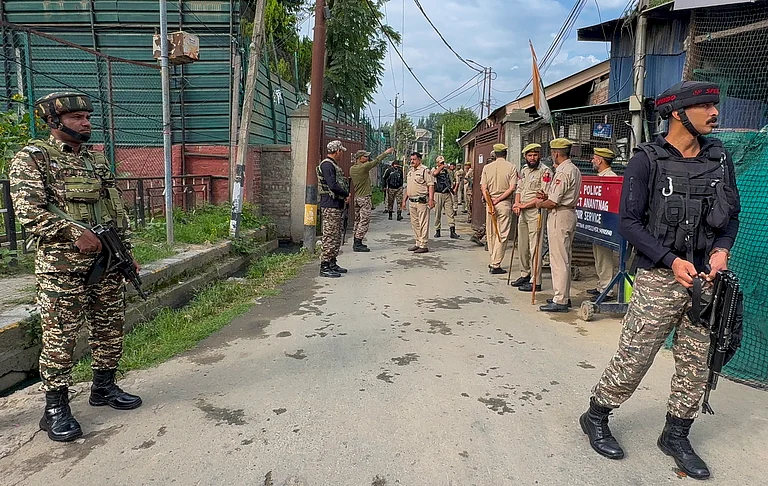
On the security front, stone-pelting incidents have declined significantly. One cannot ignore these developments but they don’t paint the complete picture either.
However, the broader socio-economic and political reality is far from what is construed and what political narrative often suggests.
Unemployment continues to remain one of the most pressing concerns, particularly among educated youth. Inflation has eroded households of their savings. Economic uncertainty paints a very dismal picture as small businesses, local traders, artisans, and sections of the private sector continue to struggle. Many citizens doubt whether any investment, if at all, has generated sufficient local employment or not.
The decline in street violence and stone-pelting brings relief but at the same time denial of passports and police verification for jobs, contradicts the narrative that all is well.
The armed militancy might have gone down in the valley but it is not completely wiped out, as often claimed. The recent sprout in attacks on police and non-local labourers shows how fragile the sense of peace can be in a place like Kashmir.
Likewise, peace is meaningless unless it can be felt on the ground and its dividends passed on to the larger population. But unfortunately, there are still attacks on Kashmiri traders, students and other professionals in different parts of the country. These attacks are often brushed aside as isolated incidents but leave a lasting mark on people’s minds. It creates an impression that Kashmiris still have a long way to go before they are welcomed outside Kashmir.
August 5, debate should move beyond political symbolism and partisan narratives. The central question should be about the amount of change ordinary citizens felt in governance after 2019. The question one should ask is, did people get jobs? Has public trust in institutions improved? Do citizens genuinely feel empowered as Kashmir is ruled by New Delhi through Lieutenant Governor? Do young people feel optimistic about their future?
These are the parameters upon which the success of constitutional changes made on August 5, 2019, will ultimately be judged.Sustainable peace cannot rest exclusively upon administrative efficiency or security measures. Lasting stability emerges when citizens have confidence in democratic institutions, and are willing to participate in the governance, and believe that constitutional guarantees are equally applicable to them.
On these larger democratic questions, there remains considerable room for reflection. Seven years later, the time is ripe for the restoration of full statehood and to renew dialogue with the stakeholders, which may well represent the next essential chapter in that unfinished constitutional journey. However, for political establishments in J&K, the continued demand for constitutional safeguards should not be traded for something as basic as statehood.
(This article has been authored by Nasir Khuehami who is National Convenor of the Jammu and Kashmir Students Association and a doctoral scholar at the Nelson Mandela Centre for Peace and Conflict Resolution, Jamia Millia Islamia, New Delhi. Views expressed are personal)