Indian authorities seized three oil tankers off the Mumbai coast that are reportedly linked to Iran and listed under U.S. sanctions, during a maritime surveillance operation in the Arabian Sea.
Investigations are underway to examine the vessels’ ownership, cargo, and compliance with Indian maritime and trade regulations; the ships have been directed to holding points pending inquiry.
The incident highlights growing scrutiny of Iranian oil shipments, as the U.S. continues sanctions on Tehran, while India balances regulatory enforcement with its independent foreign policy stance.
Indian authorities have seized three oil tankers linked to Iran and sanctioned by the United States in a coordinated operation off the coast of Mumbai, officials confirmed on Tuesday. The vessels were intercepted in the Arabian Sea during a routine maritime surveillance operation, according to sources in India’s Directorate General of Shipping and the Coast Guard.
The tankers, reportedly operating under foreign flags, are believed to have indirect ties to entities blacklisted by the U.S. Treasury for allegedly facilitating Iranian oil exports in violation of American sanctions. Preliminary investigations suggest the ships were carrying crude oil cargoes suspected to be of Iranian origin.
The seizure comes amid heightened global scrutiny of shipping networks allegedly used to circumvent U.S. sanctions on Iran’s energy sector. Washington has repeatedly targeted what it calls “shadow fleet” tankers that use complex ownership arrangements, flag-hopping, and ship-to-ship transfers to mask the origin of Iranian crude.
The National Iranian Oil Company (NIOC) has stated that tankers seized by India and their cargoes have no connections to the company, Reuters reported Iranian state media say.


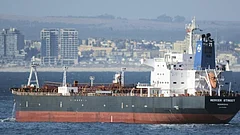
According to the defense ministry's statement, three vessels were intercepted by the ICG around 100 nautical miles west off Mumbai. “The operation was initiated following detection by ICG’s technology-enabled surveillance systems, which identified a motor tanker engaged in suspicious activity within the Indian Exclusive Economic Zone (EEZ),” it added.
Further, the statement noted that a digital investigation and data pattern analysis of vessel movements “led to the identification of two additional vessels converging on the tanker, suspected to be involved in illicit ship-to-ship transfer of oil-based cargo, thereby evading substantial duties owed to coastal states, including India”.