West Bengal’s first BJP government’s first budget saw major shifts from the policies of the erstwhile Mamata Banerjee government that ruled the state for the past 15 years.
The Suvendu Adhikari government has prioritised infrastructural development and job generation, which stagnated during Banerjee’s Trinamool Congress (TMC) rule. At the same time, the government decided to continue the social welfare schemes, which were among the keys to the Banerjee government’s popularity, though with some modifications.
Lack of industries, infrastructural development and employment opportunities had become the most contentious issues in West Bengal. Twenty years ago, the CPI(M)’s Buddhadeb Bhattacharjee government had initiated a mega industrialisation drive with a planned car plant, chemical hub and steel plant, among other projects. However, conflict due to land acquisition led to the government’s fall in 2011.
Since Banerjee rose to power riding sentiments of the anti-displacement movement, she never pushed for any project that could trigger land-related conflict. Therefore, there has been no industrial or infrastructural push during her rule. The BJP had promised to change this and restore Bengal’s industrial glory of the immediate post-Partition years.
Infrastructure push
In Monday’s budget, Swapan Dasgupta, the finance minister in the Suvendu Adhikari government, proposed a new airport near Kolkata, metro lines in other major urban centres like Siliguri, Durgapur and Asansol, and five major river bridges.
The proposed allocation for industry, commerce, and entrepreneurship has increased to ₹3,266.59 crore—more than double the Banerjee government’s last allocation of 1,477.91 crore. A ₹ 5,000 crore industrial incentive package has also been proposed.

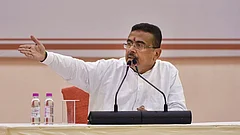
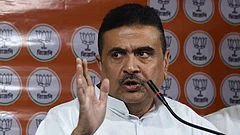

Calling the budget “inclusive”, CM Adhikari said that promoting big industries, micro, small and medium enterprises (MSME), food processing, skill development and subsidy-oriented businesses have been prioritised, apart from filling government job vacancies and creating new industrial jobs.
The budget proposed filling 1 lakh vacancies in government jobs, with 33 percent reservation for women. This includes 20,000 recruitments in the police department and 50,000 teaching and educational staff.
The total budget is of ₹ 4.38 lakh crore, 11% higher than the Trinamool Congress government’s last budget of ₹3.89 lakh crore. Industry experts and political opponents are curious to see how the government manages to allocate funds for growth while reducing the state’s debt burden. The state's total debt stands at ₹8,15,891 crore, Dasgupta said during his budget speech.
Keeping education, skill development and employability in mind, the budget proposes to establish free coaching centres for preparation for competitive exams, skill development programmes, model schools and two central universities.
Veteran management consultant Roopen Roy sees the budget as pro-business and pro-market. “They are trying to balance social justice with market-friendly policies, but the focus is visibly more on business expansion to create employment opportunities rather than doles,” Roy told Outlook.
Roy appreciates that the new government is looking to use technology to reduce corruption and bureaucratic red-tape. Corruption and extortion had been two of the major issues during the Mamata Banerjee rule that the opposition—and even some business leaders—blamed for the poor state of industrial growth.
However, the government has not neglected agriculture and rural development either. Major allocations include ₹51,836.55 crore for Panchayat and rural development, ₹8,565.84 crore for agriculture, and ₹1,404.42 crore for livestock development.
One of the major announcements has been to hike dearness allowances (DA) for government employees by 20 percentage points, to be applicable from October. Previously, government employees received DA at a rate of 18 per cent—which now becomes 38 per cent.
This is a partial fulfilment of the government employees’ demand, as there will still be a 22 percentage point gap in DA between central and state government employees. The BJP had promised an immediate implementation of the Seventh Pay Commission.
While that remains to be fulfilled, most government employees welcome this as better than the previous government. A 20 percentage point hike in DA during the Banerjee government was unthinkable, government employees point out.
Dasgupta said that while all existing social welfare schemes will continue, modifications will be made to prioritise the weaker sections of society. This essentially means people coming within the income tax bracket and beneficiaries of other social welfare schemes will be excluded from schemes like Annapurna Bhandar for women and unemployment allowances for the youth.
Allocation towards monthly allowances to women has been proposed at ₹36,000 crore under Annapurna Yojana—significantly higher than ₹26,000 crore allocated by the TMC government last year under Lakshmir Bhandar. While the BJP had promised to double the amount, they have also decided to exclude members of tax-paying families from the beneficiary list. All central schemes will be implemented in the state.
Besides, the government proposes to increase honorarium for ASHA workers, remuneration for civic volunteers and allowance for the elderly and widows. This move is expected to create a social welfare base for the BJP, party leaders say.
CPI(M) state secretary Md Salim welcomed the decisions to fill up government job vacancies and infrastructural development projects like new metro lines and river bridges. However, the party have two doubts. First, it’s still not clear where the money will come from. Second, they can be happy only when the job-related promises are finally realised. “The proof of the pudding is in the easting,” Salim said.
He also criticised the halving of minority affairs and madrasa education budget–compared to the last Mamata Banerjee government budget, and the new government’s decision to keep people within the income tax bracket outside the welfare schemes.
While the minority and madras education budgets have been halved—from ₹5,713 crore last financial year to ₹2,165 Crore this time—the government has also decided to allocate funds for temple renovation in different districts. This is not surprising, though. The BJP had accused the Banerjee government of resorting to minority appeasement and promised to "right the wrongs." The budget allocations also start that process formally.