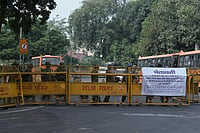
The Delhi High Court on Wednesday sought responses from the Central government and other authorities on a petition filed by messaging platform Telegram challenging a temporary ban imposed on the app ahead of the NEET-UG 2026 re-examination. The court issued notices to the Ministry of Electronics and Information Technology (MeitY), the Ministry of Home Affairs (MHA), and the National Testing Agency (NTA), and scheduled further hearings after granting time for the authorities to file their replies.
The dispute arises from the Centre’s decision to temporarily block Telegram in India until June 22, citing concerns that the platform was being used by organized cheating networks to spread leaked examination material and misinformation related to the National Eligibility-cum-Entrance Test (NEET). The re-examination is scheduled for June 21 following the cancellation of an earlier test amid allegations of paper leaks and irregularities.

Telegram approached the High Court arguing that the blanket restriction is disproportionate and unlawful. In its petition, the company contends that the actions of a small number of users should not justify blocking an entire communication platform used by millions of Indians. Telegram has also argued that the ban infringes upon constitutional protections related to free speech and access to information.
During the proceedings, the Centre defended its decision, telling the court that Telegram had allegedly been systematically misused by networks involved in examination fraud. Government lawyers indicated that authorities would place additional evidence before the court, including material they described as “shocking,” to justify the temporary restriction. According to the government, the measure was adopted to ensure the integrity of the NEET re-test and prevent further malpractice.


The temporary ban has sparked a wider debate over the balance between public interest and digital rights. Critics argue that blocking an entire platform penalizes legitimate users and sets a concerning precedent for internet governance. Supporters of the move, however, maintain that extraordinary measures are necessary to safeguard high-stakes national examinations affecting millions of students.
The case is expected to have significant implications for how India regulates online platforms during sensitive national events. The Delhi High Court’s eventual ruling could shape future government actions involving digital services, platform accountability, and the limits of emergency internet restrictions.
In a development linked to the ongoing legal challenge over Telegram’s temporary suspension in India, Telegram CEO Pavel Durov has alleged that entities associated with Reliance played a role in disrupting access to the messaging platform.
Neither Reliance nor Indian authorities have publicly accepted the allegation, and no official findings have been presented to substantiate the charge. The controversy adds another dimension to the broader debate surrounding Telegram’s restriction, highlighting concerns over transparency, platform governance, and the need for verifiable facts in high-profile digital policy disputes.