The court held that continued detention over verification delays violates personal liberty under Article 21.
The arrests followed a protest by Jawaharlal Nehru University Students' Union over remarks by Vice-Chancellor Santishree Dhulipudi Pandit.
Police alleged assault during the scuffle; 14 students were granted bail and ordered released.
A Delhi court on Sunday ordered the immediate release of 14 students who were arrested in connection with a protest demonstration at the Jawaharlal Nehru University (JNU) campus recently.
On February 27, the court granted bail to the 14 demonstrators, stating that although assaulting police officers is a severe crime, the accused are students with bright futures.
The students were appealing a magistrate court ruling that had placed them in 14 days of judicial prison until their paperwork and bail bonds were verified, and Duty Magistrate Ravi was hearing their case.

The court said, "Although the said judgment pertained to verification of surety bonds by jail authorities and police after grant of interim bail, the underlying constitutional principle is clearly that procedural formalities cannot be so protracted as to render the judicial order of bail illusory." The court said the right to personal liberty under Article 21 of the Constitution does not countenance the avoidable and disproportionate detention of an undertrial who has been judicially found entitled to bail but "is nonetheless confined solely because the administrative process of verification is lagging".


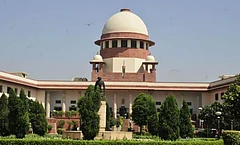
"The law has consistently recognised that the objective of bail is to secure the presence of the accused at trial, not to inflict pre-emptive punishment," the magistrate said.
The court also noted that if outstation verification is permitted to dictate continued incarceration, without outer limits or alternative safeguards, the grant of bail may effectively become illusory for all outstation students and undertrials.
"This court is of the view that the ends of justice would be met by permitting the release of the accused persons from judicial custody pending verification of their bail/surety bonds, but subject to stringent and carefully-crafted conditions to address the concerns raised by the prosecution," the court said.
The investigating officer (IO), who opposed the protesters' release, argued in court that confirming the permanent addresses and sureties is necessary to guarantee their attendance at the trial and prevent absconding, particularly since some of the accused had initially withheld accurate information.

As part of ongoing protests against JNU Vice-Chancellor Santishree Dhulipudi Pandit's recent remarks on a podcast regarding the implementation of University Grants Commission (UGC) norms, rustication of office-bearers of the students' union, and the proposed Rohith Vemula Act, JNU Students' Union (JNUSU) members attempted to march towards the education ministry after gathering at the Sabarmati T-Point on campus.
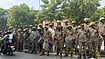
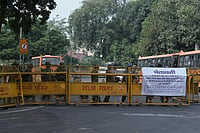
Police personnel, however, stopped the protesters at the heavily-barricaded university gates, leading to a scuffle.
Those held included JNUSU president Aditi Mishra, vice-president Gopika Babu, former president Nitish Kumar and joint secretary Danish Ali.
A total of 51 protesters were detained, with the Delhi Police claiming that the students resorted to physical assault, injuring several of its personnel, during the confrontation.