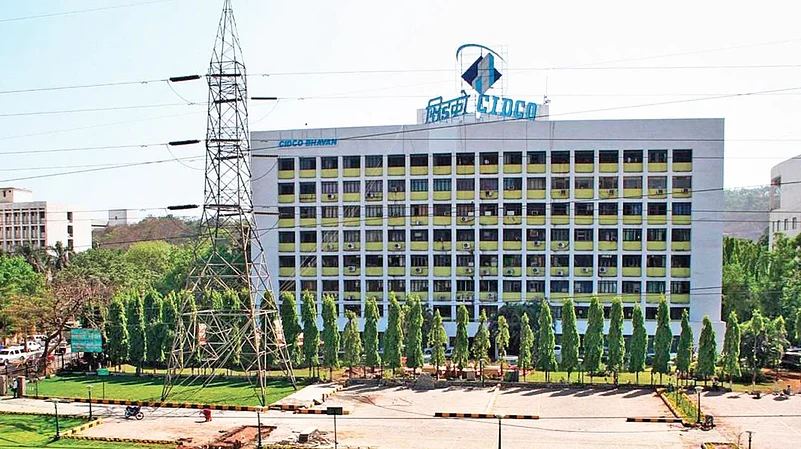
In a massive crackdown on illegal occupation, the City and Industrial Development Corporation has demolished 5,804 unauthorised constructions.
The area where the operation was carried out includes the entire Navi Mumbai, including Panvel in Raigad district, they said.
The drive aligns with directions from the Supreme Court and High Court, following provisions of the MRTP Act.
For two years, the roar of bulldozers has been the soundtrack of transition across the sprawling landscape of Navi Mumbai. From the satellite town of Panvel to the industrial stretches of Raigad, the City and Industrial Development Corporation (CIDCO) has carried out a surgical strike on illegal urban sprawl. Officials revealed this Tuesday that a staggering 5,804 unauthorised constructions have been levelled, reclaiming nearly 110 hectares of public land—a territory roughly the size of 200 football fields that had been swallowed by encroachment.
This isn't merely a story of demolition; it is a battle for the blueprint of a "world-class" city. For CIDCO’s Vice Chairman and Managing Director, Vijay Singhal, the reclaimed land represents a canvas for the future. "This reclaimed land is not just a number," Singhal remarked, his words carrying the weight of a planner’s ambition. To the authorities, these 110 hectares are the essential ingredients for a suite of "cities within a city"—Aerocity, Educity, Medicity, and even a sprawling Entertainment Arena. The mission is clear: to ensure that the Navi Mumbai of 2030 isn't choked by the unplanned errors of the past.





But behind the clinical efficiency of the "intensified demolition drives" lies a complex human narrative. For every illegal structure removed, there was a notice served, a public alert issued, and a family or business displaced. CIDCO insists it is acting under the strict mandates of the Supreme Court and the High Court, following the Maharashtra Regional and Town Planning (MRTP) Act. The corporation is now racing to secure these hard-won gains, erecting fences and wall compounds immediately after the dust settles to prevent the cycle of encroachment from beginning anew.
As the land is swiftly put up for auction or designated for the Metro and NAINA (Navi Mumbai Airport Influence Notified Area) projects, the landscape of Thane and Raigad is being physically rewritten. The strategy is proactive and, at times, ruthless—driven by the belief that for Navi Mumbai to truly take flight as a global hub, its foundation must be cleared of the legal and literal rubble that has hindered its growth for decades. For the citizens watching the skyline change, the message is unmistakable: the era of "squatters' rights" is being replaced by the rigid, concrete lines of a planned future.