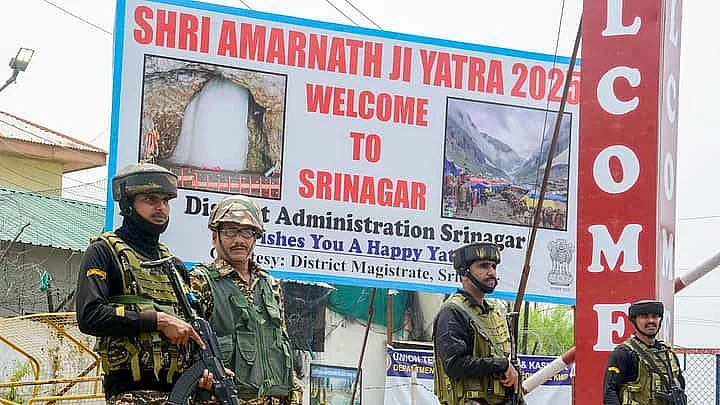
The Jammu and Kashmir Police have introduced tamper-proof QR-code-based identity cards for pony riders and service providers to prevent terrorists from infiltrating the Amarnath Yatra.
Authorities have declared the entire pilgrimage route from Jammu to the Himalayan shrine through Pahalgam and Baltal a strict no-fly zone, halting helicopter services.
DGP Nalin Prabhat has ordered enhanced coordination and intelligence sharing among security agencies to monitor the multi-layered security grid.
Jammu and Kashmir Police have issued tamper-proof QR-code-based identity cards to service providers, including pony riders, for the first time in the Amarnath Yatra's history. The multi-layered security grid comes as the 2026 pilgrimage is scheduled to begin on July 3 and conclude on August 28.
The government has declared the entire route from Jammu to the Himalayan shrine, from both the Pahalgam and Baltal routes, a no-fly zone. The restriction halts helicopter services for the second consecutive year.
Security agencies said there are no specific intelligence threat inputs. However, authorities deployed the grid as a precaution.

High-Tech Surveillance Measures
Surveillance networks track the routes. Authorities implemented real-time CCTV monitoring of pilgrim convoys and RFID tagging for vehicles, pilgrims, and service providers. Security officials said last year's terror attack on tourists at the Baisaran valley in Pahalgam necessitated the enhanced security measures.


"The cards, when scanned, will provide complete information about the service provider," a Jammu and Kashmir Police officer told the Indian Express. "This is essential to stop terrorists from disguising themselves as pony riders or other service providers," the officer added.
Police deployed high-rise watch towers and observation posts known as 'Machan Morchas' at strategic locations. The Jammu and Kashmir Police and other security agencies conducted mock drills and emergency response exercises over the past week.

Strict Traffic Restrictions
Highway travel faces new limits. Jammu and Kashmir Police issued a strict travel plan restricting civilian movement along the Srinagar-Jammu national highway. Pilgrims have been asked to strictly follow the route and timings.
No civilian traffic is permitted to leave Jammu for the Valley before 11.30 am. No vehicles are allowed to cross the Banihal-Qazigund tunnel after 3 pm. Similar restrictions have been put in place on key routes in the Valley, too.
Every year, lakhs of Amarnath pilgrims from across the country take the arduous journey to the Himalayan cave shrine during the summer.
DGP Nalin Prabhat called for strengthened coordination and intelligence sharing among all involved security agencies. The security of the yatra is considered one of the biggest security exercises in the Valley.