India termed attacks on commercial shipping in the West Asia conflict as “deplorable” and called for the immediate restoration of safe navigation through the Strait of Hormuz.
With ship traffic through the Strait dropping by nearly 95 per cent, global oil supply chains and trade face severe disruption, risking wider economic fallout.
India has termed the targeting of commercial shipping during the West Asia conflict as deplorable, urging the immediate restoration of unimpeded navigation and global commerce through the Strait of Hormuz.
"An aspect of particular concern for India for its energy and economic security relates to commercial shipping through the Strait of Hormuz," India’s Permanent Representative to the UN, Ambassador Harish Parvathaneni, said at the UN General Assembly on Thursday.
"India has deplored the fact that commercial shipping was made a target of military attacks in this conflict,” Parvathaneni added.
India reiterated that targeting commercial vessels, endangering civilian crew members, or otherwise disrupting navigation and trade through the Strait is unacceptable.
Emphasising that international law must be upheld, Parvathaneni said India strongly urges the restoration of safe and unimpeded navigation and commerce through the Strait of Hormuz at the earliest.
He also expressed concern over the loss of Indian seafarers’ lives during the conflict.
Parvathaneni was speaking at a United Nations General Assembly debate under the Veto Initiative on “The Situation in the Middle East”, convened after Russia and China vetoed a Bahrain-led resolution in the UN Security Council earlier this month seeking to reopen the Strait of Hormuz. The veto by the two permanent members triggered the General Assembly debate.


The Indian envoy noted that since the outbreak of the conflict in Iran and the Gulf region on February 28, India has consistently expressed concern and urged restraint, de-escalation, and the prioritisation of civilian safety.
“We have urged all states to promote dialogue and diplomacy and de-escalation of tensions, and to purposefully address underlying issues. We have also called for respect of sovereignty and territorial integrity of all states,” he said.
Amid the ongoing conflict, the Ministry of External Affairs said last month that eight Indian nationals have been killed and one remains missing in various incidents across the region.
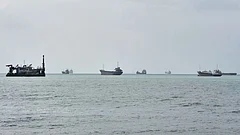
The Strait of Hormuz — a critical oil artery between Oman and Iran linking the Persian Gulf to the Arabian Sea — has been effectively disrupted due to the conflict. UN Secretary-General Antonio Guterres warned that when this chokepoint is “strangled, the world’s poorest and most vulnerable cannot breathe.”
The UN Trade and Development body (UNCTAD) has also warned that activity in the Strait has nearly ground to a halt, with daily ship transits dropping from around 130 in February to just six in March — a decline of about 95 per cent.
“The disruption is hitting a large share of global oil and gas supplies, with immediate consequences for production, trade and consumption worldwide. It is also spilling over into transport systems, including maritime routes, air cargo and port logistics,” UNCTAD said.
The agency cautioned that if military escalation and disruptions continue, the impact will extend far beyond the region, leading to widespread economic hardship globally.
(with PTI inputs)