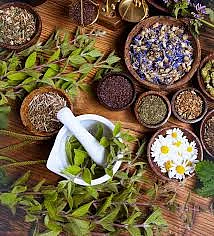
Even as modern medicine becomes more widespread and traditional knowledge systems face rapid decline, a new survey has highlighted how the tribal communities of Jhargram district in Kolkata continue to depend heavily on forest-based medicinal plants for treating fever and microbial infections.
The study by researchers from the University of Calcutta and partner institutions documents 49 medicinal plant species belonging to 32 families, regularly used by Santals, Mundas, Sabars, Lodhas and other tribal communities in the region.
Leaves, bark, roots, seeds, flowers and fruits are commonly collected from surrounding forested areas and prepared as herbal medicines in the form of decoctions, powders and pastes. These remedies are mostly administered by traditional healers — Ojhas, Vaidyas and Kavirajs — who are still regarded as primary healthcare providers in remote villages.
The research team — Samiran Hota, Soumya Nandi, Ipsita Banerjee, Paschim Bardhhaman and Annalakshmi Chatterjee from the Department of Home Science, University of Calcutta — conducted extensive fieldwork between June and December 2023 across Jhargram municipality and eight adjoining blocks including Binpur, Jamboni, Gopiballavpur, Nayagram and Sankrail.
Elder healers, forest gatherers and knowledgeable community members served as informants. Their responses were recorded, cross-checked within the same tribal groups, and scientifically categorised, said Chatterjee.
Forests have long shaped both the cultural and economic life of tribal societies in West Bengal. In Jhargram’s dry deciduous belt — characterised by red lateritic soil, sparse tree cover and a semi-humid climate — this association remains clearly visible. Families continue to prepare kaadha — a concentrated herbal infusion considered stronger than the urban version commonly consumed during seasonal flu. Many respondents reported symptomatic relief within a few days of continuous intake.




India’s association with plant-based healing is ancient. Texts from the Rig Veda and Ayurveda describe numerous medicinal herbs and their therapeutic uses. Globally, the World Health Organisation (WHO) estimates that over 80% of people rely on traditional medicine as part of primary healthcare, a reminder that biodiversity and indigenous knowledge are far more than cultural heritage. In fact, several modern drugs — including artemisinin and aspirin — owe their discovery to natural sources, said the authors.
“Of the 2.5 to 3.5 lakh plant species identified worldwide, nearly 35,000 carry medicinal value,” the paper noted, underlining why ethnomedicinal studies remain important for future drug development.
However, the authors cautioned that this knowledge system is under threat. Migration, reduced forest access, socio-economic shifts and the gradual erosion of oral traditions have made younger generations less interested in learning herbal medicine.
Some medicinal plants mentioned by healers are already becoming scarce, raising concerns about long-term sustainability, added co-author Nandi.
The researchers emphasised the urgency of documenting, conserving and scientifically validating this traditional knowledge. Many of the 49 species recorded are known for their antimicrobial and fever-reducing properties, but several remain poorly researched, they noted. With public interest in herbal remedies growing, they suggested that future pharmacological studies could help transform local biodiversity into community-driven healthcare and income-support systems.
Strengthening conservation, improving research access, and integrating traditional healers into public-health networks, the authors noted, could help preserve plant wisdom at risk of disappearing.