Couples from Jaipur and Vadodara described assault, jail, legal refusals and family estrangement after interfaith marriages.
The 30-day notice requirement under the Special Marriage Act remains a major concern for couples
Dhanak provides legal guidance, shelter support and a platform for couples navigating interfaith unions
February 14 is Valentine’s Day worldwide, couples give gifts, flowers, and make public romantic gestures.
In some Asian countries like India, it is looked down upon. The idea of chasing love and picking your own partner clashes with conservative values where arranged marriages are common and respected.
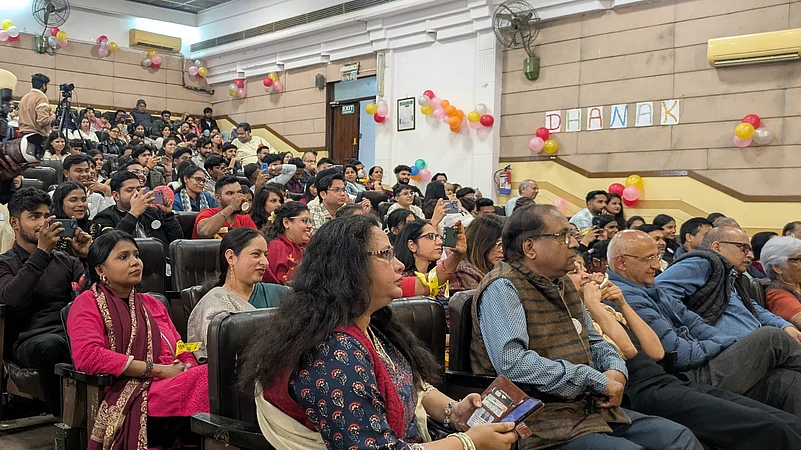
But here on a sunny day in New Delhi’s Rajendra Bhawan, a different kind of love was being shared and celebrated among married and unmarried couples. They are mingling, sharing their pasts, their differences, their similarities and instilling hope among each other. The love and bond of inter-religious marriage. In India, where concepts such as love-jihad and conversion-jihad are heating up the atmosphere, these couples are fighting it out tooth and nail to show the country that yes, such love exists and there’s no need to be political about it.
On February 14, Dhanak of Humanity, a not-for-profit organisation led by survivors of natal family violence, celebrated their annual event Sahas which commemorates interfaith and intercaste couples in India against societal, legal, and religious challenges. The NGO offers a platform to such couples to share their stories of courage and solidarity, often featuring cultural programs and music.
Living Through Family Backlash and Long Legal Processes
In a story that highlights the harsh realities of interfaith marriage, a couple from Jaipur shared their seven-year ordeal involving physical assault, false criminal charges, and a long legal battle.
Kayyum and Shweta, met as neighbors. When they decided to marry, they initially looked into the Special Marriage Act. However, they were deterred by the requirement of a 30-day public notice and police verification. The husband said, “When the police get involved... how can it stay hidden?”. Fearing the consequences , both chose to inform their parents directly.




The reaction was immediate and violent. Shweta’s family refused to accept the match, citing social standing. Shweta says her parents beat her and forcibly fixed her engagement to a man from their own community.
In June 2019, Shweta fled her home and sought help at a women's shelter in Jaipur. While she was at the shelter, her family threatened that they would ensure her partner was jailed. A few days later, while the then unmarried Kayyum was on his way to court, he was ambushed by Shweta’s family and others. The attack was brutal. “They attacked me and beat me up so much that the retina of my right eye ruptured,” he said.
Following the assault, Shweta's family filed a fabricated Protection of Children from Sexual Offences case against him, claiming he had harassed Shweta’s minor sister. He was promptly sent to jail.
“Festivals become extremely lonely for us, all we have now is each other and our kids. The past has been brutal to us, but we are trying our best to recover”, says a teary eyed Shweta.
While he was in prison, Shweta faced pressure from her family and external groups to testify against him, but she refused. With the help of NGOs, the husband received medical treatment for his eye and was eventually granted bail. The couple later married under the Special Marriage Act.

For the next six to seven years, the husband, who had recently completed his LLB, spent his time between "courts and hospitals".
“He had met with an accident a year ago, we were expecting our second child, all I did was run from hospital to court, whilst taking care of the family, no one from my family or his even bothered to ask if we are alright”, states Shweta.
Recently, Kayyum was acquitted of the POCSO charges, though he was ordered to pay a ₹25,000 fine for a related physical altercation charge—an allegation he continues to deny.
Meanwhile, the counter-case he filed against his attackers has seen little progress since 2021. The couple expressed their frustration that those who attacked have faced no real punishment, while his own career, health and his family situation have been severely impacted. Today, the couple lives a quiet life with their two children, surviving with the support of NGOs such as Dhanak.
Reflecting on their journey, Shweta said, "Everything turned out the opposite of what we dreamt... but we are moving forward."
The couple travelled all the way from Jaipur to attend the event. “Meeting people like us makes me feel joyous and validated”, says Kayyum.

Another couple from Vadodara shared their journey of navigating the social and legal hurdles of an interfaith marriage in Gujarat. Shirish and Anisha, first met as college students in 2008-09. What began as a close friendship eventually led to a decision to marry, a choice that brought them face-to-face with significant hostility.
The couple explained that their primary challenges began because of their different religions. Shirish noted that in Gujarat, “the problem starts right there” when the issue of Hindu and Muslim identities arises. When they decided to marry, they found that local legal professionals in their area were unwilling to assist them. Anisha recalled that lawyers would often refuse to help as soon as they read their names and addresses, saying, “No, we cannot do anything wrong.”

With these rejections, the couple turned to the internet for answers. In 2017, they discovered YouTube videos from the NGO Dhanak who assists interfaith couples. Although they initially struggled with the fear of potential consequences, they re-established contact with the organisation in 2019. After years of deliberation and consultation, they successfully married in 2021.
Reflecting on the law that made their union possible, Shirish said that without the Special Marriage Act, couples like them might have, “either committed suicide or separated.” He emphasised that the act served as a vital motivation for them to stay together.
Today, the couple continues to live in Vadodara with their three-year-old daughter. However, their relationship with their families remains strained and limited to phone calls and exchanging photos only. They avoid physical visits due to safety concerns, particularly regarding male relatives. “Visiting is a danger for them and a danger for us,” Anisha explained, citing the fear of social “uproar.”
The couple also expressed concern regarding current political discussions in Gujarat about a proposed bill that would require parental consent for love marriages. Despite the social pressures, they have focused on building a stable life together. Anisha highlighted that they have maintained their individual religious identities, stating, “I am still Muslim. Shirish is still Hindu.”
“Let anyone marry their person, what’s the harm, religion? We argue and take care of each other just like a normal couple “according to the society”. No one should suffer like we did”, says Shirish.
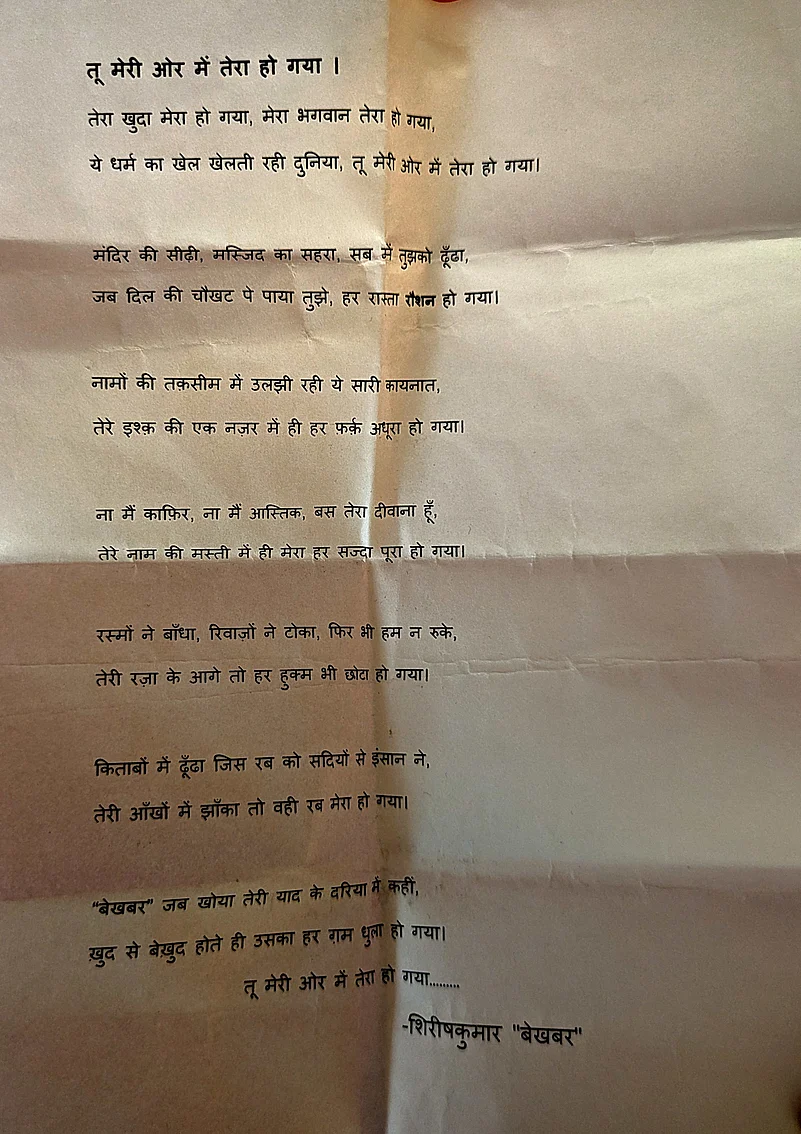
At the event, Shirish recited a poem that he specially wrote for Anisha.
From Social Pushback to Administrative Hurdles: How Dhanak steps in
Dhanak Founder Asif Iqbal said the initiative began because “there are so many interfaith couples who face many challenges in marriage,” including needs for witnesses, gazetted officer attestations, and safe places to stay. Beyond legal help, the group aimed to create “a platform to discuss” interpersonal problems.
Asif Iqbal, who founded Dhanak in 2004, noted that the challenges have shifted from purely social opposition to “systemic” resistance. He observed that while the bureaucracy was previously bound by law to process these marriages, there is now an overt bias within the system, particularly when the woman in the relationship is Hindu.
“Now, they have a legal excuse to stop it. Where the girl is Hindu, the system is openly against them,” he explained.
To counter the “deep-seated pain” faced by these couples, Dhanak launched Sahas in 2014 as an annual event to celebrate interfaith unions and demonstrate their possibility to the public.
Iqbal emphasises that the organisation maintains transparency with the administration but insists that couples maintain their own agency. “We will be with you at the police station, but you must answer the questions. It is your choice,” he stated.
He highlighted the Special Marriage Act (SMA) as a primary target for those opposing interfaith unions. He described the act as a "thorn" for officials, who now use administrative hurdles, such as the 30-day notice period, to discourage couples. These hurdles often lead to families being alerted, making the process dangerous for the individuals involved. “They create so many hurdles so that they don't do it,” he said, pointing to a decline in marriages registered under the SMA.
Despite these challenges, Iqbal remains hopeful, advocating for the SMA to be simplified so that consenting adults can marry in a single day, similar to religious ceremonies. He argued that the current system unfairly assumes all interfaith marriages are “wrong” or fraudulent, while ignoring the high rate of deception in arranged marriages.
Iqbal also addressed the patriarchal “conditioning” that often limits women’s choices, encouraging them to prioritise financial independence. He tells the women his organization assists, “First, fight for your job. Once you win that battle, the marriage will happen on its own”