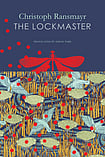
The author highlights the tragic intersection of disease and death through striking symbolism.
Through the prose the author transitions from genuine mourning to calculated staging.
The setting mirrors the narrator's internal state, from an ominous dark silence to the furious disquiet of reality.
That day, darkness rose out of the Atlantic at a speed that is usual only over rainforests and clear-cut deserts in the tropics and closed to blackness at the zenith. Not a single star was to be seen, none of the glimmering planets, not one giant sun that had shrunk to a dazzling dot millions of light years away in the boundless blackness, not one heavenly light.
No one could have said with certainty whether the firmament had been merely obscured by fog, cirrostratus or weather fronts—or had been snuffed out. And with the stars, Mira’s face too had been snuffed out.
I had tried everything that came to my horrified mind to bring her back to life. To bring her back to me. I had tried with pointless caution to jolt her heart back into its old rhythm by pressing on her sternum with both hands, over and over again, but I was paralysed by the fear of shattering another piece of glass inside her, paralysed by the intuition that none of the force I deployed could reach her heart now. As I frantically tried with all my might to start her heartbeat again, should I have broken two or more ribs in her dainty, cooling body?


I had pressed my lips to hers and panted breaths into her lifeless form until I realized that I wasn’t resuscitating her but kissing her. So, burning with shame, I abandoned my exertions and crouched motionlessly beside my motionless beloved who seemed to be encased in amber.
For how long? I can’t remember. The tower, which began to beam out dazzling light in all directions from the glass pavilion at its summit, contained on every floor only darkness.
At some stage, like one of those robots that performs perilous tasks under water or at vertiginous heights on dams or unstable dykes, I began to prepare a bed for Mira on the bottom step of the flight of stairs leading up to her living area. Lifting up this cocoon of crystalline glass, I carried her, since pulling her body even a single yard, dragging it, would have been a fresh assault on her.

I laid her corpse, wrapped in darkness, in a position that a body could only achieve following an accidental fall and rested her head on the stone pillow of the first step. Yes, this was exactly how a person suffering from brittle bone disease would lie if she had tripped and fallen on her way up to bed and grasped in vain for the steel banister rail as she tumbled down.
Propping her head on that stone pillow in a pose congruous with such an accident, I felt the track of a tear on her cheek. Or was it my own tears I felt?
Mira, I said. Mira.
Then I slunk off into the depths. Down the spiral staircase that espoused the curve of the tower, from the extinguished gold of the amber into the darkness, a weeping, wailing creature, past the doorway to my albatross room, crawling down on all fours to the console dotted with control lamps on the ground floor. There, blazing crimson, the biggest in the multicoloured row of signals, was a fist-sized button Mira had pointed out to me as the unmistakable switch hooked up to all the back-up systems, for use in an emergency.

It was as if my punching this red glass button had unleashed the foaming waves I had not noticed until then after a long stoppage, and all of a sudden, the thunder of the sea was audible once more. Loud. Deafeningly loud. And flickering in the portholes of the control room was the reflection of a chaotic series of lights. Lightning. From deep below the horizon came lightning.
Excerpted with permission from Seagull Books.