Sanjay Leela Bhansali’s presentation themed as 'Bharat Gatha' marks the first cinema tableau at the Republic Day parade.
The tableau recognises Indian cinema as a national storytelling tradition, not just entertainment.
Bhansali and Shreya Ghoshal bring cinematic scale and emotional depth to Kartavya Path.
This year’s Republic Day parade will see Indian cinema step into the national spotlight in an unprecedented way. Designed by filmmaker Sanjay Leela Bhansali for the Ministry of Information and Broadcasting, the dedicated cinema tableau marks the first time an Indian film director is formally representing Indian cinema at the country’s most ceremonial national event. The tableau presentation, which will be conceptually themed as 'Bharat Gatha', will be accompanied by a newly composed song rendered by Shreya Ghoshal, adding a musical spine to Bhansali’s vision of cinema as a living cultural narrative.
What is a cinema tableau, and why does it matter?
At its core, a tableau is a composed visual moment built around stillness rather than motion. Indian film historian Ravi Vasudevan has described tableau shots as frontal, near-static compositions charged with meaning. They are the frames that stay with audiences long after the scene has passed. When translated to the Republic Day parade, the tableau becomes a moving artwork, blending cinema's visual grammar with the parade's ceremonial flow.

Why cinema belongs at the Republic Day parade
Republic Day tableaux have long served as distilled narratives of national identity. Designed to communicate complex ideas in seconds, they represent cultural memory, political shifts and collective aspirations. Their power lies in clarity, symbolism and emotional immediacy.


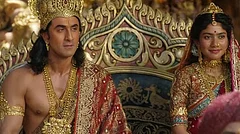
Cinema's inclusion feels overdue rather than experimental. Indian films have shaped how stories of love, sacrifice, conflict, and freedom are imagined across generations, yet they have rarely been included in the Republic Day narrative. A cinema tableau acknowledges film as a shared language that cuts across region, class, and time.

Indian cinema's natural relationship with the tableau
Indian cinema has always gravitated towards composed stillness. From early mythological films and devotional imagery to elaborate song sequences, filmmakers have used symmetry, scale, and controlled movement to heighten emotion. This visual instinct draws from classical painting, temple sculpture, and theatre, where meaning often emerges from arrangement rather than action.

Directors like Mehboob Khan and Guru Dutt, and later Sanjay Leela Bhansali, transformed the tableau into a storytelling signature. Bhansali's cinema, in particular, is known for frames that feel sculpted, where music, architecture, and performance converge into a single visual idea. Bringing this language to the Republic Day parade feels like a natural extension of both traditions.
Why Bhansali and Shreya Ghoshal matter in this context
The Bhansali–Ghoshal collaboration adds emotional texture to the tableau. Music has always been central to Bhansali's storytelling, and Ghoshal's voice has often carried the emotional core of his films. Their pairing ensures the presentation feels cinematic rather than purely ceremonial.
The specially composed song positions cinema as lived memory, something experienced collectively rather than consumed individually. This aligns with the Ministry of Information and Broadcasting's intent to present Indian cinema as a cultural force that extends beyond screens and box office metrics.

Bollywood at Republic Day parade: a shift in recognition
The Republic Day parade cinema tableau is not about spectacle alone. It signals a broader recognition of cinema's role in shaping identity, language, and emotional memory. By placing film alongside traditional representations of culture and history, the parade reframes cinema as part of India's civilisational narrative.
This moment is less about celebration and more about acknowledgement. Cinema is being recognised as a national form of storytelling, one that reflects who we are, where we've been, and how we remember ourselves.