Mistrust remains high between Washington and Tehran, casting a shadow over the FIFA World Cup 2026
Iran has protested strict U.S. travel rules that force the team to base in Mexico
Visa and security disputes have turned Iran’s presence into a major diplomatic headache for FIFA
The FIFA World Cup 2026 was always expected to be a celebration of football, but it has instead become a stage for the complex political tensions currently defining the global landscape. As the host nation, the United States has found itself navigating diplomatic friction that occasionally spills over into the tournament's logistics and atmosphere.
These challenges are perhaps most visible in the participation of the Iranian national team, whose presence has highlighted the fragile and strained relationship between the two countries, turning their campaign into a focal point for wider international debate.
Why Iran Is Protesting
The Football Federation of the Islamic Republic of Iran (FFIRI) is preparing a formal complaint to FIFA regarding the restrictive travel and visa protocols imposed by United States authorities during the FIFA World Cup 2026.
These policies have severely hampered the team's ability to prepare. Consequently, the team has been forced to establish its base camp in Tijuana, Mexico, to navigate these logistical hurdles and maintain their tournament participation.


As the team prepare for their upcoming fixture against Belgium, they are calling on FIFA to address these logistical barriers, which they claim prevent them from competing on a level playing field alongside other nations in the tournament.
Beyond the team's operational challenges, Iranian fans are facing significant barriers to attendance as well. Many supporters have seen their ticket access revoked or have been unable to secure the necessary visas due to the strict border policies in place, effectively limiting their ability to support the team at U.S.-based venues.
What Restrictions Has The Team Faced?
The Iranian national football team is currently navigating a series of severe logistical and administrative restrictions that have hampered their 2026 World Cup campaign. Due to strict visa conditions, players and staff are permitted to enter the United States only 24 hours before each match and are mandated to depart the country immediately upon the conclusion of the game.
These rules forced the team to relocate their base camp from Arizona to Tijuana, Mexico, complicating their recovery and training schedules. Additionally, the federation has faced broader challenges, including the denial of entry visas for integral support staff, the revocation of ticket allocations, and restrictions on media access, all of which Iranian officials argue undermine the principle of equal treatment for all participating nations.
Iranian team officials and head coach Amir Ghalenoei have characterized these conditions as a significant disadvantage, arguing that such political constraints undermine the principle of sporting equity. By limiting the team's ability to prepare and recover in the host cities, the federation contends that their technical readiness is being unfairly compromised.
Why The US-Iran Relationship Matters
The FIFA World Cup 2026 is unfolding against the backdrop of a major three-month military conflict between the United States, Israel, and Iran, which only recently reached a formal truce with the signing of a memorandum of understanding on June 17.
The relationship between the two nations has transformed the World Cup into a geopolitical flashpoint, illustrating the limits of sport as an instrument of diplomacy during active conflict. Against the backdrop of ongoing military operations and a history of severed diplomatic ties, the tournament has become an arena where national sovereignty, border security, and international rivalry converge.
For FIFA, the situation represents a profound challenge to its goal of political neutrality, as the host nation’s stringent travel bans and security measures directly clash with the inclusive, universalist principles the organization seeks to project.
Ultimately, the tension surrounding Iran's participation underscores how global sporting events are no longer isolated from broader international crises but instead serve as mirrors that reflect and sometimes amplify the volatility of the geopolitical landscape.
Has FIFA Responded?
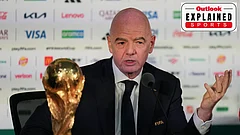
FIFA’s official stance, spearheaded by President Gianni Infantino, has been one of balancing diplomatic pragmatism with a push to keep the tournament’s focus on football. In the lead-up to the World Cup, Infantino staunchly defended his organization’s handling of the logistics, claiming that FIFA’s intervention was the only reason Iran was able to participate in the tournament at all given the geopolitical climate.
While acknowledging the "challenges" surrounding visa denials and the team’s forced relocation to Tijuana, he urged critics to "chill and relax," emphasizing that FIFA acts as a sports organization rather than a government entity with the power to override national security policies.
Following the team's opening match, Infantino took a more personal approach, visiting the Iranian dressing room to praise the players' resilience and vowing to personally assist in resolving the ongoing visa crisis for their remaining support staff.
Have Politics Affected World Cups Before?
The FIFA World Cup has often been used as a tool for politics, with host nations using the event to improve their reputation or show off their power. In 1934, Italy’s leader Benito Mussolini famously used the tournament to promote Fascist ideals, pressuring his team to win as a symbol of national strength.
Decades later, the 1978 World Cup in Argentina was hosted by a military junta that used the event as propaganda. They hoped to distract the world from their harsh human rights abuses and the disappearance of political opponents, turning a time of celebration into a stark contrast to the violence happening in the country.
In recent years, the focus has shifted to "sportswashing," where countries use tournaments to draw attention away from controversial issues at home. Russia’s hosting of the 2018 World Cup was seen by many as an attempt to improve its global image following its annexation of Crimea, using the games to project an image of stability and openness to the world.
Where Does Sport End And Diplomacy Begin?
The line between sports and diplomacy is often blurred, showing the tension between the "fair play" of the game and the reality of world politics. While sports are meant to unite people, nations frequently use them to show off power, gain legitimacy, or take a political stand. When a tournament becomes a place for visa disputes, security tensions, or propaganda, athletes are often seen as representatives of their government rather than just competitors.
his forces organizations like FIFA into the difficult role of an unplanned diplomatic mediator. In the end, it is impossible to completely separate politics from sports; instead, the real challenge is how global events can still focus on competition when every match is tied to national pride and world affairs.