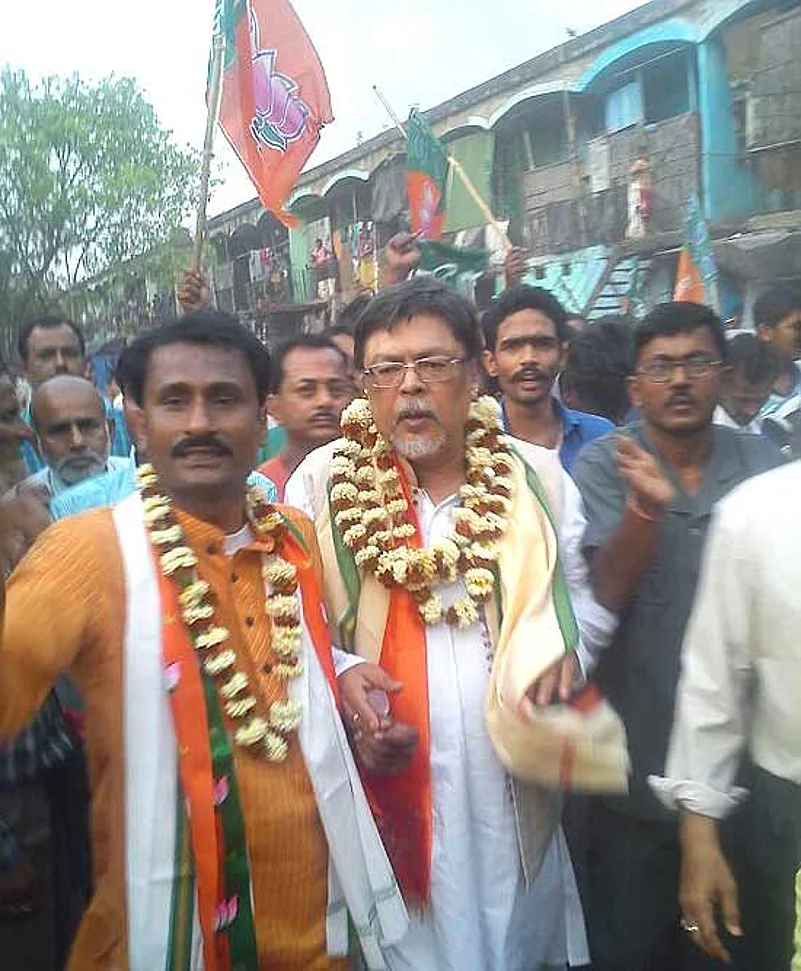

I became an accidental candidate in the 16th Lok Sabha elections from my party. The BJP’s central election committee was meeting regularly in the first week of March to finalise names for the forthcoming polls. On March 5, I was required to attend a meeting as central observer for Orissa. Invited leaders from West Bengal and Orissa were sitting in an ante-room close to the main meeting hall. Out of curiosity, I inquired about the names from West Bengal. At this point, several of those seated in the room vociferously suggested I too should enter the fray. The most compelling argument given was that I would be at “minimum risk”. As I am a sitting Rajya Sabha member with more than two years left for my second term to expire, and given the rising NaMo wave, this was the best time to try one’s luck.
My name was formally announced on March 7. Before that, I asked Arun Jaitley, a friend from our Delhi University days, if I should really take the plunge. (He hadn’t decided about contesting from Amritsar yet). “If you think you can get around one lakh votes, then it’s worth the fight. Soch lo,” he said. Next day, I sought the blessings of party president Rajnath Singh as also L.K. Advani, packed my bags and took a flight to Calcutta on March 10.
Friends and well-wishers, while applauding my “courage” in opting to contest a Lok Sabha seat, repeatedly asked, “Why Hooghly? Couldn’t you have chosen a safer seat?” My reply invariably was that there was no ‘safe’ seat for the BJP in Bengal. The party has not won even an assembly seat here on its own after the first general elections of 1952. Whenever we wrested a parliamentary seat, it was in alliance either with Mamata Banerjee’s TMC or a Gorkha party in the Darjeeling hills. In the last state assembly elections, the BJP managed to poll a meagre 6 per cent of the total votes cast in the state, still an improvement over the 2009 Lok Sabha figure of 4 per cent. Clearly, I had decided to tread the razor-thin line between bravado and foolhardiness.

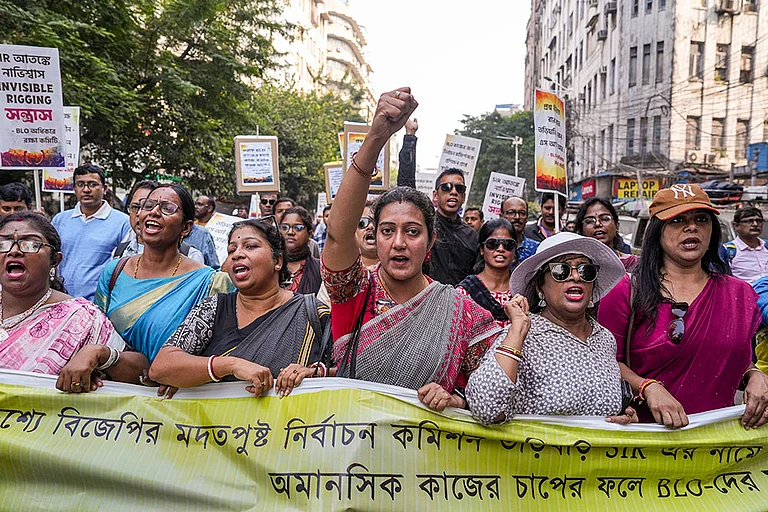
Reaching a playground outside one of the semi-defunct jute mills in Bhadreshwar on the northern edge of the constituency, on the afternoon of March 12, I was pleasantly surprised by the size of the gathering. Mounting a Tata 407 goods carrier (an open jeep was organised a few days later), I drove down GT Road, preceded by a large number of motorbikes and followed by over 50 cars. Though people waved at me as I passed through Chandannagar and Chinsura towns, their expressions were a mixture of curiosity and disbelief. Curiosity about the new kid on the election block and disbelief that a fledgling (in Bengal) party like the BJP could put up such an impressive roadshow.
The campaign routine was killing, especially because the temperature soared past 40 degrees Celsius by the last week of March and stayed fixed there till voting day. Unusually, there were no thunderstorms, barring one in late March. The incandescent sun seared through my bedroom window by 5 am. The heat was kept company by an insufferable humidity. I was often compelled to change clothes thrice a day and wash my dust-smeared hands and face as frequently as possible, wiping them even while talking to potential voters.
We evolved an innovative campaign tactic by landing up at marketplaces almost each morning. The mofussil Bengali is a sucker for fresh food, with a healthy distrust of the refrigerator. Around 9 am every morning, family elders and housewives thronged the town’s myriad bazaars to buy fresh vegetables and fish. With a big river dominating the landscape and a multitude of large ponds, there is no dearth of freshwater fish, although delicacies like hilsa are fast disappearing on account of overfishing. Confident of meeting much of my electorate, I would ride pillion on a party activist’s motorbike, dressed in tracks with shopping bag in hand to hit the local bazaars.
Delving into interior villages, I discovered concerns unheard of by city folk. In Dhaniakhali, one of the seven assembly segments that make up the Hooghly parliamentary constituency, I learnt that snake-bites were the biggest cause of deaths there. Snake-bite victims had to be taken to Chuchura (Chinsura) Imambara Hospital, at least an hour’s journey over uneven roads, and most died on the way. When at a streetcorner meeting, I pledged to build a hospital with my MPLADs funds if I couldn’t get central government approval, I saw scepticism writ large on the listeners’ faces. Getting down from my jeep, I asked some of them why they didn’t believe me. “We have heard this for close to 20 years; all candidates promise the moon and disappear after polling day.” There was no way I could convince them that I wouldn’t follow in my predecessors’ footsteps.
I discovered I was getting an enthusiastic response in many places because I looked and talked like a bhadralok. But most people believed I was a medical doctor because party posters proclaimed me as Dr Chandan Mitra. It was difficult to explain the difference between a doctorate in history and a medical doctor to semi-literate farmers. So I gave up after a few days and wondered if it was a good idea to prefix my name.
The most depressing foray I made in the course of the campaign was to the once-flourishing Dunlop tyre factory at Sahaganj, sandwiched between Chuchura and Bansberia. Almost every family in Hooghly-Chinsura had a male member working at Dunlop in its heyday; my grand-uncle as well as my father’s elder brother among them. The Dunlop factory was once India’s biggest tyre producer. British-owned for long, its campus included a prim and proper officers’ colony.
Creepers and weeds had overrun the houses. Roads were mere dirt-tracks. There was no electricity. Darkness, broken occasionally by petromax lamps, stared out of dilapidated bungalows. In the midst of this sordid setting, some occupants came out to greet my motorcade, apologising for their inability to invite me inside what they still call home.
In the adjacent slum where former Class III and IV staff of the Dunlop colony live, a strong stench of cowdung greets an occasional visitor like me. “We have no work and no hope of work. So we have kept some cows and buffaloes and sell milk to survive,” said a Bihari labourer. I felt embarrassed addressing a meeting in their midst, asking for votes.
Ignoring the magnitude of the task, I trudged on. Every afternoon I would board a topless Gypsy, fitted with a megaphone or a mike (microphones were not permitted till April 12 due to board examinations). We took breaks at marketplaces and I initiated my own version of Modi’s game-changer ‘Chai pe charcha’, inviting locals to share a cup of tea and get to know me. This and my morning visits to bazaars, I would like to think, were novel campaign tactics. Hooghly has over 18 lakh voters, 70 per cent living in remote villages. As I discovered, there are Adivasis too in my district; I was even made to shake a leg with them on a visit to the Balagarh segment.
As I ruminate upon my performance, for after all a defeat is a defeat, I am surprised by the multitude of happy memories that keep cascading down. Of course, the one big takeaway was the BJP candidate from Hooghly had polled just 39,000 votes in 2009, my tally was 2,21,617, a jump of over five times. But the experience of being among the people was priceless. I may have lost some hard-earned money in the process but I gained a humongous amount of experience, much more than 25 years of election reportage had done. The interactions taught me more sensitivity; they connected me to the India I had only seen but never felt.