India consumes more than 33 million tonnes of LPG every year, and nearly 80–85 per cent of its requirements are met through imports, mostly from Gulf countries.
A large portion of these shipments passes through the Strait of Hormuz, making supplies vulnerable to disruptions in the region.
Around 40 per cent of India’s crude oil imports pass through this corridor,
Iran’s decision to restrict navigation in the Strait of Hormuz has raised global concerns about possible disruptions to energy supplies. However, reports suggest that these restrictions are mainly directed at vessels linked to the United States, Israel and some European countries. This provides some relief for countries like India whose shipments have not been directly targeted.
Yet, the absence of direct restrictions does not mean India will escape the economic impact. In today’s interconnected global energy market, even the perception of risk in such a critical maritime corridor can influence shipping costs, insurance premiums and oil prices around the world.
A Narrow Waterway With Global Consequences
The Strait of Hormuz is only about 33 kilometres wide at its narrowest point, but its economic importance is enormous. Nearly one-fifth of the world’s oil supply passes through this narrow channel that connects the Persian Gulf to international waters.
This makes the Strait one of the most important energy chokepoints in the world. Oil produced in Gulf countries such as Saudi Arabia, Iraq, Kuwait and the United Arab Emirates is largely transported through this route before reaching global markets.


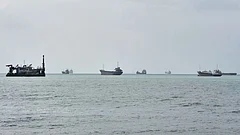
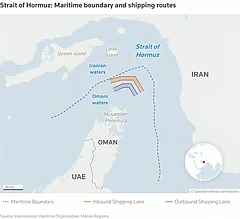
Whenever tensions rise in this corridor, oil markets react almost immediately. Even the possibility of disruptions can reduce tanker movements and push global oil prices higher.
Why India Is Watching Closely
For India, the Strait of Hormuz is not just a distant geopolitical hotspot—it is a critical part of the country’s energy supply chain. Around 40 per cent of India’s crude oil imports pass through this corridor, highlighting the country’s dependence on this maritime route.
India imports most of the crude oil it consumes, as domestic production meets only a small share of its energy needs. This heavy reliance on overseas supplies means that disruptions in the Strait—even indirect ones—can have serious economic consequences.
If tanker movements slow down or insurance costs rise, the cost of transporting crude oil increases. Since India buys oil at international market prices, any rise in global crude prices directly increases the country’s import bill.
The Shipping Cost Effect
Geopolitical tensions often affect shipping and insurance markets first. When a region becomes risky for navigation, maritime insurers charge war-risk premiums for ships passing through that area. These additional costs raise the price of transporting oil and other goods.
According to a report in CNBC, insurance companies are not willing to provide coverage for ships crossing the Hormuz Strait during periods of heightened tension. Without insurance protection, shipping companies are unlikely to send vessels through the route, which can further reduce tanker traffic. A recent report by NASDAQ suggests that tanker movements through the Strait dropped sharply after warnings from Iranian authorities. Traffic reportedly fell from around 40 vessels per day to almost none on some days, with several ships choosing to remain anchored outside the waterway due to security concerns.
Even if the Hormuz Strait is not officially closed, such disruptions can quickly push freight rates and energy prices higher.
Why Indian Businesses Could Feel The Pinch
Even though India is not the direct target of the current restrictions, its economy remains vulnerable because of its heavy reliance on imported energy. In a globally connected oil market, disruptions in one region can quickly push up prices everywhere, and rising crude prices soon translate into higher fuel costs within India.
One of the first sectors to feel the impact is transportation. Diesel powers a large share of India’s freight movement, especially road transport. When oil prices rise, diesel becomes more expensive, increasing the cost of transporting goods across the country. Since trucks carry a major portion of domestic cargo, higher diesel prices eventually raise logistics costs across supply chains.
Another major concern is liquefied petroleum gas (LPG). India consumes more than 33 million tonnes of LPG every year, and nearly 80–85 per cent of its requirements are met through imports, mostly from Gulf countries. A large portion of these shipments passes through the Strait of Hormuz, making supplies vulnerable to disruptions in the region.
A recent news report highlighted growing concerns about tightening supplies of commercial LPG cylinders used by restaurants, hotels, and small food businesses. Prices have already begun rising, with domestic LPG cylinders costing around ₹900 in many cities, while commercial cylinders used by eateries are priced close to ₹1,800–1,900. If tanker movements through the Strait slow further, supply pressures could intensify, affecting both small businesses and household energy affordability.
The impact does not stop there. Higher fuel prices increase logistics costs for businesses across sectors. Manufacturers face higher transportation costs for raw materials, exporters face rising freight charges, and retailers often pass these costs on to consumers. As a result, the ripple effects can be felt across many parts of the economy, from agriculture and manufacturing to aviation and e-commerce.
The broader economic impact can also be significant. Estimates suggest that every $10 increase in global crude oil prices could raise India’s annual oil import bill by about $15–16 billion. Shipping markets also react quickly to geopolitical risks, with freight rates on Middle East routes rising by 20–50 percent because of higher insurance and security costs.
In India’s road transport sector, fuel accounts for nearly half of trucking operating costs. This means that even a 10 percent increase in diesel prices can push road freight rates up by around 3–5 percent, increasing logistics costs throughout the supply chain. A sustained rise in oil prices could also add pressure on inflation and slow economic growth.
In this way, disruptions in a distant maritime corridor can gradually influence everyday costs in India—from transportation and groceries to cooking fuel.
Can The Strait Be Closed Completely?
Despite rising tensions in the region, a complete and prolonged closure of the Strait of Hormuz remains unlikely.
The waterway lies between Iran and Oman, and under international maritime law, ships have the right of transit passage through strategic straits used for global navigation. This makes it difficult for any single country to block the route entirely for an extended period.
More importantly, shutting the Strait would harm not only importing countries but also the Gulf exporters themselves. Major oil producers such as Saudi Arabia and the United Arab Emirates depend heavily on this corridor to export crude to global markets. Even Iran relies on the same route for a significant share of its own oil exports.
The persistent risk of disruption has nevertheless pushed Gulf countries to develop alternative export routes. Saudi Arabia operates a 1,200-kilometre pipeline capable of transporting up to 5 million barrels of crude oil per day, according to the U.S. Energy Information Administration (EIA). In earlier periods of tension, it has even temporarily repurposed a natural gas pipeline to carry crude oil.
Similarly, the United Arab Emirates has connected its inland oilfields to the port of Fujairah on the Gulf of Oman through a pipeline with a capacity of at least 1.5 million barrels per day, allowing some exports to bypass the Strait.
However, these alternative routes can only partially offset disruptions. Reuters reports that even if these pipelines operate at full capacity, global oil supplies could still fall short by 8–10 million barrels per day if traffic through the Strait were severely restricted.
For these reasons, analysts believe that while temporary disruptions, security incidents, or warnings to shipping may occur during periods of geopolitical tension, a complete and prolonged shutdown of the Strait remains highly improbable.
A Strategic Reminder For India
The latest tensions in the Strait of Hormuz highlight a broader challenge for India’s economic strategy: energy security. For India, the situation underscores the need to strengthen resilience against external supply shocks further. This could involve expanding strategic petroleum reserves to store more emergency crude oil, diversifying import sources beyond the Gulf region, and strengthening long-term supply partnerships with countries such as the United States, Brazil, and African producers.
India can also accelerate investments in renewable energy, green hydrogen, and biofuels to reduce its dependence on imported fossil fuels gradually. At the same time, improving domestic logistics infrastructure and promoting energy-efficient transport systems, including electric mobility, can help reduce fuel consumption. Together, these steps can make India’s energy system more diversified and better prepared to withstand geopolitical disruptions in global oil markets.
Dr. Rohit Yadav is Assistant Professor, School of Business Management, Narsee Monjee Institute of Management Studies. He writes on technology, digital transformation, sustainability and policy, with a focus on Indian businesses and logistics ecosystem
Views expressed are personal