Supreme Court sought detailed affidavits from Centre and NTA on NEET reforms.
The bench will monitor implementation throughout the year to ensure institutionalisation.
Centre must report progress across examination security, testing, transport and data protection.
The Supreme Court on Friday directed the Centre and the National Testing Agency (NTA) to submit comprehensive affidavits detailing the progress made in implementing examination reforms following the NEET-UG paper leak controversy.
A bench comprising Justices PS Narasimha and Alok Aradhe said the affidavits must clearly explain how the proposed reforms are being institutionalised, rather than merely listing temporary or ad hoc measures adopted after previous lapses.
“We will closely monitor it. We will ensure institutionalisation takes place. We will monitor it throughout the year,” the bench said while posting the matter for further hearing.
The court was hearing a batch of petitions, including one filed by the Federation of All India Medical Association (FAIMA), seeking an overhaul of the country’s entrance examination system in the wake of alleged irregularities in NEET-UG.
According to news agency PTI, the bench asked Solicitor General Tushar Mehta to place on record the steps taken by the government to improve transparency, implement the recommendations of the Radhakrishnan Committee and examine the adoption of an IIT-style model for conducting examinations.

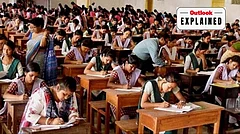


Court Seeks Progress Report Across Examination Cycle
The Supreme Court sought a stage-wise status report covering reforms before, during and after the examination.
The Centre has been asked to provide details on testing arrangements involving state and district authorities, the feasibility of conducting examinations in multiple sessions, the selection and management of examination centres, and the processes followed for preparing, printing, transporting and securing question papers.
The bench also sought information on the proposed governing board, the creation of expert-led units and the nomination of relevant stakeholders.
According to news agency ANI, the court also asked Centre to explain the implementation of the High-Powered Committee’s recommendations across 10 verticals, including digital infrastructure, examination security, research and development, transparency, administration and human resources.
The court also sought updates on the responsibilities and work undertaken by the newly appointed Additional Directors General dealing with security, monitoring and vigilance.

IAF Deployment Was Only An Ad Hoc Measure: Court
Justice Narasimha observed that deploying the Indian Air Force to safely transport question papers after a paper leak could only be considered a temporary response and not a sustainable institutional solution.
The court said reforms must create systems capable of preventing future breaches without requiring extraordinary arrangements after every crisis.
It also asked the Centre to explain the progress made on the proposed transition to Computer-Based Testing and the safeguards being considered to protect examination-related data.
The bench sought details on the possible use of technologies such as DigiYatra for candidate identification and verification.
After observing that the Union government’s earlier affidavit had not adequately addressed several of these issues, the court accepted Solicitor General Tushar Mehta’s assurance that a fresh and more detailed affidavit would be filed.
Earlier Order Sought ‘Institutional Memory’
During a hearing in May, the bench had interacted with the expert committee constituted by the Supreme Court in 2024 to recommend reforms in the NEET examination process.
It subsequently directed the concerned Union ministries to file affidavits explaining the measures being taken to strengthen the system.
“The affidavit shall indicate the method by which regulating and supervising authorities of NEET examination can develop and retain institutional memory so that they can act on the basis of the experience, data, and information they have gathered and processed with each examination cycle,” the court had said.
“The endeavour must be to ensure that the National Testing Agency has the wherewithal, physical and intellectual, to prevent incidents such as the 2024 or 2026 examinations from occurring in the future,” it added.

Background Of The NEET-UG Paper Leak Case
The latest proceedings stem from petitions seeking the dissolution or restructuring of the NTA and wider reforms in the national entrance examination system, LiveLaw reported.
The NEET-UG 2026 controversy began after allegations of a question paper leak led the NTA to cancel the examination originally conducted on May 3.
The cancellation affected more than 22 lakh candidates, following which the Centre ordered a fresh examination and a Central Bureau of Investigation probe into the alleged leak.
The episode triggered student protests across the country and renewed scrutiny of the NTA’s examination management, security protocols and ability to prevent leaks and other irregularities.