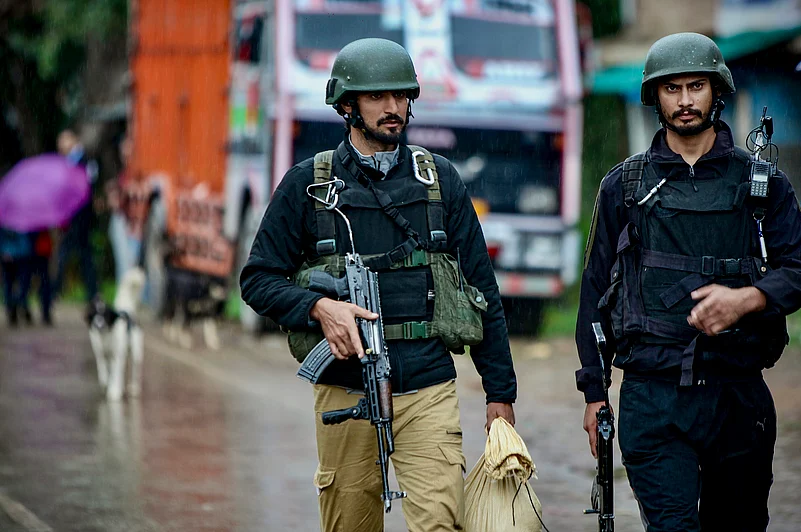
Militancy has declined in Kashmir, but terror groups have shifted to smaller and more covert operations.
Infiltration, drone-based weapons supply and OGW networks remain major security challenges.
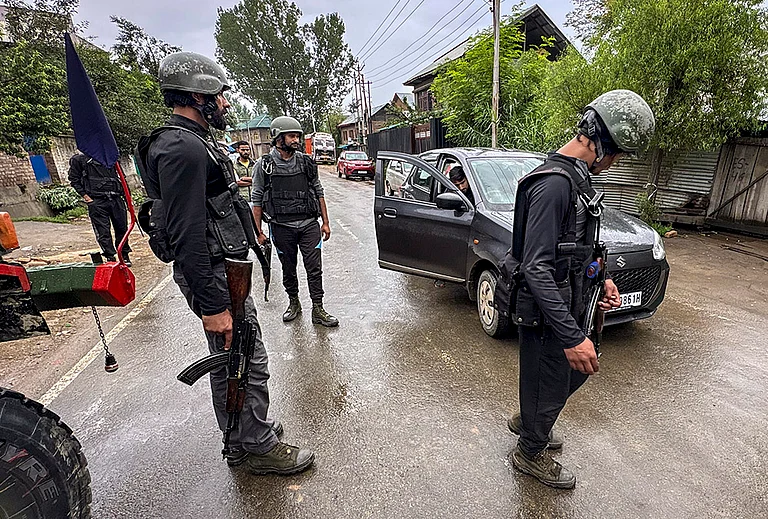
The Kulgam attack highlights how fewer militants can still carry out targeted strikes.
The Kulgam terror attack has raised a difficult question about Jammu and Kashmir’s security landscape: if militancy has declined sharply, local recruitment has fallen and security forces have dismantled several militant networks, why do terror strikes continue?
The answer lies in how the threat has changed. The current security environment in Jammu and Kashmir is different from the peak years of insurgency, when militant groups maintained larger formations and depended heavily on local recruitment. According to the Ministry of Home Affairs (MHA), terrorist-initiated incidents in Jammu and Kashmir declined from 228 in 2018 to 46 in 2023, while civilian and security force fatalities also fell during the same period.
The challenge now comes from a different model of militancy — smaller infiltration teams, concealed support networks, evolving methods of weapons movement and the difficulty of maintaining complete surveillance across a challenging border terrain.
The Kulgam attack is therefore not only about the number of militants active in the Valley. It raises questions about how a small number of trained operatives can cross security layers, receive logistical support and carry out targeted attacks despite a stronger counter-insurgency grid.



The changing face of militancy
The militancy landscape in Jammu and Kashmir has undergone a major shift. Security agencies have said sustained operations and intelligence-based action have disrupted several militant networks, reducing the ability of groups to operate openly.
However, the decline in numbers has not eliminated the possibility of attacks. Instead, militant groups have adapted to a more concealed operational model.
Retd. Major General Rajan Kochhar of the Indian Army says one of the biggest changes has been the size of infiltration groups. "Previously these terrorists used to come in 10, 12, 14... a dozen or so. Now what they're doing is they are coming in small groups of three to four, and sometimes two to three people also."
Smaller groups leave fewer traces, require fewer resources and can disperse quickly after crossing the Line of Control (LoC). Their objective is often not to maintain a prolonged presence but to carry out specific attacks and avoid detection.
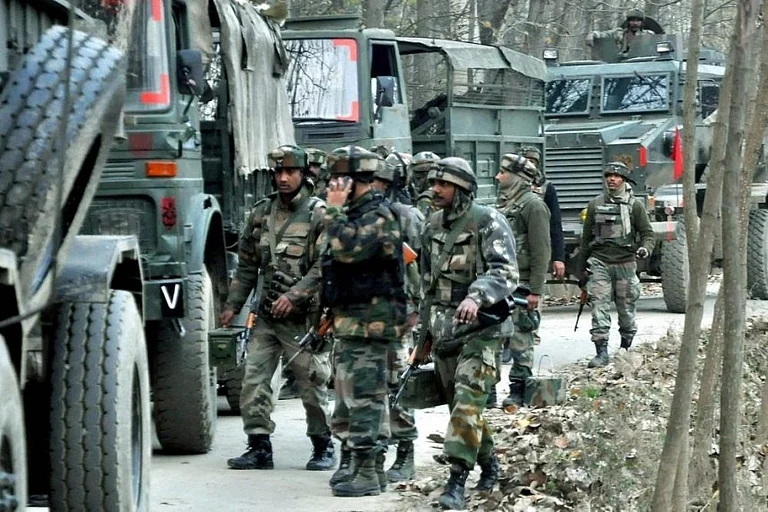
This has changed the nature of counter-insurgency operations. Security forces are not only looking for armed groups but also attempting to detect small teams that can operate with support from hidden networks.
Why local recruitment has declined, but attacks continue
The decline in local recruitment has been one of the most significant changes in Jammu and Kashmir’s security environment. Security agencies have pointed to a decline in local recruitment compared to earlier years.
But fewer local recruits do not automatically mean the end of militant operations.
With local recruitment becoming harder, security agencies have said that groups based across the border have continued to rely on trained infiltrators for specific missions. This reduces the need to maintain large numbers while allowing groups to retain the ability to carry out targeted attacks.
The result is a different security challenge: identifying a few trained operatives moving through difficult terrain and relying on hidden networks rather than detecting large armed groups.
The Kulgam attack reflects this broader shift: even with fewer active militants, small groups with access to logistical support can still carry out targeted strikes.
Foreign infiltrators and the terrain challenge
The LoC remains one of the biggest challenges because of its geography.
Major General Kochhar says infiltration cannot be completely brought down to zero because terrain and weather continue to create opportunities.
"The terrain and the weather are two important things which actually facilitate infiltration," he says.
The LoC passes through mountains, forests, narrow passes and natural streams, making continuous surveillance extremely difficult. Kochhar says security forces cannot maintain physical dominance over every part of the border.
"Manpower constraints are there and they are likely to be gaps in the deployment of the forces. So these gaps are exploited," he says.
Weather conditions add another difficulty. Snowfall, rainfall and reduced visibility can affect surveillance and movement, creating opportunities for those attempting to cross.
India’s counter-infiltration system includes physical barriers, electronic surveillance, patrolling and intelligence-based operations. However, difficult terrain means that even a heavily monitored border cannot completely rule out infiltration attempts.
How infiltration methods have evolved
Kochhar says another shift has been in the way infiltrators and weapons move.
Instead of always carrying weapons while crossing, he says some infiltrators are now entering without arms and relying on other methods to receive weapons after entering Indian territory.
"They are entering without weapons. So what they are doing is they are using drones for dropping of weapons in designated areas," Kochhar says.
He explains that weapons can be broken down into multiple parts, transported separately and assembled later after reaching the intended location.
Kochhar describes this as "hybrid infiltration" — a method where the movement of personnel, weapons and local assistance takes place through separate channels, making detection more difficult.
The use of drones has added another layer to the security challenge. While surveillance technology has improved, it also has limitations.
Kochhar says drones have "dark zones" where dense foliage and difficult terrain prevent continuous monitoring. Even when security forces launch operations after an attack, locating infiltrators can remain difficult because forests and mountainous regions provide natural cover.
The intelligence and OGW challenge
Crossing the LoC is only the first stage of an infiltration attempt. Once inside Jammu and Kashmir, militants require support to move, hide and sustain operations.
This is where Overground Workers (OGWs) become significant.
Kochhar explains that militants often depend on people who are not active fighters but provide logistical assistance. A person may collect supplies from one location, another may move them further, creating several layers between the militant and the support network.
"These guys disguised as civilians... it will be difficult to find out," he says.
Identifying such networks remains one of the most difficult parts of counter-terror operations because OGWs do not operate like armed militants. They often function within civilian spaces and can only be detected through intelligence inputs.
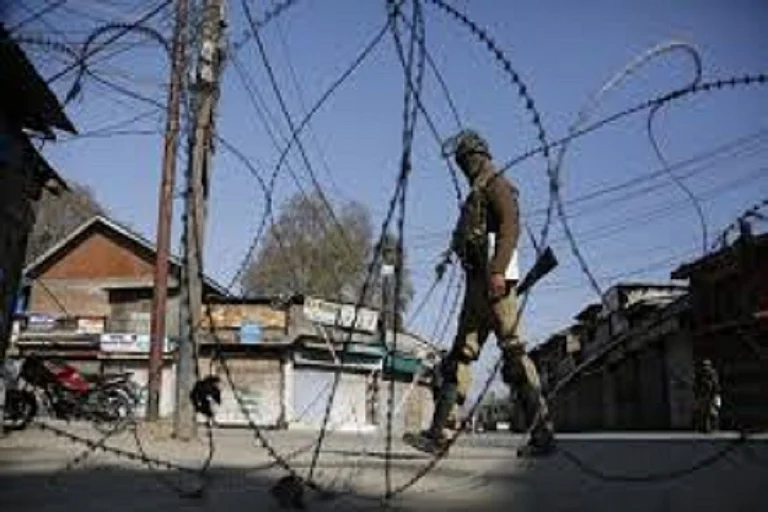
Kochhar says India’s counter-infiltration strategy works through multiple layers — forward observation near the LoC, fencing and sensors, physical patrolling, hinterland surveillance and intelligence-based operations.
The final layer depends heavily on intelligence fusion. Information collected by agencies such as the Intelligence Bureau, Research and Analysis Wing, Military Intelligence, technical intelligence units and state police branches has to be combined quickly enough to produce actionable inputs.
The challenge is ensuring that separate intelligence streams are fused quickly enough to prevent attacks.
Can targeted attacks be prevented?
The Kulgam attack highlights the difficulty of preventing every terror strike in a terrain where geography, weather and evolving tactics continue to create vulnerabilities.
Security forces can strengthen surveillance, improve technology and disrupt support networks, but reducing militant numbers alone cannot remove the threat.
Kochhar argues that technology must be supported by human intelligence and cooperation from local communities. He points to the example of the Kargil conflict, when local shepherd Tashi Namgyal alerted the Army about suspicious movement, providing an early warning of Pakistani intrusion.
The lesson remains relevant in counter-insurgency operations. Surveillance systems can monitor large areas, but timely information can determine whether infiltrators remain hidden or are detected before carrying out an attack.
The Kulgam attack does not indicate a return to the scale of militancy seen during earlier decades. Instead, it reflects a changed security challenge: fewer fighters, smaller teams and more concealed networks. The task for security forces is now not only reducing militant presence but preventing smaller groups from exploiting gaps in terrain, intelligence and surveillance.