LPG shortage and price rise in Mumbai are pushing low-income households and workers into a deepening food crisis.
Street vendors, small eateries, and migrant workers are among the worst hit, with rising fuel costs and shutdowns limiting access to affordable meals.
Policy gaps lack of—regulations for alternative fuels and uneven crisis response—are worsening the burden on the urban poor.
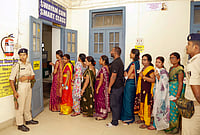
Mayuri Pate, 59, a domestic worker in Mumbai, doesn’t know about the ongoing war between the US and Israel on Iran, she doesn’t know about geopolitics or the global energy crisis. What she knows is that the domestic LPG cylinder price has risen from Rs 855 to Rs 905. The difference might sound like just Rs 60, but that’s the price of 1.5 kg rice for her. In this economy, Pate who earns around Rs. 5,000 a month, is hard hit by the price hike of Rs. 60. Pate booked her LPG cylinder last week and lined up in a queue for three days, going late to her workplace, yet, she didn’t get a cylinder. On March 16, she went to the LPG agency at J.P. Road in Andheri at 5 am.

“There was already a big queue of people, who had been there since 3 am. After five hours of waiting, I got a cylinder at around 10 am. People who were in the queue were frustrated, there was chaos, people quarreling with each other over their turn. Muslim women had to prepare for sehari, they were expecting some concessions in the queue, others were not co-operating, everybody was panicking,” says Pate.
Chirag Panchal’s family who lives in Rajivali slums in Vasai has started using coal for the stove for cooking food as have many other families. But coal which was sold earlier Rs 40 per kg, is now being sold for Rs. 60 per kg. Restaurants in Mumbai have started using coal as cooking fuel. As tdemand for coal is rising, prices are going up to between Rs. 20-30 per kg in different parts of Mumbai and suburban areas. Established restaurants and hotels adapted to this old-new fuel, but small street vendors can’t cook everything on coal on the streets. The prices of induction cooktops, electric cooking appliances are skyrocketing.



“Induction cooktops which were earlier available for Rs. 2,000-3,000 are now being sold for Rs. 17,000-18,000 per set. We spent Rs 1 lakh to buy inductions and we buy around 200 kg of coal everyday. But small thelawalas are not able to afford these expenses on cooking fuel,” says Ashwin, owner of the Paa-G Restaurant in Chakala.
Most of the street shops around Paa-G are shut. Dosa carts, pav-bhaji, and burji-pao carts near Chakala junction, and Chinese corners which used to sell meals from Rs. 30-100 a plate have been closed since March 13. Similarly small thali restaurants near Ansa Industrial estate in Sakinaka have also been shut down. ‘Select’ Restaurant used to provide a thali for Rs. 70, an affordable meal option for the working class in the area, but it is no longer an option.

Dosa carts, pav-bhaji and burji-pao carts near Chakala junction, and Chinese corners which used to sell meals from Rs. 30-100 a plate, have been closed since March 13.
“I have been eating at ‘Select’ for a year now. Where else will you get a thali for 70 rupees? They also give non-veg thali for Rs. 120, but since four days the hotel has been closed and we don’t know when it will open,” says Surinder Yadav, 35, who works in a metal godown in Ansa Industrial Estate. A migrant from Bihar’s Darbhanga district, Yadav lives in Vikroli, in a 100- sq-ft house without a kitchen, which he shares with four others. For lunch, he is dependent on ‘Select’, and dinner is a mess tiffin that costs Rs. 100 per tiffin.

“Our mess Didi (tiffin service) has also stopped giving tiffin for the past two days and asked me to look for another option. I requested her to continue the service. I am ready to pay even Rs 130 rupees per tiffin because I have an ulcer and there are a few restrictions on outside food, but Didi is unable to provide tiffin,” says Yadav.
Like Yadav, some workers of Ansa Industrial now eat bread-jam from a nearby shop, and biscuits, namkeen and bananas for lunch. Tetrapacks of buttermilk and sugarcane juice are other options in the March heat in Mumbai. But these can’t sustain them for a long time.
“How many days will we survive on bananas, bread and cane juice? For the initial few days, I used to eat misal pao, bhajia pao, but now those stalls are also shutting dow ,” says Amit Yadav, a construction worker who works nearby.

Workers in Ansa Industrial do precarious physical labour. Dry snacks and cane juice can barely sustain them. There is no parallel arrangement on the part of owners for workers.
“Itni garmi me thanda pani tak nahi milta, malik log khaane ka intajam kaise karega?” (We don’t even get cold drinking water in this heat. How will the owners arrange food?), asks a construction worker who doesn’t want to be named.
For Muslim migrants, roza fast is a blessing in this food crisis, where they don’t have to worry about lunch and get some time in the evenings after work to arrange meals. A few go to charity iftars in nearby areas arranged by corporators or muslim businessmen. Some migrants remember the ordeals they endured during the covid pandemic.

When the pandemic began in March 2020, the Union government declared a nationwide lockdown on March 24. It was a sudden step, without giving any proper intimation and time for crisis management. Only essential services were allowed to operate, protocols were strict, and there was heavy police presence on the streets. Migrants who were stranded in Mumbai at their workplaces were left without basic necessities.
Food was the major challenge. Restaurants, street food stalls and and tiffin services were closed due to physical distancing norms.
Millions of workers faced an extreme hunger crisis and scarcity due to their precarious financial situation. Workers were totally dependent on the food sent as aid by NGOs and other charity options.
Now with the LPG crisis rapidly spiralling into a hunger crisis, Shambu Prasad, 60, a migrant from Bihar also remembers the pandemic days and feels scared due to the uncertainty of the LPG supply. Prasad works as a security guard in Andheri, earning Rs 10,000 a month.
some migrant workers in Marol, Sakinaka, are going to gurdwaras for free food served to visitors and the needy. During the pandemic too, gurdwaras had fed migrant workers and the homeless .
“I have been trying to book a cylinder for a week, but they didn’t accept my booking. After many attempts, my booking was accepted on March 15, but the agency’s manager asked me to collect it from the agency, for which I will have to take leave, and go stand in the queue. I don’t get any leave. One day paycut means I can’t have tea and shave for a month. I really feel this situation should not be scary like the covid times,” says a worried Prasad.
A few migrant workers in Marol, Sakinaka area, have started going to gurdwaras for free food served to visitors and the needy. During the pandemic too, gurdwaras had fed migrant workers and homeless people.
What are the key policy measures that have been put in place to deal with the curent LPG crisis? In early March 2026, the Government of India invoked the essential commodities Act to stabilise, regulate the LPG supply for households. LPG remains an essential commodity under the Essential Commodities Act, 1955, allowing the government to regulate its production, supply and distribution during crises.
However, alternatives like electric induction cooktops are not covered under the Act, which is why their pricing or availability cannot be similarly controlled or capped.
The Act includes food items, crops, fertilisers, organic or chemical; and medicines and petroleum products as essential commodities, but excludes induction cooktops and other substitute stoves used to cook food.
“The list of the essential commodities can and must be modified according to the crisis and people’s needs. Alternative cooking appliances must be included in the list. This amendment doesn’t need routine parliamentary procedures. It can simply be done with a gazette notification,” says development economist Neeraj Hatekar.

The government has prioritised household LPG supply and restricted commercial LPG supply, which is hitting small street food vendors hard.
“Street food vendors should be considered by the government. There should be some policy, and crisis management for them, because these vendors feed the poor. Applying a one size fits all approach will only harm their income and contribute to the hunger crisis of the poor,” Hatekar warns.
At the state level, although the Maharashtra government maintains that there is no shortage in household LPG supply, Food and Civil Supplies Minister Chhagan Bhujbal has announced that the government is planning to distribute kerosene at petrol stations. “We are seeking the High Court’s permission, as supply of kerosene was stopped with the High Court’s (Nagpur bench) intervention during Ujjwala Yojana. We have convinced them of the need of the hour,” Bhujbal said in the Legislative Assembly on March 17.
Internet users have been making reels, sarcastically commenting on this decision about kerosene distribution, while right to food activists, and economists like Neeraj Hatekar ask: why not use the public distribution system along with petroleum companies for this distribution? PDS has a last-mile reach, but many villages in Maharashtra don’t have patrol stations. Travelling to a patrol station for buying kerosene would place an additional financial burden on the poor.

MORE FROM THIS ISSUE


(This article appeared in Outlook's April 1st, 2026 issue titled 'ParaDime Shift,' which looks at how the US-Israel attack on Iran has come home to India with the LPG crisis and is disrupting the nation's energy ecosystem, exposing policy gaps and testing the limits of diplomacy.)