State’s Principal Secretary (Finance) says Himachal may head for catastrophe
Says CM abolishing RDG is not an issue of the Govt, but a matter of rights of people, invites BJP to joint delegation to centre
An annual Rs 6,000 cr resource gap due to RDG abolition will result in serious crisis
Severely impacted by the Centre halting the Revenue Deficit Grant (RDG)—a long-standing mechanism of resource-gap funding practised since 1952, Himachal Pradesh Chief Minister Sukhwinder Singh Sukhu said he was preparing to meet Prime Minister Narendra Modi, along with his Cabinet ministers, to seek justice for the state and its 75 lakh people.
Sukhu, however, said he was awaiting a response from the BJP MLAs, Leader of the Opposition Jairam Thakur, and sitting MPs from the state to form a joint delegation and seek urgent intervention, including financial gap funding or any other form of support to help the state tide over a deep crisis.
He hinted that the option of taking any legal recourse in the matter is not an option before him.

Earlier in the day on Sunday, he held a meeting of the cabinet, wherein the state’s finance department made a presentation on the impact of the 16th Finance Commission report on the state’s fiscal position. The report proposing the discontinuation of the RDG has been accepted by the center.


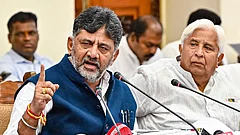
Later, at his instance, Principal Secretary (Finance) Devesh Kumar and his team made another presentation for the MLAs and media persons, highlighting the serious fallout of the report on the resource-starved state.
“The state, whose income is just Rs 18,000 cr with another Rs 13,900 cr as a share of central taxes, will not be able to manage its finances, meet committed liabilities, and then also carry out any development activities. Even after raising loans as per the limited prescribed by the centre, there will be an unmet gap of Rs 6000 cr,” said Principal Secretary (Finance)
For a small hill state, which used to draw 12 to 13 percent of its budget from the RDG, the shortfall will be significant and is expected to severely strain its fiscal capacity.
The Chief Minister intervened to say, “For bigger states having a strong resource base, big airports, high GST compensations, and domestic earnings may not have any impact, but in the scenario in Himachal Pradesh—a state formed not because of its viability but to meet people’s aspirations—the RDG mechanism is its financial life-saving dose. We can't survive in its absence.”
He said there will be a gap of Rs 7,000 crore-8,000 crore annually between revenue and expenditure, which was being met through the RDG. The actual loss per year will be Rs 10,000 cr
This means the government will have to stop all development activities and not pay social security pensions to the poor and vulnerable sections, and instead pay only salaries and pensions to the staff.
The Chief Minister said the tax collection growth has come down to around 8 percent which was 13 to 14 percent in the post-GST era. Being a producer state, the implementation of GST has adversely impacted the economy of the state, as it is a consumer-based tax. The competency of imposing taxes has also been taken away after the GST regime.
Despite these constraints, the state government mobilised Rs 3,000 crore; however, its fiscal space has now been exhausted, with limited scope to levy additional taxes and an already overstretched resource base.
Himachal produces 14,000 MW of electricity and receives only 12 percent of this as royalty. Why can’t the state get 50 per cent royalty? from the projects making profits on the state’s soil, and those having completed 40 years should have been returned to the state. Despite being a “water bowl” of India, Himachal Pradesh doesn’t get any benefits.
Himachal’s rightful share in BBMB stands at 7.19 percent and has not been given despite the Supreme Court ruling in 2011. The government is fighting to get Rs 5,000 cr.
“Abolition of RDG is not the issue of a government, but it is a matter of the rights of the people of the state. We are ready to go to Delhi and meet the Prime Minister along with BJP MPs and MLAs to take up this issue. I think once the provision of RDG is gone, it will be difficult to reclaim the rights of the people," he remarked.
The state government has earned a revenue of Rs. 26,683 crore from its own resources, but this income generation was not enough, as Himachal Pradesh has only river waters and forests as a source of revenue apart from the tourism sector.
Yet, he says, "I assure the people of the state that we will implement every welfare scheme on the ground, we will increase the resources of the state, and we will continue to fight for our legitimate rights. I am a fighter and will not let down the hill people.”
From 2000 to 2015, Himachal Pradesh received nearly Rs 48,000 crore as a revenue deficit grant. Its discontinuation for five years will result in serious consequences for the state’s economy.
Meanwhile, Himachal Pradesh Governor Shiv Pratap Shukla on Saturday turned down the state government's plea to summon a special session of the state assembly to discuss the RDG issue. He instead issued a notification convening a scheduled budget session of the House, which will begin on February 16 with his address.
"We will devote a full day (maybe two days) to the RDG discussion after the governor presents his address on the opening day of the assembly. The session will have only three to four sittings. There will be a few days' gap (adjournment), and the state's budget for the year 2026-27 will be presented later," said Harshvardhan Singh Chauhan, minister for parliamentary affairs.