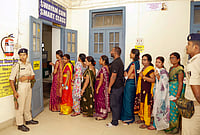
Only 19 of 131 awardees in 2026 are women, continuing a persistent gender gap despite decades of female excellence across fields.
Women recognised this year include pioneers in sports, arts, medicine, social service, and literature, from Harmanpreet Kaur’s historic cricket victories to Mangala Kapoor’s contributions to musical education.
Historical trends show women’s representation has fluctuated but remains low: 2025 – 23 of 139; 2024 – 30 of 132; 2023 – 19 of 106; 2022 – 34 of 128; 2021 – 29 of 119.
On the eve of India’s 77th Republic Day, the government announced this year’s Padma awardees, generating widespread coverage on social media. Names such as R. Madhavan, Rohit Sharma, Shibu Soren, and Dharmendra featured prominently in news reports, videos, and online posts.
The awards recognise individuals who have demonstrated excellence across Indian public life. Among the 131 recipients are both well-known figures and lesser-known contributors whose work in cinema, sports, science, and social service continues to make a meaningful impact.
Yet, of the 131 awardees, only 19 are women—and none of these are recognised in the politics, civil service, or trade and engineering categories. In a country where women have repeatedly excelled—leading teams to historic sporting victories, preserving culture, advancing healthcare, and building educational infrastructure—the gender gap in national recognition remains striking. Even in music, cinema, and the arts, it is difficult to overlook the many women whose contributions have shaped India’s cultural and social landscape.



Yet this pattern has persisted over the years. In 2025, 23 women were honoured among 139 awardees; in 2024, around 30 of 132; in 2023, 19 of 106; in 2022, 34 of 128; and in 2021, 29 of 119. Despite minor fluctuations, women have consistently remained a small minority.
These numbers are more than statistics. They highlight how public recognition often falls short of acknowledging women’s substantial contributions to society.
This year’s women winners include household names and lesser‑known figures. Their achievements show how women continue to define progress, often outside the glare of mainstream attention.
And these are the women, one for every seven men, who won a Padma title this year:

Sporting Triumphs That Reshaped the Narrative
In Indian sport, 2025 was a watershed year. Harmanpreet Kaur Bhullar (Padma Shri) led the Indian women’s cricket team to its first ICC Women’s Cricket World Cup title, defeating South Africa by 52 runs at Navi Mumbai’s DY Patil Stadium. Her tactical leadership and crucial semi-final innings proved decisive in India’s march to the title.
Under her captaincy, India also achieved its first T20I series victory against England and a historic Test win over Australia. Harmanpreet further strengthened her legacy through multiple Women’s Premier League titles with the Mumbai Indians, while her exuberant celebration after the ODI triumph became an enduring image of the year.
Savita Punia (Padma Shri) has been the backbone of the Indian women’s hockey team as its goalkeeper. Known for her composure and sharp reflexes, she has provided defensive stability across major international tournaments, lending consistency and resilience to India’s push on the global stage.
Arts and Culture: Guardians of Legacy and Innovation
The arts continue to be a sphere where women’s voices shape collective memory and cultural expression.
N Rajam (Padma Visbhushan, highest among the Padma awards) was recognised for her contributions to Indian classical music. She was previously awarded Padma Shri and Padma Bhushan over her career spanning more than six decades.
Alka Yagnik (Padma Bhushan) is one of India’s most prolific playback singers; her voice defining decades of Bollywood music. From the playful energy of Tip Tip Barsa Paani in the 1990s to the poignant emotion of Agar Tum Saath Ho in the 2010s, her singing has left an indelible mark on generations of cinema-goers.
Gayatri and Ranjani Balasubramanian (Padma Shri) have preserved the rigour and beauty of Carnatic music through both performance and teaching, extending its influence across generations. Their work underscores how tradition thrives through continuity and mentorship.
Deepika Reddy (Padma Shri) has enriched India’s visual arts with work that bridges contemporary practice with cultural roots, and Kalamandalam Vimala Menon (Padma Shri) has sustained classical dance through performance and pedagogy.
Pokhila Lekthepi (Padma Shri), a cultural contributor from Assam recognised for sustaining regional performance traditions and engaging communities in the arts.
Handicraft artist Tripti Mukherjee (Padma Shri) from Bengal also won in the Arts category.
Medicine and Health: Transforming Lives Quietly but Deeply
In the field of health, Armida Fernandez (Padma Shri) has been a pioneer in paediatrics. Based in Mumbai, she founded Asia’s first human milk bank, greatly enhancing the survival and nutrition of premature and critically ill infants. Her work shows how innovation aimed at the public good can transform health outcomes.
Suneeta Godbole won her Padma Shri in Medicine as a duo with her husband, Ramchandra Godbole for their medical help in the tribal areas of Chhattisgarh.
Shubha Venkatesha Iyengar (Padma Shri, Science & Engineering) she was recognised for her contributions to science and engineering, bridging technical practice with public benefit and community impact.

Social Service: Building Foundations at the Grassroots
Some of this year’s honourees have shaped lives through sustained service in communities that rarely make headlines.
Kollakal Devaki Amma G (Padma Shri) has devoted her life to strengthening rural and tribal education in Kerala, ensuring schooling reaches children in remote regions.
Budhri Tati (Padma Shri), known as Badi Didi, is a social worker from Chhattisgarh who has dedicated decades to empowering women, promoting literacy, and supporting tribal communities in remote areas.
S.G. Susheelamma (Padma Shri) founder of Sumangali Seva Ashrama in Karnataka, she has helped orphaned children, women, and marginalised communities through education, vocational training, and healthcare.
Literature, Education and Heritage: Voices That Shape Identity
In literature and cultural heritage, women’s contributions helped revive and sustain arts both ancient and new.
Mangala Kapoor (Padma Shri) has been a driving force in regional education and literary scholarship, advocating for local languages and community-based learning often overlooked by mainstream discourse. She is an acid attack survivor, targeted at the age of 12 in 1965. And yet her resilience made her one of the most prominent figures in musical education with her expertise in the Gwalior gharana.
Sivasankari (Padma Shri) a writer and social commentator whose literary work highlights social issues and enriches public understanding of culture and community.
Liudmila Viktorovna Khokhlova from Russia won in the Foreigner category.
Recognition That Still Has Room to Grow
This year, 19 women have been honoured, each reflecting achievement, leadership, and service in a country where gender disparities remain significant. Yet the small number underscores a broader issue: national recognition does not always match the scale of women’s contributions. Notably, no women have been awarded the Padma Vibhushan, Padma Bhushan, or Padma Shri in the politics category.
Padma Awards should recognise more than public visibility; they should acknowledge sustained effort, quiet leadership, and transformative impact across classrooms, clinics, studios, fields, and villages. Until recognition expands to reflect the full breadth of women’s contributions, these honours will remain only a partial measure of the nation they help shape.