US forces boarded and seized the Russia-flagged oil tanker Marinera after a two-week pursuit in the North Atlantic
Russia protested strongly, calling the move illegal under international maritime law
The tanker was linked to sanctioned Venezuelan and Iranian oil trade, according to US officials
The United States has seized a Russian-flagged oil tanker, Marinera, following a dramatic, weeks-long pursuit across the Atlantic Ocean, escalating tensions between Washington and Moscow amid tightening sanctions enforcement.
According to the US military’s European Command, the tanker was seized for alleged violations of American sanctions related to illicit oil trade. The operation involved coordinated efforts by the US Department of Justice, Department of Homeland Security, and the Department of Defense, with logistical support from the United Kingdom.
Originally named Bella I, the vessel was sanctioned by the US in 2024 for its role in transporting oil linked to Venezuela and Iran. After an earlier failed boarding attempt near Venezuelan waters in December, the ship reportedly repelled US forces. Soon after, a Russian flag was painted onto its hull, and the tanker was formally added to Russia’s shipping registry.
Moscow responded sharply to the latest seizure. Russia’s Foreign Ministry urged the US to ensure “humane and dignified treatment” of Russian citizens aboard the vessel, while the Ministry of Transport argued that the operation violated the 1982 United Nations Convention on the Law of the Sea, which prohibits the use of force against vessels registered under another state’s jurisdiction. Although the US has not ratified the convention, it generally recognises its provisions as customary international law.


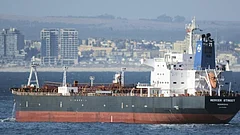
The seizure was confirmed publicly through social media posts by US officials. Defence Secretary Pete Hegseth reiterated that the blockade of sanctioned Venezuelan oil “remains in full effect — anywhere in the world.” Homeland Security Secretary Kristi Noem said the operation was part of a broader crackdown on so-called “ghost fleet” tankers used to evade sanctions.
British defence officials confirmed that UK armed forces provided “pre-planned operational support” during the interdiction, particularly in the strategic UK-Iceland-Greenland maritime corridor.
The New York Times reported that no Russian naval vessels were present during the boarding, avoiding a direct military confrontation between the two powers. Russian state broadcaster RT released images showing a helicopter approaching the tanker, claiming it had obtained exclusive footage of the operation.
The Marinera had reportedly been travelling from Iran to Venezuela before altering course in an apparent attempt to evade US surveillance. In recent days, it was closely monitored through aerial reconnaissance flights launched from US bases in Iceland, with British assets also involved.
The incident marks a significant escalation in the US enforcement of maritime sanctions and highlights growing friction over energy trade routes, international law, and military power projection on the high seas.