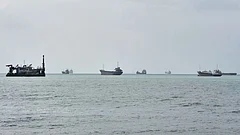
The U.S. will enforce a naval blockade on ships linked to Iranian ports through the Strait of Hormuz, following failed ceasefire talks.
U.S. Central Command said non-Iranian port traffic can still pass, easing earlier plans of a full blockade.
The move targets Iran’s strategic leverage but risks further disruption to global oil flows, with the strait handling ~20% of world supply.
Following the failure of U.S.-Iran ceasefire negotiations in Pakistan, US President Donald Trump declared on Sunday that the U.S. Navy would immediately start a blockade of ships entering or departing the vital Strait of Hormuz.
According to U.S. Central Command, the blockade will be "enforced impartially against vessels of all nations" and will affect all Iranian ports starting Monday at 10 a.m. EDT, or 5:30 p.m. in Iran.
However, CENTCOM said it would still allow ships traveling between non-Iranian ports to transit the strait. Its announcement was a step down from the president’s earlier threat to blockade the entire strait, and allows traffic to flow in the crucial waterway as long as it avoids Iranian ports.
Trump wants to weaken Iran’s key leverage in the war after demanding that it reopen the strait to global traffic on the waterway where 20% of global oil transited before fighting began.
That traffic has been limited even in the days since the ceasefire. Since the ceasefire began, more than 40 commercial ships have crossed, according to marine trackers.
Global energy markets could be further shaken by a U.S. blockade.