Pakistan has invited Iranian Foreign Minister Abbas Araghchi to Islamabad amid uncertainty over US-Iran negotiations.
Islamabad is seeking to maintain its role as a mediator while diplomatic efforts continue behind the scenes.
The outreach follows renewed tensions after US-Iran talks stalled and military strikes resumed.
Pakistan has stepped up its diplomatic engagement with Iran by inviting Foreign Minister Abbas Araghchi to Islamabad, as Islamabad seeks to sustain its role in efforts to ease tensions between Tehran and Washington.
The latest outreach comes amid renewed uncertainty over US-Iran diplomacy, two days after US President Donald Trump said he had called off planned military strikes against Iran following appeals from key regional allies. According to PTI, Pakistani officials view the invitation as part of Islamabad's effort to remain an important diplomatic bridge between the two countries.
Deputy Prime Minister and Foreign Minister Ishaq Dar invited his Iranian counterpart to visit Pakistan "at the earliest" during a telephone conversation on Monday. However, Iran's response to the invitation is not immediately known.
"Deputy Prime Minister/Foreign Minister Senator Mohammad Ishaq Dar @MIshaqDar50 spoke today with the Foreign Minister of Iran, Seyyed Abbas Araghchi. They exchanged views on regional and international developments, including the deteriorating situation in Occupied East Jerusalem,” the Pakistan Foreign Office said in a post on X on Monday.
It further said, “DPM/FM (Dar) invited Foreign Minister Araghchi to visit Pakistan at his earliest convenience."
Separately, Pakistan's National Assembly Speaker Ayaz Sadiq has reportedly invited his Iranian counterpart Mohammad Bagher Ghalibaf to Islamabad.


According to PTI, a senior Pakistani government official said the latest outreach was aimed at reinforcing Pakistan's position as a trusted intermediary at a time when diplomatic efforts remained fragile and the prospect of another military confrontation continued to loom over the Gulf.
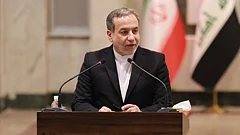
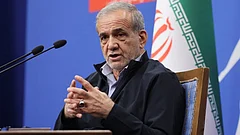
Both Araghchi and Ghalibaf played prominent roles in the recent US-Iran negotiations.
The official further said Pakistan was maintaining a "relatively low profile" to help ease tensions. He added, "Let me tell you... diplomatic engagement has continued behind the scenes.”
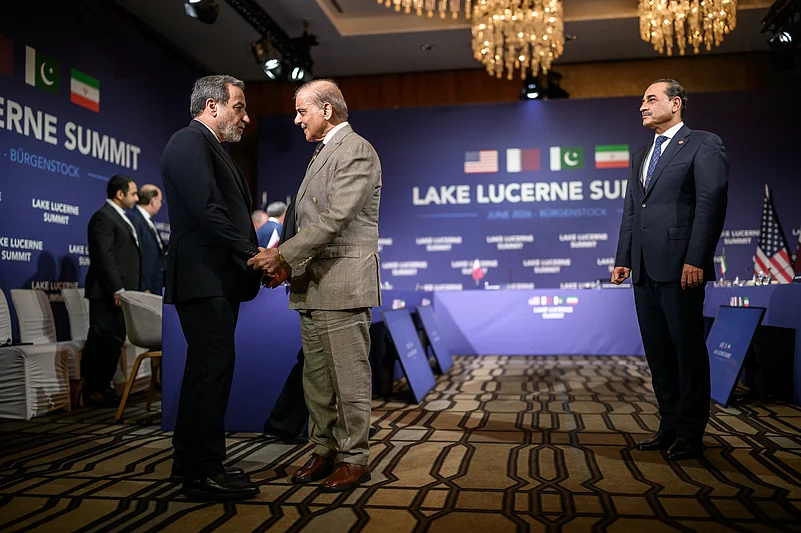
In June, the US and Iran signed a Memorandum of Understanding (MoU) aimed at bringing peace in West Asia. Pakistan also signed the document as a "guarantor".
Pakistan hosted peace talks in April and later attended another round of technical-level talks in Switzerland as a mediator, days after the signing of the MoU.
PTI reported that the negotiations collapsed in early July after renewed military strikes, with both sides accusing each other of violating the agreement while remaining deadlocked over demands related to the Strait of Hormuz, the Gulf chokepoint through which about a fifth of the world's energy supplies passed in peacetime.
On Monday, Trump accused Iran's leadership of being "unbelievably duplicitous" after Tehran denied that negotiations with Washington were underway.
He insisted talks with Iran were ongoing, while Iranian officials maintained that no negotiations with the US were taking place or scheduled.
A day earlier, the US President said he had suspended planned military strikes on Iran after Saudi Crown Prince Mohammed bin Salman and the leaders of Qatar and the UAE urged him to allow more time for negotiations.
He did not specifically identify Pakistan as a mediator in his remarks.
However, Tehran has continued to publicly acknowledge Islamabad's role. Iranian Foreign Ministry spokesman Esmail Baghei said on Monday that Pakistan remained "the mediator in the discussions related to Iran and the US", while Qatar was facilitating the process whenever required.
"To say that we have added a new mediator to the existing mediators is not, in the strict sense of the word, the case," he added.