Denmark’s AkademikerPension and Sweden’s largest fund, Alecta, are selling US Treasury holdings, citing rising credit risk, weak fiscal discipline under President Donald Trump, and heightened geopolitical tensions linked to Greenland, challenging the long-held view of US debt as politically insulated and risk-free.
While limited in size, the decision is closely watched because European public institutions hold trillions in US assets. Similar actions by other conservative funds could disrupt US financing, raise borrowing costs, and pressure equity markets, even as some central banks reduce dollar exposure in favor of gold.
Renewed tariff threats, fiscal expansion, and geopolitical brinkmanship have increased investor anxiety. Market volatility following recent policy signals underscores concerns that political risk is becoming inseparable from US financial assets, potentially reshaping global capital allocation over time.
A quiet shift is underway in Europe’s most conservative corner of finance, and it’s aimed squarely at Washington.
By the end of this month, AkademikerPension, a Danish pension fund alongside Sweden’s largest pension manager, Alecta, is preparing to offload its holdings of US Treasuries, a move that is already reverberating through global markets. Alecta pension fund, Sweden’s biggest fund, which has about $110 billion worth of assets under its management, has decided to divest most of its US Treasury holdings. The reason is not short-term volatility, but something more structural: mounting concern over America’s fiscal credibility under President Donald Trump, weakening budget discipline, and a sharp rise in geopolitical tension following renewed controversy around Greenland.
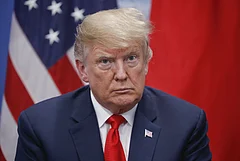


AkademikerPension, which plans to sell all its holdings of US government debt by the end of the month, cited rising credit risk under President Donald Trump, weak fiscal discipline in Washington and mounting geopolitical tensions linked to the administration’s aggressive stance on Greenland. While small in isolation, the move is symbolically significant: US Treasuries have long been treated by global investors as the world’s safest asset, insulated from politics and geopolitical shocks.
Similar Sell-Offs Can Disrupt US Finance
That assumption is now being questioned. European countries collectively hold trillions of dollars in US bonds and equities, much of it through public-sector pension funds, sovereign vehicles and central banks. These institutions are traditionally conservative, slow-moving investors. When one of them publicly flags concern about US creditworthiness, it signals a shift in how risk is being assessed, not just in financial terms, but political ones as well.
A treasury head of an Indian bank, on anonymity, highlighted that such a decision of a fund house is not reflective of a global phenomenon but it is something to keep eye on. “Such action, if followed by several fund houses can lead to disruption,” the treasury head said.
Not only this but central banks around the world are exiting their dollar investments and resorting to safer means, predominantly, gold. A JP Morgan report dated July 1, 2025 showed that the main de-dollarization trend in forex reserves globally is due to growing demand for gold.
“Seen as an alternative to heavily indebted currencies, the share of gold in reserves has increased, led by emerging market (EM) central banks, China, Russia and Türkiye have been the largest buyers in the last decade,” the report showed.
Trump Versus Europe
Trump’s earlier renewed tariff threats against European allies before backtracking, to secure Greenland have injected an element of unpredictability into US policy.
For investors with long-term liabilities, such uncertainty matters. A softer dollar, ballooning deficits and rising debt servicing costs add to concerns that fiscal discipline is no longer a priority in Washington. A day after the announcement of the tariffs, on January 20, the S&P 500 ended lower by around 2.1 percent, its worst day since October 2025. The Nasdaq Composite plunged 2.4 percent, the Dow Jones Industrial Average dropped 1.7 percent. Impact was also seen on Indian equities which closed sharply lower, their weakest levels in three months. The BSE Sensex fell 1.28 percent, the NSE Nifty 50 dropped 1.38 percent.
For now, the funds’ move stands as a warning rather than a trend. Yet it underscores a deeper shift: the erosion of the idea that US assets are politically neutral. If more European institutions begin to reassess their exposure, quietly or otherwise, the consequences could reshape not just markets, but the financial foundations of the US’s global influence.