India’s startup ecosystem has entered a phase of introspection. After a decade defined by rapid capital inflows and headline valuations, deeper questions are emerging around sustainability, access, and long-term value creation. While the country has cultivated ambitious founders and globally competitive talent, structural gaps persist. Access to global networks remains uneven, mentorship is often fragmented, and institutional support frequently tapers off beyond early funding cycles. Within this shifting context, Draper Startup House is positioning itself as a framework that attempts to reimagine how ecosystems are built, not merely as networks, but as sustained institutional movements.
Redefining Access and Opportunity
At its core, Draper Startup House articulates a clear mission: to empower founders globally through access, community, and opportunity. In India, this proposition carries particular weight. Despite the scale of entrepreneurial activity, structured pathways to global exposure remain limited to a narrow segment of founders.
The organization functions as a connective layer between local ecosystems and international networks. Its approach goes beyond introductions, focusing instead on embedding founders into global systems that include investors, mentors, and educational platforms. This model shifts the narrative from isolated startup journeys to interconnected entrepreneurial pathways, where geography becomes less restrictive.
Hyderabad as a Focused Execution Hub
The Hyderabad chapter reflects a deliberate evolution of this philosophy. While global Draper locations emphasize community, Hyderabad integrates that foundation with structured execution. The city is being developed as a high-energy hub where community, capital access, and ecosystem alignment converge.
For Sai Chaitanya Kokku, Executive Director at Draper Startup House Hyderabad, the emphasis is not merely on building a network but on creating a system that enables founders to move with clarity and speed. Hyderabad’s growth trajectory supports this ambition. With strong infrastructure, a growing base of deep technology talent, and a governance environment that increasingly supports innovation, the city presents a compelling case as an emerging startup center.



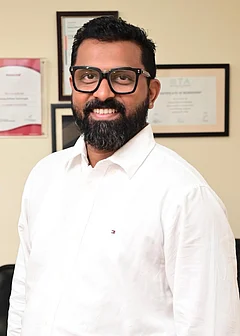
Draper Startup House has aligned closely with this ecosystem, engaging founders, investors, institutions, and policy stakeholders. This integration enables a cohesive approach to ecosystem building, where structured programs, defined capital pathways, and continuous engagement replace fragmented interactions.
Cultivating Collaboration Over Competition
A distinctive element of Draper Startup House’s model is its emphasis on collaboration. In a sector often driven by competition, the organization has designed environments that encourage shared growth. Co-living spaces, curated cohorts, and collaborative work settings form the foundation of this approach.
These environments are intentionally structured to foster trust among founders. When individuals live and build together, barriers diminish and knowledge flows more freely. This shift from competition to collaboration contributes to a more resilient ecosystem.
The Draper Founders Program in Hyderabad illustrates this dynamic. By bringing together high-potential startups and connecting them to global initiatives such as the Draper Hero Program in Silicon Valley, the platform enables founders to move from local validation to international exposure, reinforcing a global outlook.
Embedding Global Thinking from the Start
A defining feature of Draper Startup House’s strategy is its emphasis on global orientation from inception. Rather than treating international expansion as a later milestone, the model integrates cross-border thinking into early stages of a founder’s journey.
Through its wider ecosystem, founders gain access to global investors, international mentors, and educational platforms. More importantly, they are encouraged to operate within these networks, adapting strategies to diverse markets from the outset. This reflects an emerging reality in India’s startup ecosystem, where cross-border scalability is becoming essential.
By embedding global thinking early, the platform aligns founders with a broader vision of growth that extends beyond domestic limitations.
Aligning Stakeholders and Building Trust
Building such an ecosystem requires more than infrastructure. One of the central challenges lies in aligning diverse stakeholders, including founders, investors, institutions, and policy actors, each with distinct priorities.
Under the leadership of Sai Chaitanya Kokku, Executive Director, along with Sai Krishna Vepuri and Deepika Reddy Palreddy, the approach remains firmly founder-first, centered on clarity, access, and belief. By prioritizing founders, Draper Startup House establishes common ground for collaboration. Trust becomes a critical element, enabling sustained engagement across the ecosystem.
Equally significant is the organization’s view of community as a strategic asset. Rather than treating it as peripheral, community is positioned as a driver of outcomes such as collaboration, deal flow, and long-term value creation.
Redefining Success in a Maturing Ecosystem
As India’s startup ecosystem matures, success metrics are evolving. The emphasis is shifting from valuation-driven growth to sustainable, revenue-focused models. Simultaneously, sectors such as artificial intelligence, climate technology, and deep technology are shaping the next wave of innovation.
Within this context, Draper Startup House envisions a distributed yet interconnected ecosystem across multiple cities. Its ambition extends beyond individual success stories toward building a broader entrepreneurial movement.
Success, in this framework, is not limited to funding milestones. It is reflected in the ability of founders to build enduring companies, generate employment, expand globally, and inspire future entrepreneurs.
By positioning itself as an institutional movement rather than a transactional network, Draper Startup House aligns with a more mature understanding of ecosystem building. Its emphasis on access, alignment, and long-term value offers a perspective on how India’s entrepreneurial landscape may evolve in the years ahead.